Performance & Wellness
Breathwork Techniques for Building Focus and Resilience
Master science-backed breathwork techniques that sharpen mental focus, enhance cognitive performance, and build unshakeable resilience. Learn how controlled breathing transforms your nervous system, optimizes brain function, and creates the mental strength to thrive under pressure—whether you're an executive, athlete, student, or anyone seeking peak performance and stress resilience.
Why Focus and Resilience Matter in Modern Life
In an age of constant distraction, information overload, and mounting pressure, the ability to focus deeply and bounce back from challenges has become a superpower. Whether you're leading a team, making critical decisions, studying for exams, or navigating daily stress, your capacity for sustained focus and resilience determines your success and well-being.
The good news? Focus and resilience aren't fixed traits—they're skills you can develop through breathwork. Your breath is the most powerful tool you have for regulating your nervous system, optimizing brain function, and building mental strength. Navy SEALs use breathwork before high-stakes missions. Elite athletes use it to enter flow states. Executives use it to maintain clarity under pressure. And now, backed by extensive research, these techniques are available to anyone willing to practice.
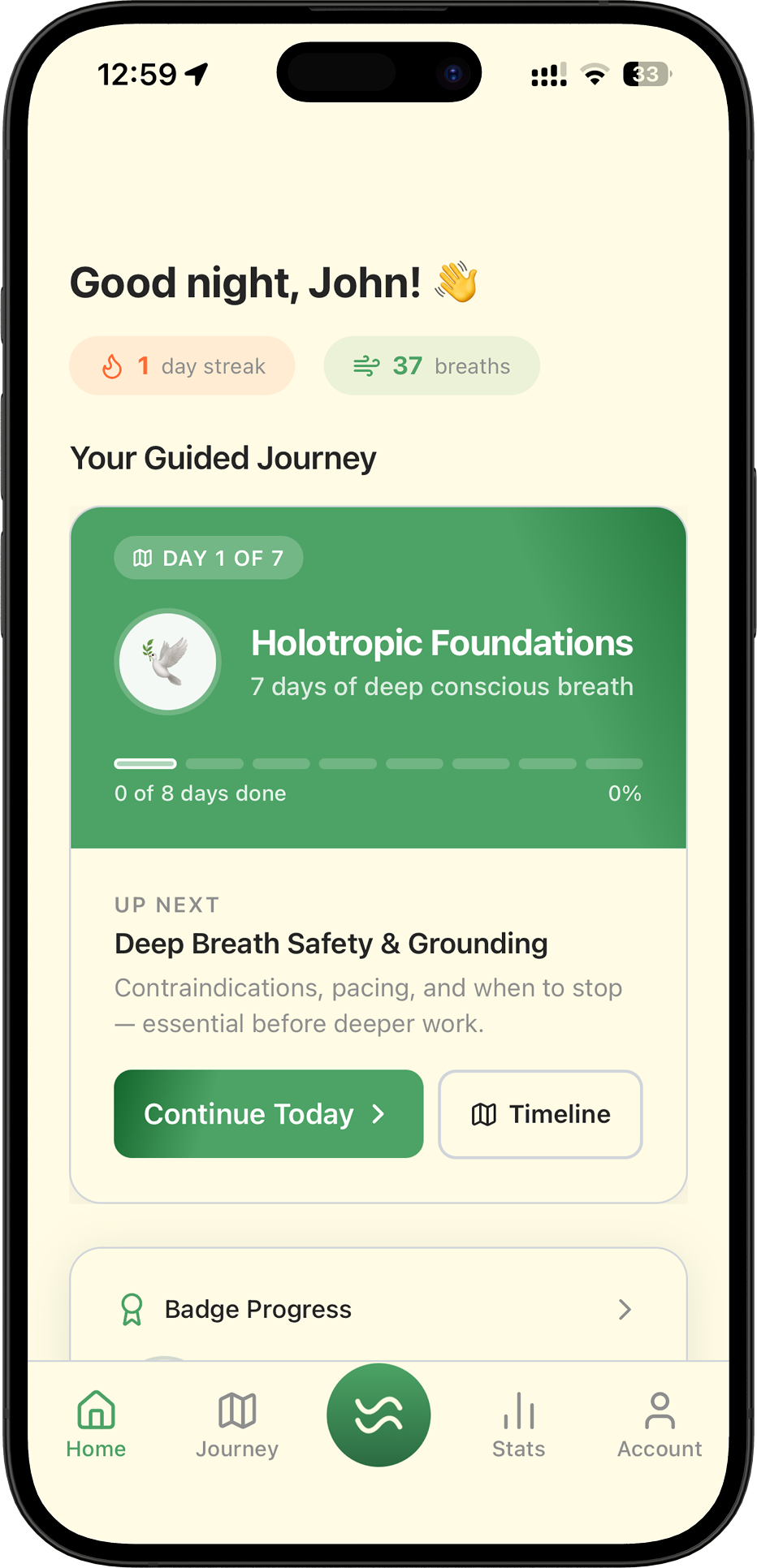
Practice guided breathing exercises for enhanced focus and resilience with visual guidance
Key Insight:
Research from Stanford University and the U.S. military shows that just 5 minutes of structured breathwork can enhance cognitive performance by up to 25%, reduce stress hormones by 30%, and improve decision-making under pressure. The key is using specific techniques with precise timing—which is why guided breathwork apps with visual cues are so effective for building focus and resilience.
The Science: How Breathwork Enhances Focus and Resilience
Understanding the science behind breathwork helps you appreciate why these techniques are so powerful and motivates consistent practice. When you control your breath, you directly influence your brain, nervous system, and stress response. Here's what happens physiologically:
The Brain-Breath Connection
Activates the Prefrontal Cortex
Controlled breathing increases activity in the prefrontal cortex—the brain's executive control center responsible for focus, decision-making, planning, and impulse control. This enhanced activation improves concentration, working memory, and cognitive performance. Research shows measurable improvements within 5 minutes of practice.
Increases Alpha Brain Waves
Specific breathing patterns (especially coherent breathing) increase alpha brain waves, which are associated with relaxed alertness and flow states. This is the ideal mental state for learning, problem-solving, and creative thinking—calm yet focused, relaxed yet engaged. Elite performers train to access this state on demand.
Optimizes Oxygen Delivery
While it might seem counterintuitive, slower, controlled breathing actually improves oxygen delivery to the brain more effectively than rapid breathing. This is because controlled breathing optimizes the CO2-O2 exchange, ensuring brain cells receive the oxygen they need for optimal function, enhancing mental clarity and reducing brain fog.
Calms the Amygdala
Breathwork reduces activity in the amygdala—the brain's fear and emotional response center. When the amygdala is hyperactive, it hijacks the prefrontal cortex, impairing focus and rational thinking. By calming the amygdala, breathwork allows the prefrontal cortex to function optimally, enhancing focus and decision-making under pressure.
Building Resilience Through the Nervous System
Resilience isn't just mental toughness—it's a physiological capacity of your nervous system. Your ability to handle stress, recover from challenges, and maintain equilibrium under pressure is determined by your nervous system's flexibility and strength. Breathwork is the most direct way to train this system.
Increases Heart Rate Variability (HRV)
HRV is the gold standard biomarker for resilience. It measures the variation in time between heartbeats, reflecting your nervous system's flexibility. Higher HRV indicates better stress resilience, faster recovery, and greater adaptability. Coherent breathing (5-6 breaths/minute) is proven to increase HRV significantly, literally training your body to be more resilient.
Strengthens the Vagus Nerve
The vagus nerve is your nervous system's "brake pedal," responsible for calming stress responses. Regular breathwork practice strengthens vagal tone, improving your ability to shift from stress to calm quickly. This is the physiological basis of resilience—the capacity to regulate your state regardless of external circumstances.
Regulates Stress Hormones
Chronic stress elevates cortisol, which impairs focus, disrupts sleep, and weakens resilience. Breathwork reduces baseline cortisol levels by 20-30% and helps you recover from stress spikes faster. This creates a more balanced stress response—you can still activate when needed but return to baseline quickly, the hallmark of resilience.
Creates Nervous System Flexibility
Breathwork trains your nervous system to shift between states smoothly—from activation to calm, from focus to relaxation. This flexibility is crucial for resilience. Athletes call it "playing between the lines"—maintaining optimal arousal without going too high (anxiety) or too low (sluggishness). Breathwork gives you the control to regulate your state in real-time.
Research Highlight:
A 2023 Stanford study published in Cell Reports Medicine found that participants who practiced cyclic sighing (a specific breathwork technique) for just 5 minutes daily showed greater improvements in mood, stress reduction, and physiological markers of resilience compared to meditation groups. The study demonstrated that breathwork's effects on the nervous system are measurable, reproducible, and powerful.
6 Breathwork Techniques for Focus and Resilience
These techniques are specifically chosen for their proven effects on cognitive performance, stress resilience, and nervous system regulation. Each serves a different purpose—some optimize immediate focus, others build long-term resilience, and some do both. Master these techniques to create your personalized toolkit for peak performance.
Box Breathing (Tactical Breathing)
Box breathing is the gold standard for immediate focus enhancement and stress regulation. Used extensively by Navy SEALs, police officers, and elite performers, this 4-4-4-4 pattern creates a steady rhythm that optimizes both mental clarity and nervous system balance. The predictable structure gives your mind something to focus on while simultaneously activating the parasympathetic nervous system.
How to Practice Box Breathing for Focus:
- Find a quiet space and sit with your spine straight (or stand if needed)
- Inhale slowly through your nose for 4 seconds, maintaining mental focus on the count
- Hold your breath at the top for 4 seconds with calm awareness
- Exhale slowly through your nose for 4 seconds, releasing tension
- Hold at the bottom for 4 seconds, maintaining stillness
- Repeat for 5-10 cycles (3-5 minutes)
Best practices: Use before important tasks, meetings, or decisions. Focus on the precise count to anchor your attention. The breath holds are crucial—they build CO2 tolerance and create mental steadiness.
Focus Benefits:
- • Immediate mental clarity (within 2-3 minutes)
- • Enhanced concentration and attention
- • Reduced mental distractions
- • Improved decision-making under pressure
Resilience Benefits:
- • Trains nervous system regulation
- • Builds stress tolerance
- • Strengthens emotional control
- • Creates calm under pressure
When to Use:
Before presentations, important decisions, high-pressure situations, when feeling scattered or unfocused, during work transitions, or anytime you need immediate mental clarity and calm focus.
Coherent Breathing (Resonance Frequency)
Coherent breathing at 5-6 breaths per minute (typically 5 seconds in, 5 seconds out) is perhaps the most powerful technique for building resilience. This pace synchronizes with your body's natural resonance frequency, maximizing heart rate variability and creating optimal conditions for nervous system balance. Research shows this is the single best technique for long-term resilience building.
How to Practice Coherent Breathing:
- Sit or lie down comfortably with your spine aligned
- Inhale slowly through your nose for 5 seconds (count: 1-2-3-4-5)
- Exhale slowly through your nose for 5 seconds (count: 1-2-3-4-5)
- Continue this smooth 5-5 rhythm without pausing between breaths
- Focus on making the breaths smooth and even—like waves rolling in and out
- Practice for 10-20 minutes for optimal benefits
Pro tip: The magic happens around 5-6 breaths per minute. If 5-5 feels too slow initially, try 4-4 and work your way up. Use a visual guide (like Breathworkk) to maintain the perfect pace.
Focus Benefits:
- • Creates relaxed alertness (alpha brain waves)
- • Enhances sustained attention
- • Optimal state for learning and problem-solving
- • Reduces mental fatigue
Resilience Benefits:
- • Maximizes heart rate variability (HRV)
- • Strengthens vagal tone over time
- • Builds long-term stress resilience
- • Improves recovery and adaptability
When to Use:
Daily morning practice for resilience building, before deep work sessions, during study or learning, when building a meditation practice, or as a foundation technique for overall nervous system health. This is the cornerstone technique for anyone serious about building resilience.
Physiological Sigh (Cyclic Sighing)
The physiological sigh is a rapid-acting technique that resets your nervous system in real-time. Discovered through Stanford research, this simple pattern—two quick inhales followed by a long exhale—is more effective for stress reduction than meditation in some studies. It's your emergency reset button when stress spikes or focus wavers.
How to Practice Physiological Sighing:
- Take a deep inhale through your nose, filling your lungs about 80%
- Immediately take a second, shorter inhale through your nose to completely fill your lungs
- Exhale slowly and completely through your mouth with an audible sigh, releasing all air
- Repeat this pattern 1-3 times for immediate stress relief
- For deeper practice, continue for 5 minutes
Why it works: The double inhale maximizes lung capacity and offloads CO2, while the long exhale activates the parasympathetic nervous system. This combination provides rapid stress relief and mental clarity.
Focus Benefits:
- • Rapid mental clarity restoration
- • Releases physical tension affecting focus
- • Resets attention after distractions
- • Quick cognitive performance boost
Resilience Benefits:
- • Fastest stress reduction technique
- • Teaches real-time nervous system control
- • Builds confidence in stress management
- • Demonstrates immediate mind-body control
When to Use:
When you feel stress rising, after receiving difficult news, between back-to-back meetings, when focus suddenly drops, during exam anxiety, or anytime you need an immediate reset. This is your go-to "in the moment" technique.
Extended Exhale Breathing (4-6 or 4-8)
Extended exhale breathing involves making your exhale longer than your inhale (e.g., inhale 4, exhale 6-8 seconds). This pattern strongly activates the parasympathetic nervous system, creating a calm-yet-alert state ideal for focused work. It's especially useful when you need to maintain concentration while managing underlying stress or anxiety.
How to Practice Extended Exhale Breathing:
- Sit comfortably with your spine straight
- Inhale through your nose for 4 seconds
- Exhale through your nose for 6-8 seconds (choose what feels comfortable)
- Continue this rhythm smoothly without pausing between breaths
- Focus on making the exhale smooth and complete, but not forced
- Practice for 5-10 minutes before focused work sessions
Variations: Start with 4-6 if 4-8 feels too challenging. Advanced practitioners can try 4-10 or even 5-10 for deeper parasympathetic activation.
Focus Benefits:
- • Calm alertness for sustained work
- • Reduces background anxiety interfering with focus
- • Perfect for long concentration sessions
- • Balances relaxation with mental sharpness
Resilience Benefits:
- • Trains parasympathetic activation
- • Builds capacity to stay calm while performing
- • Reduces baseline anxiety levels
- • Strengthens emotional regulation
When to Use:
Before deep work sessions, when you need to focus despite stress, during exam preparation, before creative work, or when starting work in a stressed state. This technique bridges calm and productivity.
Alternate Nostril Breathing (Nadi Shodhana)
Alternate nostril breathing is an ancient yogic technique that balances the left and right brain hemispheres, promoting mental equilibrium and clarity. The focused attention required for this practice naturally quiets mental chatter, making it excellent for both immediate focus and long-term resilience building.
How to Practice Alternate Nostril Breathing:
- Sit comfortably and bring your right hand up to your face
- Use your right thumb to close your right nostril
- Inhale slowly through your left nostril for 4 seconds
- Close your left nostril with your ring finger, release your thumb
- Exhale through your right nostril for 4 seconds
- Inhale through your right nostril for 4 seconds
- Close your right nostril with your thumb, release your ring finger
- Exhale through your left nostril for 4 seconds
- This completes one full cycle—repeat for 5-10 cycles
Pro tip: The focused coordination required naturally quiets mental noise. If your mind wanders, the pattern itself brings you back to the present.
Focus Benefits:
- • Balances left-right brain function
- • Quiets mental chatter and racing thoughts
- • Enhances clarity and mental organization
- • Improves cognitive balance
Resilience Benefits:
- • Creates emotional equilibrium
- • Balances nervous system activation
- • Builds mindful awareness
- • Strengthens self-regulation capacity
When to Use:
When your mind feels chaotic or scattered, before strategic thinking or planning, when you need mental balance, during morning routines, or when transitioning between different types of mental work. Best practiced in a quiet space where you won't be interrupted.
Energizing Breath (Modified Kapalabhati)
Energizing breath is a modified version of the yogic Kapalabhati technique, adapted for focus and energy enhancement. Unlike the previous calming techniques, this is activating—it increases alertness, mental energy, and readiness for performance. Use this when you need a quick energy boost without caffeine.
How to Practice Energizing Breath:
- Sit comfortably with your spine straight
- Take a deep inhale through your nose
- Perform quick, forceful exhales through your nose (about 2-3 per second)
- Let the inhales happen passively between exhales
- Focus on the sharp, active exhale—like trying to blow out through your nose
- Continue for 20-30 breaths, then return to normal breathing
- Rest for 30 seconds, then repeat for 2-3 rounds if desired
Caution: Stop if you feel lightheaded. This is an activating technique—don't use it before bed or when you're trying to calm down. It's for energy, not relaxation.
Focus Benefits:
- • Rapid alertness increase
- • Mental energy boost without stimulants
- • Clears mental fog and sluggishness
- • Enhances readiness for performance
Resilience Benefits:
- • Trains capacity for activation on demand
- • Builds energy resilience (ability to access energy)
- • Demonstrates control over arousal levels
- • Complements calming techniques for full range
When to Use:
Morning wake-up routine, afternoon energy slump, before workouts or physical tasks, when you need alertness without caffeine, pre-presentation for energy boost, or anytime you feel sluggish and need activation. Not for calming or before sleep.
Safety Note:
This technique is more intense than the others. Avoid if you have high blood pressure, are pregnant, or have respiratory conditions. Start with just 10-15 breaths and build up gradually. If you feel lightheaded, stop immediately and return to normal breathing.
Building Your Daily Practice for Long-Term Results
The key to building lasting focus and resilience through breathwork is consistency, not intensity. A daily 5-10 minute practice will transform your nervous system more effectively than occasional hour-long sessions. Here's how to build a sustainable practice:
The Resilience-Building Framework (4 Weeks)
Week 1: Foundation (Focus on Coherent Breathing)
- Morning (5-10 min): Coherent Breathing (5-5 rhythm). This builds your baseline resilience.
- As needed: Box Breathing (2-3 min) when you need focus or feel stressed.
- Goal: Establish the habit and get comfortable with the pace of coherent breathing.
Week 2: Expand (Add Performance Techniques)
- Morning (5-10 min): Continue Coherent Breathing for resilience foundation.
- Pre-work: Box Breathing (3-5 min) to optimize focus for your first task.
- Emergency reset: Physiological Sigh (1-3 cycles) when stress spikes.
- Goal: Start using breathwork strategically for specific situations.
Week 3: Refine (Match Techniques to Needs)
- Morning (10 min): Coherent Breathing or Alternate Nostril Breathing for mental balance.
- For sustained focus: Extended Exhale Breathing (4-6 or 4-8) before deep work.
- For energy: Energizing Breath (2-3 min) when you need alertness.
- Goal: Begin matching the right technique to your current state and needs.
Week 4+: Optimize (Personalize Your Toolkit)
- Core practice (10-20 min daily): Coherent Breathing remains your foundation for resilience.
- Performance toolkit: You now have 5+ techniques you can deploy based on your needs.
- Track patterns: Notice which techniques work best for you in which situations.
- Goal: Maintain consistency with your core practice while using techniques strategically.
The 80/20 Rule for Breathwork:
80% of your resilience gains come from consistent daily Coherent Breathing practice. The other 20% comes from using the right technique at the right time (Box Breathing for immediate focus, Physiological Sigh for stress spikes, etc.). Don't skip your daily foundation practice in favor of only using "as-needed" techniques. The magic is in the consistency of your baseline practice.
Using Breathwork for Peak Performance
Elite performers—from Navy SEALs to Olympic athletes to Fortune 500 CEOs—use breathwork as their secret weapon for performing under pressure. Here's how to deploy these techniques in high-stakes situations:
Before Important Meetings/Presentations
5-10 minutes before:
- Box Breathing for 3-5 minutes (creates calm focus)
- Or Coherent Breathing for 5 minutes (optimal state)
1-2 minutes before:
- 2-3 Physiological Sighs to reset nerves
- Final minute of calm, steady breathing
During High-Pressure Decision Making
When you need clarity fast:
- 1-3 Physiological Sighs (30 seconds)
- Immediately into Box Breathing (2-3 minutes)
- Make decision from this clearer state
For complex analysis:
- Extended Exhale (4-6) for sustained focus
Before Exams or Tests
Night before:
- Coherent Breathing for 10 minutes (resilience)
- Extended Exhale for 5 minutes (calm sleep prep)
Morning of exam:
- Coherent Breathing for 5-10 minutes
- Energizing Breath for 2 minutes (alertness)
- Before entering: 3-5 rounds of Box Breathing
For Creative Work and Problem-Solving
Before creative sessions:
- Coherent Breathing for 10 minutes (alpha waves)
- Or Alternate Nostril for 5 minutes (brain balance)
When stuck on a problem:
- Physiological Sigh to reset
- Coherent Breathing for 3-5 minutes
- Return to problem with fresh perspective
Professional Insight:
Navy SEALs use Box Breathing before missions. Athletes use Coherent Breathing before competition. Executives use Physiological Sighs between meetings. The pattern? They don't wait until they're overwhelmed—they use breathwork proactively to create their optimal state before high-pressure situations. This is the difference between reactive stress management and proactive performance optimization.
The Long Game: Building Unshakeable Resilience
Resilience isn't built in a day—it's the cumulative result of consistent practice over weeks and months. Here's what happens when you maintain a daily breathwork practice:
After 1 Week:
- • Noticeable improvements in stress management and immediate recovery from stress spikes
- • Better sleep quality and falling asleep faster
- • Increased awareness of your stress patterns and triggers
- • Initial improvements in focus and concentration
After 1 Month:
- • Measurable increase in heart rate variability (if tracking with HRV monitor)
- • Reduced baseline anxiety and stress levels throughout the day
- • Significant improvements in sustained focus and mental endurance
- • Better emotional regulation and reduced reactivity
- • Breathwork techniques become more automatic and natural
After 3 Months:
- • Fundamental nervous system changes—your baseline stress response is more balanced
- • Dramatically improved resilience—challenges that once overwhelmed you feel manageable
- • Enhanced cognitive performance, decision-making, and mental clarity
- • Stronger vagal tone (measurable through HRV and stress recovery)
- • Ability to access calm focus on demand in high-pressure situations
- • Noticeable improvements in relationships due to better emotional regulation
After 6+ Months:
- • Profound transformation in how you experience and respond to stress
- • Resilience becomes a core trait, not just a skill you practice
- • Peak cognitive performance is more accessible and sustainable
- • Deep integration—breathwork becomes second nature in daily life
- • Improved overall health markers (blood pressure, cortisol, sleep quality)
- • Enhanced sense of control over your mental and emotional state
The Compound Effect:
Think of breathwork like strength training for your nervous system. Each session creates small adaptations. Over time, these adaptations compound into profound changes in your stress resilience, cognitive performance, and emotional regulation. The practitioners who see the most dramatic results are those who commit to daily practice for at least 3 months. That's when the real transformation happens.
Tips for Success & Common Pitfalls
Do This
- • Practice at the same time each day to build the habit
- • Use visual guides (like Breathworkk) for precise pacing
- • Start with just 5 minutes—consistency beats duration
- • Track your HRV if possible to see objective improvement
- • Be patient—resilience builds gradually over weeks
- • Match the technique to your current need (calm vs. energy)
Avoid This
- • Don't expect instant transformation—this is a practice
- • Don't skip your daily foundation practice for weeks
- • Don't force the breath—it should feel natural, not strained
- • Don't only practice when you're stressed (too late!)
- • Don't use energizing breath when you need to calm down
- • Don't practice complex techniques while driving

Master These Techniques with Guided Practice
Breathworkk provides all the techniques covered in this guide with precise visual pacing, session timers, and expert guidance—helping you build focus and resilience through consistent, effective practice.
Complete Technique Library
Access Box Breathing, Coherent Breathing, Physiological Sighs, and more—all with visual guides that ensure you're practicing at the precise pace for maximum benefit.
Science-Backed Protocols
Every session is designed based on research about optimal breathing patterns, durations, and frequencies for building focus, resilience, and nervous system health.

Frequently Asked Questions
What is the best breathing technique for focus?
Box Breathing (4-4-4-4) and Coherent Breathing (5-5) are the most effective breathing techniques for focus. Box breathing provides immediate mental clarity through structured, predictable rhythms, while coherent breathing optimizes brain function by maximizing heart rate variability. Both techniques enhance prefrontal cortex activity, improving concentration, decision-making, and cognitive performance within minutes.
How does breathwork build resilience?
Breathwork builds resilience by training your nervous system to regulate stress more effectively. Regular practice strengthens the vagus nerve, improves heart rate variability (HRV), reduces baseline stress levels, and enhances your ability to shift from stress to calm. This creates a more adaptable nervous system that can handle challenges without becoming overwhelmed—the essence of resilience.
How long should I practice breathing exercises for focus?
For immediate focus enhancement, practice breathing exercises for 2-5 minutes before tasks requiring concentration. For building long-term resilience, practice 5-10 minutes daily. Research shows that even 5 minutes of daily breathwork improves focus, stress management, and cognitive performance. Consistency is more important than duration for building resilience.
Can breathing exercises improve cognitive performance?
Yes, breathing exercises significantly improve cognitive performance. Research shows that controlled breathing increases prefrontal cortex activity, enhances working memory, improves decision-making, reduces mental fatigue, and increases alertness. Techniques like box breathing and coherent breathing optimize oxygen delivery to the brain and activate neural networks responsible for executive function.
What is coherent breathing and why is it good for resilience?
Coherent breathing involves breathing at 5-6 breaths per minute (typically 5 seconds in, 5 seconds out). This pace synchronizes with your body's natural resonance frequency, maximizing heart rate variability—a key marker of resilience. Regular coherent breathing practice strengthens your nervous system's ability to regulate stress, recover from challenges, and maintain emotional balance.
How does breathwork help with mental clarity?
Breathwork enhances mental clarity by optimizing oxygen delivery to the brain, activating the prefrontal cortex (responsible for executive function), calming the amygdala (reducing emotional reactivity), increasing alpha brain waves (associated with relaxed alertness), and improving blood flow to cognitive centers. This creates optimal conditions for clear thinking, problem-solving, and decision-making.
Can I use breathwork before important meetings or presentations?
Absolutely. Box breathing, coherent breathing, and tactical breathing are excellent pre-performance techniques used by executives, athletes, and military personnel. Practicing 2-5 minutes before high-pressure situations calms nerves, sharpens focus, reduces anxiety, and enhances cognitive performance. These techniques help you enter a state of calm alertness ideal for peak performance.
How long does it take to build resilience through breathwork?
You'll notice initial improvements in stress management within 1 week of daily practice. Measurable changes in heart rate variability and nervous system regulation typically appear within 1 month. Significant, lasting resilience—where your stress response is fundamentally more balanced—develops after 3-6 months of consistent daily practice. The key is consistency: 5-10 minutes daily is more effective than occasional longer sessions.
What's the difference between using breathwork for focus vs. resilience?
Focus techniques (like Box Breathing) are used "as needed" before tasks to optimize immediate cognitive performance. Resilience techniques (like Coherent Breathing) are practiced daily to create long-term nervous system changes that improve your baseline stress tolerance and recovery. Think of focus techniques as performance tools and resilience techniques as foundation training. The most effective approach combines both: daily resilience practice plus strategic use of focus techniques.
Can breathwork replace meditation for focus and resilience?
Breathwork and meditation complement each other, but breathwork may be more effective for some people. A 2023 Stanford study found that breathwork (specifically cyclic sighing) produced greater improvements in mood and stress reduction than meditation for many participants. Breathwork has the advantage of being more structured and accessible for beginners. That said, many people find value in both—breathwork for nervous system regulation and focus, meditation for awareness and mindfulness. See our guide on breathwork vs meditation for more details.
Related Resources: Focus, Resilience & Performance
Breathwork for Focus
Discover how breathing exercises enhance concentration, mental clarity, and cognitive performance.
Box Breathing: Navy SEALs Technique
Master the tactical breathing technique used by elite performers for focus and stress management.
Coherent Breathing for Burnout
Learn how coherent breathing builds resilience and prevents burnout through nervous system regulation.
Physiological Sigh for Exam Anxiety
Use this rapid-acting technique for immediate stress relief and performance optimization.
Breathwork for High-Pressure Decisions
How founders and executives use breathwork for clarity and decision-making under pressure.
Science of Breathwork
Explore the research behind breathwork's effects on focus, resilience, and nervous system health.
Breathwork App for Business Professionals
Optimize performance, manage stress, and build resilience with guided breathwork for professionals.
Breathing App for Students
Enhance focus, reduce exam anxiety, and improve learning with breathwork techniques for students.