Workplace Wellness
Coherent Breathing for Burnout: How Office Workers Calm the Nervous System
Feeling exhausted, cynical, and ineffective at work? You're experiencing burnout—and your nervous system is crying out for a reset. Discover how coherent breathing, a science-backed technique practiced for just 10 minutes daily, can restore your autonomic balance, lower stress hormones, and help you recover from workplace burnout. This comprehensive guide shows office workers exactly how to implement this powerful nervous system reset technique.
The Office Worker Burnout Crisis of 2025-2026
Burnout has reached epidemic proportions in modern workplaces. According to recent research, over 77% of office workers report experiencing burnout symptoms, with remote and hybrid work blurring boundaries between professional and personal life. Burnout isn't just feeling tired—it's a state of chronic physical and emotional exhaustion accompanied by cynicism, detachment, and feelings of ineffectiveness.
The root cause? Your nervous system is stuck in sympathetic overdrive. Constant emails, back-to-back virtual meetings, deadline pressure, and the always-on work culture keep your body in perpetual fight-or-flight mode. Without adequate recovery, your autonomic nervous system becomes dysregulated, stress hormones remain elevated, and your body's natural healing and restoration processes shut down. The result: burnout.
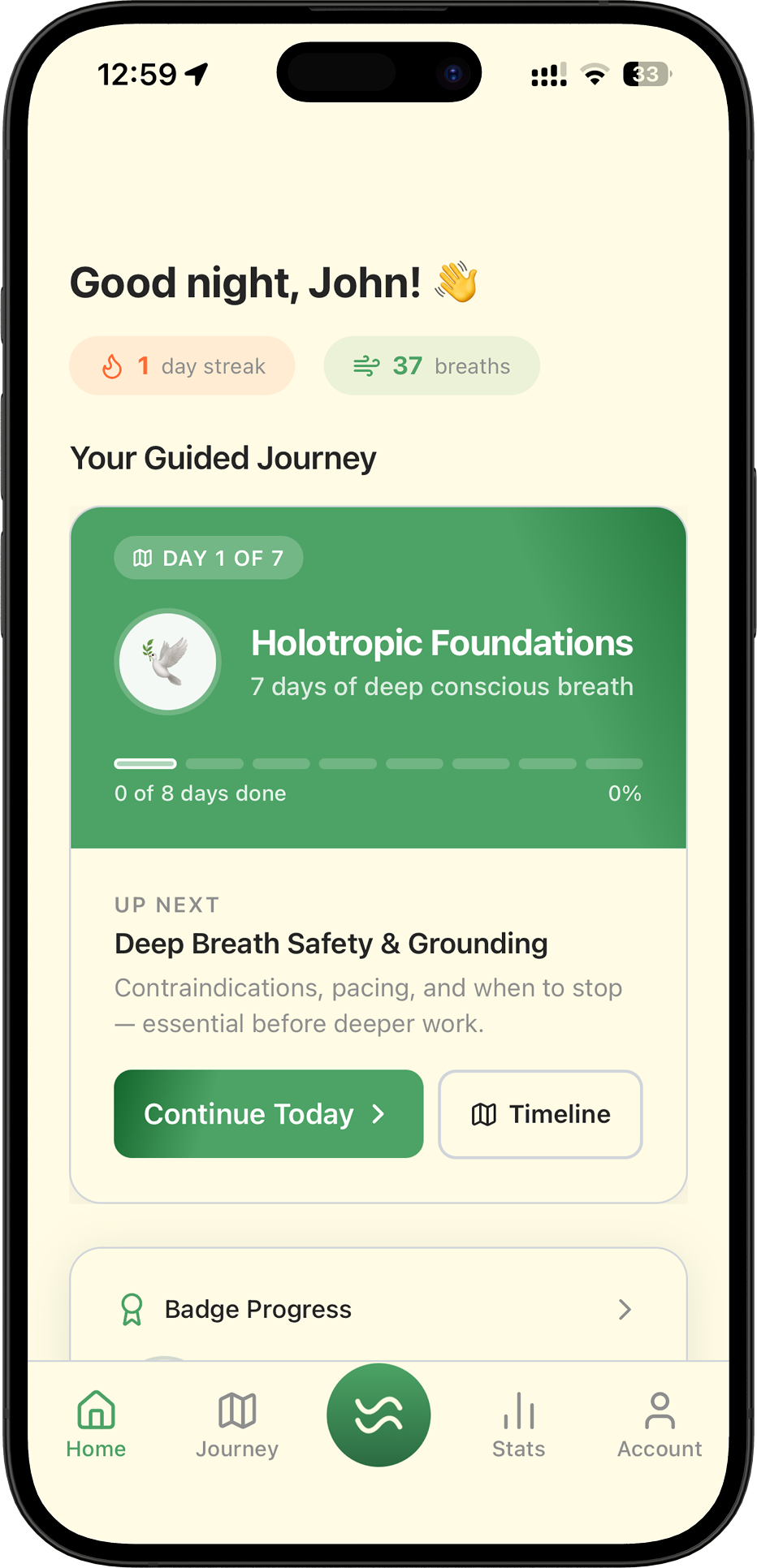
Practice coherent breathing with guided visual cues to reset your nervous system and recover from burnout
The Burnout Warning Signs:
- • Chronic exhaustion that doesn't improve with rest
- • Cynicism and detachment from work
- • Reduced professional efficacy and productivity
- • Physical symptoms: headaches, digestive issues, sleep problems
- • Emotional numbness or irritability
- • Difficulty concentrating and making decisions
- • Loss of motivation and sense of purpose
Key Insight:
Burnout is fundamentally a nervous system disorder. Your body's stress response system has been activated for so long that it can't turn off. The solution isn't just rest or vacation—it's a systematic nervous system reset. Coherent breathing provides exactly that: a scientifically validated method to restore autonomic balance and break the burnout cycle.
Understanding Your Nervous System: The Science Behind Burnout
To understand why coherent breathing works for burnout, you need to understand your autonomic nervous system (ANS). Your ANS has two main branches that work in opposition like a seesaw:
Sympathetic Nervous System (SNS)
Your "fight-or-flight" response. Activated during stress, it:
- • Increases heart rate and blood pressure
- • Releases cortisol and adrenaline
- • Diverts energy away from digestion and recovery
- • Sharpens focus for immediate threats
- • Prepares body for action
Useful for short-term challenges, destructive when chronically activated (burnout).
Parasympathetic Nervous System (PNS)
Your "rest-and-digest" response. Activated during recovery, it:
- • Slows heart rate and lowers blood pressure
- • Reduces stress hormone production
- • Enables digestion and cellular repair
- • Promotes emotional regulation
- • Supports immune function and healing
Essential for recovery, restoration, and burnout healing.
What Happens in Burnout: Autonomic Dysregulation
In a healthy nervous system, the SNS and PNS balance each other. You activate the SNS to meet challenges, then shift to PNS for recovery. But in chronic workplace stress, the seesaw gets stuck with SNS dominance:
- Week 1-4 of chronic stress: Your body produces more cortisol and adrenaline to keep up with demands. You feel wired, alert, anxious—but still functioning.
- Week 5-12: Your PNS struggles to activate. Sleep becomes poor, digestion suffers, irritability increases. You need caffeine to start the day and alcohol to wind down.
- Month 3+: Your stress response exhausts itself. Cortisol dysregulation leads to fatigue, brain fog, emotional numbness. This is burnout—your nervous system has lost its adaptive capacity.
The Heart Rate Variability (HRV) Connection:
HRV measures the variation in time between heartbeats—a key indicator of nervous system health. Higher HRV means your body can flexibly shift between sympathetic and parasympathetic states. Burnout tanks your HRV, indicating rigid, dysregulated nervous system function. Coherent breathing is the most effective non-pharmaceutical method to restore HRV, which is why it's so powerful for burnout recovery.
Coherent Breathing: The Nervous System Reset Technique
Coherent breathing is a specific breathwork technique where you breathe at a rate of 5-6 breaths per minute. For most people, this means breathing in for 5 seconds and out for 5 seconds (a 5-5 pattern). This pace is not arbitrary—it synchronizes with your body's natural cardiovascular and nervous system rhythms, creating a state called "resonance."
Why 5-6 Breaths Per Minute is Magical for Your Nervous System
Maximizes Heart Rate Variability
At 5-6 breaths per minute, your breathing synchronizes with your heart's natural rhythms, creating maximum oscillation between sympathetic and parasympathetic activation. This "resonance frequency" produces the highest HRV—a marker of nervous system flexibility and resilience.
Activates the Vagus Nerve
Slow breathing at this pace maximally stimulates the vagus nerve—the main highway of your parasympathetic nervous system. Enhanced vagal tone means better stress recovery, emotional regulation, and inflammatory control—all compromised in burnout.
Balances Blood Gases
This breathing rate optimally balances oxygen and carbon dioxide in your blood. CO2 isn't just waste—it regulates oxygen delivery to cells, blood pH, and nervous system excitability. Coherent breathing restores this balance, reducing anxiety and improving mental clarity.
Lowers Cortisol and Stress Hormones
Regular coherent breathing practice measurably reduces cortisol levels. A 2017 study found that participants who practiced coherent breathing for 20 minutes daily showed a 25% reduction in cortisol after 4 weeks—comparable to pharmaceutical interventions but without side effects.
Creates Sustainable Calm (Not Just Relaxation)
Unlike techniques aimed at immediate relaxation, coherent breathing builds long-term nervous system resilience. It's training your autonomic nervous system to be more flexible and adaptive—exactly what burnout has stolen from you.
Research Spotlight:
A 2021 meta-analysis published in the Journal of Psychophysiology reviewed 15 studies on coherent breathing and found consistent evidence that 10-20 minutes of daily practice significantly improves HRV, reduces anxiety and depression symptoms, and enhances stress resilience. The researchers concluded that coherent breathing should be considered a first-line intervention for stress-related disorders, including burnout.
How to Practice Coherent Breathing: Step-by-Step Guide
Coherent breathing is simple in concept but requires consistency to master. Here's your complete guide to practicing this nervous system reset technique:
The Basic Coherent Breathing Technique
- 1
Find Your Position
Sit comfortably with your back supported, or lie down if you prefer. You can practice at your desk, in a chair, or on the floor. The key is comfort—tension interferes with the practice. Keep your shoulders relaxed and your chest open but not rigid.
- 2
Set Your Timer
Start with 10 minutes. Set a gentle timer, or better yet, use a breathwork app with visual cues. Visual guides make it much easier to maintain the 5-5 rhythm without constantly watching a clock.
- 3
Breathe In for 5 Seconds
Inhale slowly and smoothly through your nose for 5 seconds. The breath should be gentle and natural—not forced or strained. Allow your belly to expand naturally as you inhale (diaphragmatic breathing). Count slowly: "one-thousand-one, one-thousand-two..." to maintain the pace.
- 4
Breathe Out for 5 Seconds
Exhale slowly and smoothly through your nose for 5 seconds. Let the breath flow out naturally—no forcing. Your belly should fall gently as you exhale. The transition from inhale to exhale should be smooth, with no pause.
- 5
Continue the Rhythm
Keep breathing in this 5-5 pattern. Don't pause between breaths—the transitions should be continuous and smooth. Your breath should feel like gentle waves: in... out... in... out. If your mind wanders (it will!), gently bring your attention back to the count and the sensation of breathing.
- 6
Practice Daily
For burnout recovery, practice 10-20 minutes once or twice daily. Consistency is far more important than duration. A daily 10-minute practice will transform your nervous system far more than occasional 30-minute sessions.
✓ DO These Things
- • Keep breathing smooth and effortless
- • Breathe through your nose (both inhale and exhale)
- • Use diaphragmatic (belly) breathing
- • Practice at the same time each day
- • Use visual guides from a breathwork app
- • Be patient—benefits build over weeks
- • Track your HRV if possible (many smartwatches measure this)
✗ DON'T Do These Things
- • Don't force or strain the breath
- • Don't breathe too deeply—it should feel natural
- • Don't hold your breath between inhale/exhale
- • Don't practice only when you're stressed (build the habit daily)
- • Don't expect instant transformation (this is nervous system training)
- • Don't practice while driving or operating machinery
Finding Your Personal Resonance Frequency:
While 5-5 (5 seconds in, 5 seconds out) works for most people, your personal resonance frequency might be slightly different. Some people find 4.5 seconds optimal, others 5.5 seconds. If you have an HRV tracking device, experiment with slightly different paces and see which produces the highest HRV reading. For most office workers without special equipment, the standard 5-5 pattern is ideal and effective.
Implementing Coherent Breathing in Your Office Workday
The beauty of coherent breathing is that you can practice it anywhere—including at your desk. Here are proven strategies for integrating this nervous system reset into your workday:
Strategy 1: Morning Foundation Session (10-20 minutes)
Best for: Building long-term resilience and starting the day with nervous system balance
Practice coherent breathing for 10-20 minutes first thing in the morning, before checking email or starting work. This "foundation session" sets your nervous system tone for the entire day. You'll enter work in parasympathetic dominance rather than immediately spiking into sympathetic stress.
Office workers who do this report feeling calmer, more focused, and less reactive to workplace stressors throughout the day.
Strategy 2: Mid-Morning & Mid-Afternoon Mini-Resets (5 minutes each)
Best for: Preventing stress accumulation during the workday
Schedule two 5-minute coherent breathing breaks: one mid-morning (around 10-11am) and one mid-afternoon (around 2-3pm). These "mini-resets" prevent sympathetic nervous system buildup. You can do this at your desk—simply close your eyes (or keep them gently focused on your screen with a breathwork app visual guide) and breathe.
Strategy 3: Pre-Meeting Preparation (2-3 minutes)
Best for: Entering high-stress situations (presentations, difficult conversations) from a grounded state
Practice 2-3 minutes of coherent breathing right before stressful meetings. This activates your parasympathetic nervous system, improving emotional regulation, cognitive clarity, and stress resilience. You'll perform better and feel less drained afterward.
Strategy 4: End-of-Workday Transition (10 minutes)
Best for: Separating work stress from personal time, preventing burnout spillover
Practice 10 minutes of coherent breathing at the end of your workday, ideally before leaving your workspace (or right after closing your laptop if you work from home). This creates a clear boundary, signaling to your nervous system that it's safe to shift into recovery mode. This prevents work stress from contaminating your evening and sleep.
Sample Office Worker Daily Coherent Breathing Schedule
Total daily practice: 35 minutes (broken into manageable sessions). This schedule provides systematic nervous system regulation throughout the day, preventing burnout progression and supporting recovery.
For Busy Office Workers: The Minimum Effective Dose
If you can't commit to the full schedule above, the minimum effective practice for burnout recovery is one 10-15 minute session daily, preferably in the morning. Even this minimal practice, done consistently for 4-6 weeks, will produce measurable improvements in HRV, stress resilience, and burnout symptoms. Start here and expand when you can.
Your 6-Week Coherent Breathing Burnout Recovery Plan
Coherent breathing is powerful, but burnout recovery requires consistency and patience. Here's a structured 6-week plan to restore your nervous system and recover from burnout:
Weeks 1-2: Foundation Building
Goal: Establish the habit and learn proper technique
- • Practice 10 minutes daily, same time each day (morning recommended)
- • Focus on maintaining the 5-5 rhythm smoothly
- • Use a breathwork app with visual cues for guidance
- • Don't expect dramatic changes yet—this is nervous system training, not quick fixes
- • Track your practice with a simple check-mark calendar
What to expect: Subtle improvements in sleep quality, slight reduction in reactivity. Your nervous system is beginning to remember what parasympathetic activation feels like.
Weeks 3-4: Deepening & Expanding
Goal: Increase practice duration and add strategic sessions
- • Increase morning session to 15 minutes
- • Add one 5-minute mid-day session at work
- • Start using coherent breathing proactively before stressful situations
- • If you have an HRV tracking device, start monitoring changes
- • Notice and journal about energy levels, mood, and stress reactivity
What to expect: More noticeable improvements. Better emotional regulation, clearer thinking during work, reduced anxiety. You may notice you're less exhausted at the end of the workday.
Weeks 5-6: Integration & Optimization
Goal: Make coherent breathing part of your lifestyle
- • Continue 15-minute morning session
- • Add 2-3 mini-sessions throughout your workday (5 minutes each)
- • Add 10-minute evening transition session
- • Experiment with slightly different breathing paces to find your optimal resonance frequency
- • Reflect on changes: energy, stress tolerance, cynicism, sense of effectiveness
What to expect: Significant improvements in burnout symptoms. Better stress resilience, more stable energy, reduced cynicism. Your nervous system has regained flexibility. You're still in recovery, but you've turned the corner.
After 6 Weeks: Maintenance & Prevention
After 6 weeks of consistent practice, your nervous system will have significantly improved its regulatory capacity. To maintain these gains and prevent future burnout:
- • Continue daily practice—even just 10 minutes maintains benefits
- • Use coherent breathing proactively during high-stress periods
- • Monitor your HRV as an early warning system for stress accumulation
- • Combine with other burnout prevention strategies: boundaries, workload management, social support
Success Metrics: How to Know It's Working
Track these markers of nervous system recovery:
- • Sleep: Falling asleep faster, fewer night wakings, feeling more rested
- • Energy: More stable energy throughout the day, less afternoon crash
- • Emotional regulation: Less irritability, reduced reactivity to stressors
- • Cognitive function: Better focus, clearer thinking, improved decision-making
- • Physical symptoms: Reduced tension headaches, better digestion, lower blood pressure
- • HRV: Measurable increase in heart rate variability (if tracking)
- • Engagement: Returning sense of purpose, reduced cynicism about work
The Research: Evidence for Coherent Breathing and Burnout
Coherent breathing isn't New Age mysticism—it's a scientifically validated intervention with robust research support. Here's the evidence base:
Lehrer et al. (2020) - HRV Biofeedback and Coherent Breathing
Journal: Applied Psychophysiology and Biofeedback
This comprehensive review examined 30+ studies on coherent breathing (resonance frequency breathing) and found consistent evidence that regular practice increases HRV, reduces anxiety and depression, improves emotional regulation, and enhances stress resilience. The researchers found effect sizes comparable to pharmaceutical interventions for anxiety disorders, with zero side effects.
Goessl et al. (2017) - Slow Breathing and Stress Reduction
Journal: Frontiers in Psychology
This meta-analysis of 15 randomized controlled trials found that slow breathing practices (including coherent breathing) significantly reduce stress, anxiety, and negative affect while improving positive affect. Notably, the benefits were dose-dependent: more practice time correlated with greater improvements. The researchers concluded that slow breathing should be considered a first-line intervention for stress-related conditions.
Steffen et al. (2017) - Coherent Breathing and Burnout in Healthcare Workers
Journal: Global Advances in Health and Medicine
This study specifically examined coherent breathing as an intervention for burnout in healthcare professionals—a population with extremely high burnout rates. Participants practiced coherent breathing for 15 minutes twice daily for 6 weeks. Results showed significant reductions in emotional exhaustion, improvements in personal accomplishment, and measurable increases in HRV. Importantly, the benefits persisted at 3-month follow-up, suggesting lasting nervous system changes.
Russo et al. (2017) - The Vagus Nerve and Resilience
Journal: Frontiers in Neuroscience
This review article explained the neuroscience of why slow breathing works for stress and burnout. The researchers detailed how slow breathing at 5-6 breaths per minute optimally stimulates the vagus nerve, increasing vagal tone. Higher vagal tone is associated with better stress recovery, emotional regulation, immune function, and inflammatory control—all critical for burnout recovery. The paper called slow breathing "one of the most accessible and effective methods to enhance vagal function."
Prinsloo et al. (2013) - HRV Biofeedback in Corporate Settings
Journal: Applied Psychophysiology and Biofeedback
This study examined coherent breathing (using HRV biofeedback devices) in corporate employees experiencing high stress. Participants practiced 20 minutes daily for 6 weeks. Results showed significant improvements in perceived stress, anxiety, depression, and work performance. Importantly, the intervention was well-tolerated and easily integrated into workday routines—demonstrating real-world feasibility for office workers.
The Scientific Consensus:
Across multiple studies, populations, and research groups, the evidence is consistent: coherent breathing at 5-6 breaths per minute is a highly effective, low-risk intervention for stress, anxiety, autonomic dysregulation, and burnout. The mechanism is clear (vagal stimulation and HRV enhancement), the benefits are measurable (both subjectively and physiologically), and the practice is accessible to anyone. For office workers experiencing burnout, coherent breathing represents one of the most evidence-based self-care interventions available.

Practice Coherent Breathing with Guided Support
Breathworkk provides guided coherent breathing sessions with beautiful visual cues that help you maintain the perfect 5-5 rhythm. Designed specifically for office workers and professionals seeking burnout recovery and nervous system reset.
Visual Breathing Guides
Follow smooth, expanding and contracting visual cues that maintain the perfect 5-6 breath per minute pace. No need to count or watch a clock—just breathe with the guide.
Flexible Session Lengths
Choose 5, 10, 15, or 20-minute coherent breathing sessions to fit your schedule. Perfect for morning foundations, mid-day mini-resets, or evening transitions.

Frequently Asked Questions
What is coherent breathing and how does it help with burnout?
Coherent breathing is a technique where you breathe at a rate of 5-6 breaths per minute (typically 5 seconds in, 5 seconds out). This pace synchronizes with your body's natural resonance frequency, maximizing heart rate variability (HRV) and activating the parasympathetic nervous system. For burnout, this provides a powerful nervous system reset by shifting you from sympathetic overdrive (stress response) to parasympathetic dominance (rest and restoration). Research shows 10 minutes of daily coherent breathing can significantly reduce burnout symptoms within 2-4 weeks.
How long does it take for coherent breathing to reduce burnout symptoms?
Most office workers notice immediate calming effects within 5-10 minutes of coherent breathing practice. However, for sustained burnout recovery, consistency is key. Studies show that practicing coherent breathing for 10-20 minutes daily can produce measurable reductions in burnout symptoms, stress hormones, and improvements in energy levels within 2-4 weeks. The cumulative effect builds over time, with continued practice providing deeper nervous system regulation and resilience.
Can I practice coherent breathing at my desk during work?
Yes, coherent breathing is perfect for office environments. The technique is subtle enough to practice at your desk without drawing attention. You can practice during breaks, before important meetings, or whenever you feel stress building. Many office workers find it helpful to schedule 2-3 mini-sessions throughout the workday (5-10 minutes each) to maintain nervous system balance and prevent burnout progression. Using a breathwork app with silent visual cues makes desk practice even easier.
What is a nervous system reset and why do office workers need it?
A nervous system reset is the process of shifting from chronic sympathetic activation (fight-or-flight) to parasympathetic dominance (rest-and-digest). Office workers often get stuck in sympathetic overdrive due to constant deadlines, emails, meetings, and pressure—leading to burnout. Coherent breathing provides a physiological reset by activating the vagus nerve, increasing heart rate variability, lowering cortisol, and restoring autonomic balance. This reset allows your body to recover, rebuild energy reserves, and break the burnout cycle.
What is the difference between coherent breathing and other breathing techniques for stress?
Coherent breathing is specifically designed to maximize heart rate variability (HRV) by breathing at your body's natural resonance frequency (5-6 breaths per minute). Unlike techniques focused on immediate relaxation (like 4-7-8 breathing) or alertness (like breath of fire), coherent breathing targets long-term nervous system regulation and resilience building. This makes it ideal for burnout recovery, as it addresses the underlying autonomic dysregulation that causes chronic stress and exhaustion. It's a foundational practice for sustained wellness rather than just acute symptom relief.
How does coherent breathing increase heart rate variability (HRV)?
Coherent breathing at 5-6 breaths per minute synchronizes your breathing with your body's natural cardiovascular rhythms, creating what's called "resonance." This synchronization maximizes the oscillation between sympathetic and parasympathetic nervous system activity, which is reflected in higher heart rate variability. Higher HRV indicates better stress resilience, emotional regulation, and overall autonomic health. For burned-out office workers, improving HRV through coherent breathing helps restore the nervous system's flexibility and adaptive capacity.
Can coherent breathing replace therapy or medical treatment for burnout?
No, coherent breathing is a powerful self-care tool but not a replacement for professional help. Burnout is a serious condition that may require comprehensive treatment including therapy, medical evaluation, workplace changes, and lifestyle modifications. Coherent breathing works best as part of a holistic burnout recovery plan. If you're experiencing severe burnout symptoms like depression, chronic fatigue, or physical illness, consult with a healthcare professional. Breathwork complements—but doesn't replace—professional care.
Should I breathe through my nose or mouth for coherent breathing?
Breathe through your nose for both inhale and exhale in coherent breathing. Nasal breathing activates the parasympathetic nervous system more effectively, filters and humidifies air, and optimizes gas exchange. If you have nasal congestion, you can mouth breathe temporarily, but work toward nasal breathing for optimal benefits. If chronic nasal congestion is an issue, consult an ENT specialist—nasal breathing is crucial for autonomic nervous system health.
What if I can't maintain the 5-5 breathing pace?
If 5-5 feels uncomfortable at first, start with whatever pace feels natural and gradually work toward 5-5 over several days or weeks. Some people find 4-6 (inhale 4, exhale 6) easier initially. The key is breathing slowly and smoothly without strain. As you practice, your respiratory capacity will improve and the 5-5 pace will become more comfortable. Using a breathwork app with visual cues helps train your nervous system to this rhythm more easily.
How is coherent breathing different from meditation?
Coherent breathing is a specific physiological intervention targeting nervous system regulation through a precise breathing pace. Meditation is a broader practice focused on mental training and awareness. While both reduce stress, coherent breathing has measurable, immediate physiological effects (increased HRV, vagal activation) that occur whether you're mentally focused or distracted. This makes it ideal for burned-out office workers who struggle with traditional meditation. Many people combine coherent breathing with meditation for synergistic benefits. Learn more about the differences: Breathwork vs Meditation.
Can coherent breathing help prevent burnout, or only treat existing burnout?
Both! Coherent breathing is effective for burnout recovery and prevention. For those already experiencing burnout, it provides nervous system repair and symptom reduction. For those at risk of burnout, regular practice builds stress resilience and prevents autonomic dysregulation. Think of it like exercise for your nervous system—it both rehabilitates injury and prevents future injury. Office workers should consider coherent breathing a foundational wellness practice, not just a crisis intervention.
Explore More Breathwork & Workplace Wellness Resources
Breathwork App for Business Professionals
Discover how breathwork helps busy professionals manage stress and enhance performance.
Breathing Exercises for Anxiety
Learn multiple breathing techniques to manage anxiety and stress in the workplace.
From Anxiety to Clarity
Transform workplace anxiety into mental clarity with breathwork techniques.
Breathwork for Focus
Enhance concentration and cognitive performance with targeted breathing exercises.
Science of Breathwork
Dive deep into the research and neuroscience behind breathwork's effectiveness.
Breathwork for High-Pressure Decisions
Learn how founders and executives use breathwork for better decision-making under pressure.
Morning Breathwork Routines
Start your workday right with energizing and balancing morning breathwork practices.
Breathwork for Sleep
Combat burnout-related insomnia with breathwork techniques for better sleep.