Burnout Recovery
Breathing App for Burnout Recovery
Recover from burnout with gentle breathing exercises delivered through a calming app. Learn how breathwork apps support nervous system recovery and provide accessible tools for healing from chronic stress and exhaustion.
Why breathing apps are ideal for burnout recovery
When you're experiencing burnout, your nervous system is exhausted and dysregulated. The last thing you need is another complicated intervention. Breathing apps provide exactly what burnout recovery requires: gentle, accessible, on-demand support that doesn't add to your cognitive load.
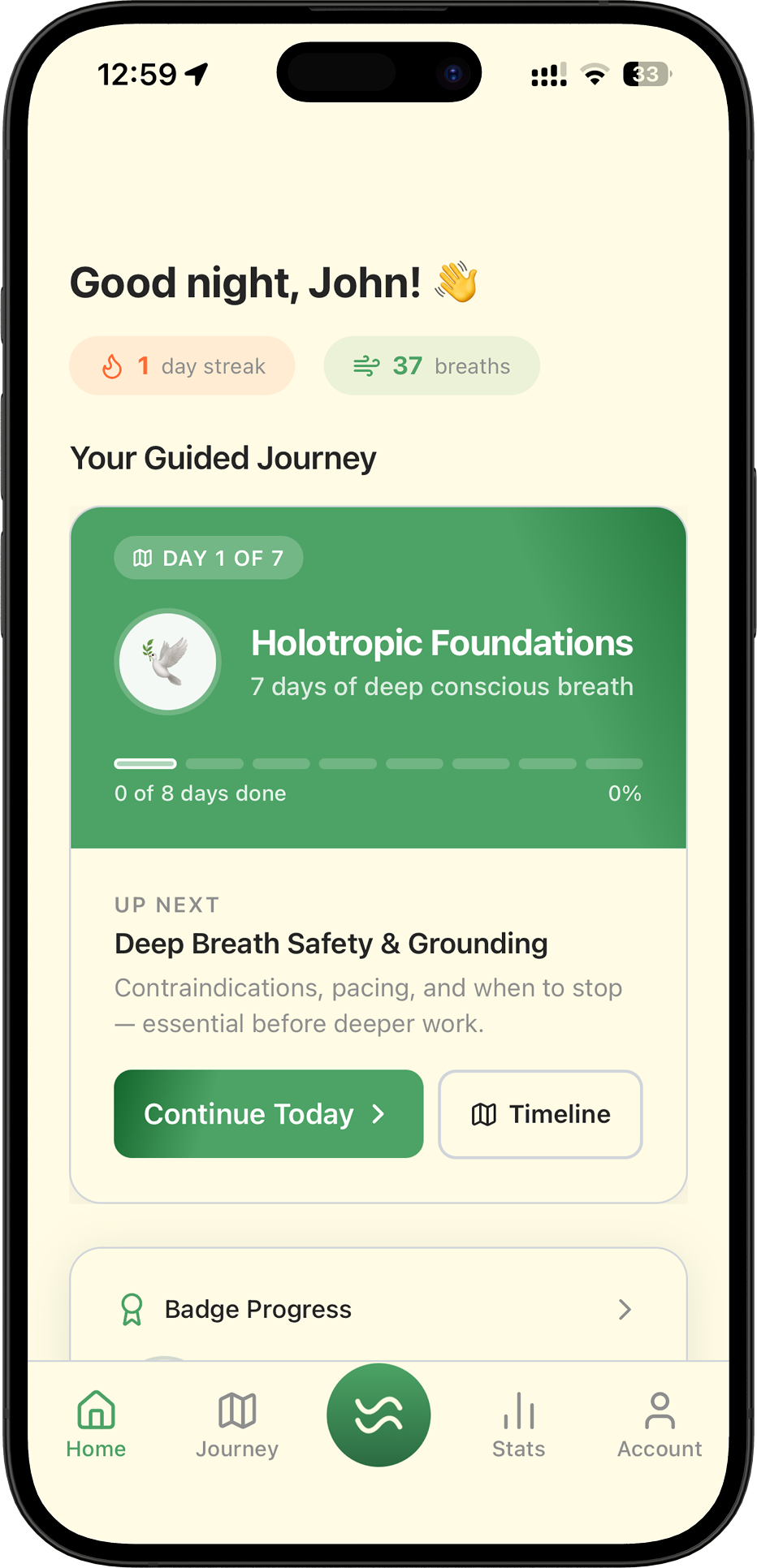
Gentle, guided breathing exercises designed for burnout recovery
Accessibility when you need it
Burnout doesn't follow a schedule. A breathing app is always available—on your phone, tablet, or computer—whenever you need a moment of calm. No need to schedule appointments or travel anywhere.
Guided support without pressure
Visual breathing guides take the mental effort out of practice. You don't need to count, remember techniques, or think—just follow the gentle visual cues and let your nervous system reset.
Consistent practice made easy
Burnout recovery requires consistency, but consistency is hard when you're exhausted. Apps make it easier to build the daily habit with reminders, progress tracking, and flexible session lengths.
Gentle, non-stimulating design
Good breathing apps for burnout use calming colors, smooth animations, and quiet interfaces. They don't overwhelm your already taxed nervous system with bright colors, loud sounds, or complex features.
The science behind app-based breathwork:
Research shows that guided breathing exercises, especially when delivered through apps with visual cues, are highly effective for stress reduction and nervous system regulation. The combination of structured practice, visual guidance, and accessibility makes breathing apps particularly valuable for burnout recovery, where energy and motivation are limited.
Gentle breathing exercises for burnout recovery
When recovering from burnout, you need breathing exercises that calm and restore—not energize or overstimulate. These gentle techniques are ideal for nervous system recovery:
Coherent Breathing (5-6 breaths per minute)
This is the gold standard for burnout recovery. Breathing at 5-6 breaths per minute (typically 5 seconds in, 5 seconds out) maximizes heart rate variability and activates the parasympathetic nervous system. It's gentle, sustainable, and specifically targets nervous system regulation—exactly what burnout recovery requires.
Best for: Daily foundation practice, nervous system reset, long-term recovery
Box Breathing (4-4-4-4)
Simple, even-paced breathing that creates a sense of stability and calm. The equal counts (inhale 4, hold 4, exhale 4, hold 4) are easy to follow and don't require much mental effort—perfect when your cognitive resources are depleted from burnout.
Best for: Quick resets during the day, when feeling overwhelmed
Extended Exhale Breathing (4 in, 6-8 out)
Making the exhale longer than the inhale strongly activates the parasympathetic nervous system. This gentle technique is particularly effective for reducing anxiety and promoting relaxation without requiring complex counting.
Best for: Evening practice, reducing anxiety, promoting sleep
Diaphragmatic Breathing
Slow, deep belly breathing that engages the diaphragm fully. This natural breathing pattern supports the body's relaxation response and is gentle enough for even the most exhausted nervous systems.
Best for: Beginners, when feeling physically tense, general relaxation
What to avoid during burnout recovery:
Avoid energizing breathing techniques like breath of fire, rapid breathing, or breath holds that might overstimulate your nervous system. Focus on slow, gentle, calming exercises that support recovery rather than performance.
Essential features in a breathing app for burnout
Not all breathing apps are created equal for burnout recovery. Here are the features that matter most when you're recovering from chronic stress and exhaustion:
Visual Breathing Guides
Smooth, expanding and contracting visual cues that guide your breathing rhythm. This removes the mental effort of counting or remembering patterns—crucial when cognitive resources are depleted. The visuals should be calming and non-stimulating.
Flexible Session Lengths
Options for 5, 10, 15, and 20-minute sessions allow you to practice according to your energy levels. On exhausted days, a 5-minute session is better than skipping practice. On better days, longer sessions support deeper recovery.
Calming Interface Design
Soft colors, gentle animations, and quiet sounds (or silence) create a non-stimulating environment. Avoid apps with bright colors, loud notifications, or complex interfaces that add cognitive load.
Coherent Breathing Option
The app should offer coherent breathing at 5-6 breaths per minute, as this is the most research-backed technique for nervous system regulation and burnout recovery.
Progress Tracking (Optional)
Simple tracking that shows your consistency without creating pressure. Some people find this motivating; others find it stressful. The best apps let you opt in or out of tracking features.
Offline Access
Being able to practice without internet connection ensures you can access support whenever you need it, regardless of your location or connectivity.
Using a breathing app in your burnout recovery plan
A breathing app is most effective when integrated into a comprehensive burnout recovery plan. Here's how to use it strategically:
Week 1-2: Establishing the Habit
- • Start with one 10-minute session daily, same time each day (morning recommended)
- • Use coherent breathing or box breathing—gentle, easy to follow
- • Don't worry about perfect technique; consistency matters more
- • Set a gentle reminder in the app or your phone
- • Track your practice with simple checkmarks if it helps (but don't stress if you miss a day)
Week 3-4: Building Consistency
- • Continue daily 10-15 minute morning session
- • Add one 5-minute session during the day when you feel stress building
- • Notice subtle changes: slightly better sleep, less reactivity, more stable energy
- • Be patient—nervous system recovery takes time
Week 5-6: Deepening Practice
- • Extend morning session to 15-20 minutes if energy allows
- • Add evening session (10 minutes) to support sleep and recovery
- • Use the app proactively before stressful situations
- • Combine with other recovery strategies: rest, boundaries, professional support
Remember:
A breathing app is a tool, not a cure. Burnout recovery requires comprehensive support: adequate rest, professional help if needed, workplace boundaries, and lifestyle changes. The app supports your recovery but doesn't replace addressing the root causes of burnout.
Getting started with a breathing app for burnout
Starting a new practice when you're already exhausted can feel overwhelming. Here's a simple approach:
Day 1: Just Try It
Download the app and try one 5-minute session. Don't worry about doing it "right"—just follow the visual guide and breathe. That's it. No pressure, no expectations.
Week 1: Build the Habit
Practice 5-10 minutes daily at the same time. Morning works well because it sets your nervous system tone for the day. Use a gentle reminder if helpful, but don't beat yourself up if you miss a day.
Beyond Week 1: Adjust as Needed
As you recover, you may find you want longer sessions or multiple sessions per day. Or you might need shorter sessions on difficult days. Both are fine. The app should adapt to you, not the other way around.
Pro tip:
If you're too exhausted to practice, that's information. Burnout recovery sometimes means doing less, not more. A breathing app should support you, not add to your stress. On days when even 5 minutes feels too much, rest. The app will be there when you're ready.

Gentle breathing support for burnout recovery
Breathworkk provides calming, guided breathing exercises designed specifically for nervous system recovery. With gentle visual cues, flexible session lengths, and a calming interface, it's built to support your burnout recovery journey without adding stress.

FAQs
How can a breathing app help with burnout recovery?
A breathing app provides gentle, guided breathing exercises that activate the parasympathetic nervous system, helping to reset your stress response system. For burnout recovery, these apps offer accessible, on-demand tools to practice coherent breathing, box breathing, and other techniques that reduce cortisol, improve heart rate variability, and support nervous system recovery. The guided nature makes it easier to practice consistently, which is essential for burnout healing.
What makes a breathing app good for burnout recovery?
A good breathing app for burnout recovery should offer gentle, calming exercises (like coherent breathing at 5-6 breaths per minute), visual guides to maintain proper rhythm, flexible session lengths (5-20 minutes), and a calming, non-stimulating interface. It should focus on nervous system regulation rather than energizing techniques, and provide options for both quick resets and longer recovery sessions.
How often should I use a breathing app for burnout recovery?
For burnout recovery, consistency is key. Aim for at least one 10-15 minute session daily, ideally in the morning to set your nervous system tone for the day. You can also add shorter 5-minute sessions throughout the day for stress management. Many people find that practicing 2-3 times daily (morning, midday, evening) provides the best results for burnout recovery.
Can a breathing app replace therapy or medical treatment for burnout?
No, a breathing app is a valuable self-care tool but not a replacement for professional help. Burnout is a serious condition that may require therapy, medical evaluation, workplace changes, and lifestyle modifications. Breathing apps work best as part of a comprehensive burnout recovery plan that includes professional support, rest, boundaries, and other interventions.
What if I'm too exhausted to use the app?
If you're too exhausted to practice, that's important information. Burnout recovery sometimes means doing less, not more. Rest is essential. On days when even a 5-minute session feels too much, prioritize rest. The app will be there when you're ready. Recovery isn't linear, and forcing practice when you need rest can be counterproductive.
Which breathing technique should I start with?
Start with coherent breathing (5-6 breaths per minute) or box breathing (4-4-4-4). Both are gentle, easy to follow with visual guides, and specifically support nervous system regulation. Avoid energizing techniques. As you recover, you can explore other gentle techniques, but start simple.
How long until I see results?
Most people notice subtle improvements in sleep and stress reactivity within 1-2 weeks of consistent practice. More significant changes in energy, emotional regulation, and burnout symptoms typically emerge after 4-6 weeks of daily practice. Remember, burnout recovery is a process, not an event. Be patient and consistent.
Related resources
Coherent Breathing for Burnout
Deep dive into how coherent breathing resets your nervous system and combats workplace burnout.
Breathwork App for Business Professionals
Learn how professionals use breathwork apps to manage workplace stress.
Breathing Exercises for Anxiety
Gentle techniques to reduce anxiety that often accompanies burnout.
Breathwork for Sleep
Improve sleep quality, which is essential for burnout recovery.
From Anxiety to Clarity
Transform stress and overwhelm into mental clarity with breathwork.
Guided Breathwork App
Explore the benefits of guided breathing apps for stress management.