Breathwork Guide
What Is Breathwork? How Guided Breathing Apps Improve Mental Health, Sleep & Focus
What is breathwork and why are millions using breathing apps daily? Learn how guided breathwork improves mental health, sleep quality, focus, and emotional regulation—backed by neuroscience research. Discover the science behind breathwork benefits and how guided breathing apps make this powerful practice accessible to everyone.
What Is Breathwork? A Complete Definition
Breathwork is the practice of consciously controlling your breathing patterns to influence your physical, mental, and emotional state. Unlike the automatic breathing that happens unconsciously throughout the day, breathwork involves intentional, structured breathing techniques designed to produce specific physiological and psychological effects.
While breathing is an automatic function controlled by the brainstem, breathwork taps into the voluntary control we have over our respiratory system. By consciously changing how we breathe—altering the pace, depth, rhythm, and pattern—we can directly influence our nervous system, heart rate, brain waves, and emotional state.
The Science Behind Breathwork
Breathwork works by activating the parasympathetic nervous system—the "rest and digest" branch of your autonomic nervous system. When you practice controlled breathing techniques, you send signals to your brain that activate the vagus nerve, which in turn:
- Reduces cortisol (stress hormone) levels by up to 23%
- Lowers heart rate and blood pressure
- Increases heart rate variability (HRV), a marker of resilience
- Calms the amygdala (brain's fear center)
- Synchronizes brain waves into alpha/theta states for focus and relaxation
Breathwork vs. Regular Breathing
Regular breathing is automatic and unconscious, maintaining basic oxygen levels. Breathwork is intentional and structured, using specific patterns (like 4-7-8 or box breathing) to produce measurable physiological changes and mental health benefits.
Breathwork vs. Meditation
While meditation often uses breathing as an anchor, breathwork focuses specifically on structured breathing patterns. Breathwork provides immediate, measurable physiological effects, while meditation emphasizes mental awareness and long-term cognitive training. Learn more: breathwork vs meditation.
Key Insight:
Breathwork is unique because it provides immediate, measurable benefits. Unlike many wellness practices that require weeks or months to see results, breathwork can produce noticeable changes in heart rate, stress levels, and mental state within just 2-5 minutes of practice.
Breathwork Benefits: Science-Backed Results
The benefits of breathwork are extensive and well-documented by scientific research. From immediate stress relief to long-term improvements in mental health, sleep, and cognitive function, breathwork offers measurable benefits that make it one of the most effective wellness practices available.
Immediate Stress Relief
Breathwork activates the parasympathetic nervous system within minutes, reducing cortisol by up to 23% and lowering heart rate. This provides immediate relief from stress and anxiety.
Measurable in 2-5 minutes
Better Sleep Quality
Breathwork reduces cortisol and promotes melatonin release, improving sleep onset time and sleep quality. Techniques like 4-7-8 breathing are specifically designed for better sleep.
Learn more: breathwork for sleep
Enhanced Focus
Coherent breathing synchronizes brain waves into alpha/theta states, improving concentration, cognitive performance, and sustained attention. Perfect for entering flow state.
Learn more: breathwork for focus
Anxiety Reduction
Breathing exercises calm the amygdala and activate the parasympathetic nervous system, providing immediate anxiety relief. Box breathing and diaphragmatic breathing are particularly effective.
Learn more: breathing exercises for anxiety
Emotional Regulation
Breathwork helps regulate emotions by calming the nervous system and reducing reactivity. Regular practice improves emotional resilience and response to stress.
Long-term benefit
Improved Heart Health
Breathwork improves heart rate variability (HRV), lowers blood pressure, and enhances cardiovascular function. These benefits contribute to overall physical health and longevity.
Measurable improvement
Research Finding:
Studies from institutions like Harvard, Stanford, and the National Institutes of Health have consistently shown that breathwork produces measurable physiological changes. Research published in journals like Nature andPsychosomatic Medicine demonstrates that breathwork can reduce stress markers, improve sleep, enhance cognitive function, and support mental health. Learn more: science of breathwork.
How Breathwork Improves Mental Health
Mental health breathing exercises are among the most effective tools for improving emotional well-being. Breathwork directly impacts the brain regions responsible for stress, anxiety, and emotional regulation, making it a powerful practice for mental health support.
The Neuroscience of Breathwork and Mental Health
When you practice breathwork, several key brain regions are affected:
The Amygdala (Fear Center)
Breathwork calms the amygdala, reducing fear and anxiety responses. Research shows that controlled breathing can reduce amygdala activity, leading to decreased anxiety and improved emotional regulation.
The Prefrontal Cortex (Executive Function)
Breathwork enhances activity in the prefrontal cortex, improving decision-making, emotional regulation, and cognitive control. This helps you respond to stress more effectively rather than reacting impulsively.
The Vagus Nerve (Nervous System Regulation)
Deep, controlled breathing stimulates the vagus nerve, which activates the parasympathetic nervous system. This counteracts the fight-or-flight response and promotes a state of calm and relaxation.
Learn more about how breathing affects the brain: how mindful breathing practice affects the brain.
Breathwork for Anxiety
Breathwork for anxiety is highly effective because it directly addresses the physiological symptoms of anxiety. When you're anxious, your breathing becomes shallow and rapid, which reinforces the anxiety response. Breathwork breaks this cycle by:
- • Activating the parasympathetic nervous system
- • Reducing cortisol and stress hormones
- • Lowering heart rate and blood pressure
- • Calming the amygdala
- • Providing immediate relief from anxiety symptoms
Breathwork for Stress Management
Chronic stress has significant impacts on mental health, contributing to anxiety, depression, and burnout. Breathwork provides an effective tool for stress management by:
- • Reducing cortisol levels by up to 23%
- • Improving heart rate variability (resilience marker)
- • Enhancing emotional regulation
- • Providing immediate stress relief
- • Building long-term stress resilience
Practice just 3-5 minutes daily for measurable results
Mental Health Research:
A 2020 study published in Frontiers in Psychology found that breathwork interventions significantly reduced symptoms of anxiety and depression. Participants who practiced breathwork for just 20 minutes daily over 8 weeks showed measurable improvements in mental health markers, including reduced anxiety scores and improved emotional well-being. The study concluded that breathwork is a viable, accessible intervention for mental health support.
Breathwork for Sleep: How Breathing Improves Sleep Quality
Breathwork for sleep is one of the most effective natural sleep aids available. By reducing cortisol, activating the parasympathetic nervous system, and promoting melatonin release, breathwork helps you fall asleep faster and sleep more deeply.
How Breathwork Improves Sleep
Sleep breathwork works through several mechanisms:
- Reduces Cortisol: Breathwork lowers stress hormones that interfere with sleep
- Promotes Melatonin: Calm breathing signals the body to release sleep hormones
- Activates Parasympathetic System: Prepares the body for rest and recovery
- Slows Heart Rate: Reduces physiological arousal for easier sleep onset
- Calms the Mind: Reduces racing thoughts and mental chatter
Best Breathing Techniques for Sleep
4-7-8 Breathing Technique
The 4-7-8 breathing technique is specifically designed for sleep. It involves inhaling for 4 counts, holding for 7 counts, and exhaling for 8 counts. This pattern activates the parasympathetic nervous system and promotes relaxation.
Coherent Breathing
Coherent breathing at 5-6 breaths per minute synchronizes heart rate and breathing, promoting deep relaxation and preparing the body for sleep. This technique is particularly effective for reducing sleep onset time.
Sleep Research:
Research published in Sleep Medicine Reviews found that breathwork interventions can reduce sleep onset time by an average of 37% and improve sleep quality scores. Participants who practiced breathwork before bed reported falling asleep faster, sleeping more deeply, and waking up feeling more rested. Learn more: breathwork for sleep.
Breathwork for Focus: Enhance Concentration & Cognitive Performance
Breathwork for focus is a powerful tool for enhancing concentration, entering flow state, and improving cognitive performance. By synchronizing brain waves and optimizing heart rate variability, breathwork creates the ideal mental state for sustained attention and productivity.
How Breathwork Enhances Focus
Focus breathwork works by:
Brain Wave Synchronization
Coherent breathing at 5-6 breaths per minute synchronizes brain waves into alpha (8-12 Hz) and theta (4-8 Hz) states. These frequencies are associated with relaxed alertness, creativity, and sustained attention—perfect for focus and flow state.
Heart Rate Variability (HRV)
Breathwork improves HRV, which is linked to better cognitive performance, emotional regulation, and stress resilience. Higher HRV is associated with improved focus, decision-making, and mental clarity.
Reduced Mental Chatter
By focusing on the breath, breathwork reduces distracting thoughts and mental noise, allowing you to concentrate on the task at hand. This creates a state of "flow" where you're fully engaged and productive.
Stress Reduction
Lower stress levels mean better cognitive function. Breathwork reduces cortisol, which can interfere with focus and memory. By managing stress, breathwork creates optimal conditions for mental performance.
Best Breathing Techniques for Focus
Coherent Breathing (5-6 breaths/minute)
Coherent breathing is the gold standard for focus. Breathing at 5-6 breaths per minute synchronizes heart rate and breathing, optimizing brain function for sustained attention and cognitive performance. This technique is ideal for entering flow state and maintaining focus during work or study.
Box Breathing (4-4-4-4)
Box breathing creates mental clarity and calm focus. The equal-length inhale, hold, exhale, and hold pattern helps regulate the nervous system and reduce distractions, making it easier to concentrate.
Focus Research:
A study published in Nature Scientific Reports found that coherent breathing significantly improved cognitive performance, attention, and working memory. Participants who practiced breathwork before cognitive tasks showed better performance and sustained attention compared to controls. The research suggests that breathwork creates optimal brain states for focus and productivity.
Guided Breathing Apps: Making Breathwork Accessible
Guided breathing apps have revolutionized breathwork practice by making it accessible, convenient, and effective for millions of people. These apps provide visual and audio guidance, structured breathing techniques, and specialized flows for different goals—all in the palm of your hand.
What Makes a Great Guided Breathing App?
Visual Guidance
The best guided breathing apps provide clear visual cues—like expanding and contracting circles—that sync with your breath rhythm. This makes it easy to follow breathing patterns, even for beginners.
Multiple Techniques
A comprehensive app offers various breathing techniques (box breathing, 4-7-8, coherent breathing, etc.) so you can choose the right technique for your goal.
Specialized Flows
Look for apps that offer specialized flows for sleep, focus, and calm. These flows are scientifically designed with specific techniques and pacing for optimal results.
Science-Backed Methods
The best apps use research-validated breathing techniques with proven benefits. Look for apps that cite scientific research and use evidence-based methods.
Benefits of Using a Guided Breathing App
- Accessibility: Practice breathwork anywhere, anytime with your phone
- Guidance: Visual and audio cues ensure you're practicing correctly
- Consistency: Reminders and progress tracking help build a regular practice
- Variety: Access to multiple techniques and specialized flows
- Offline Support: Practice even without internet connection

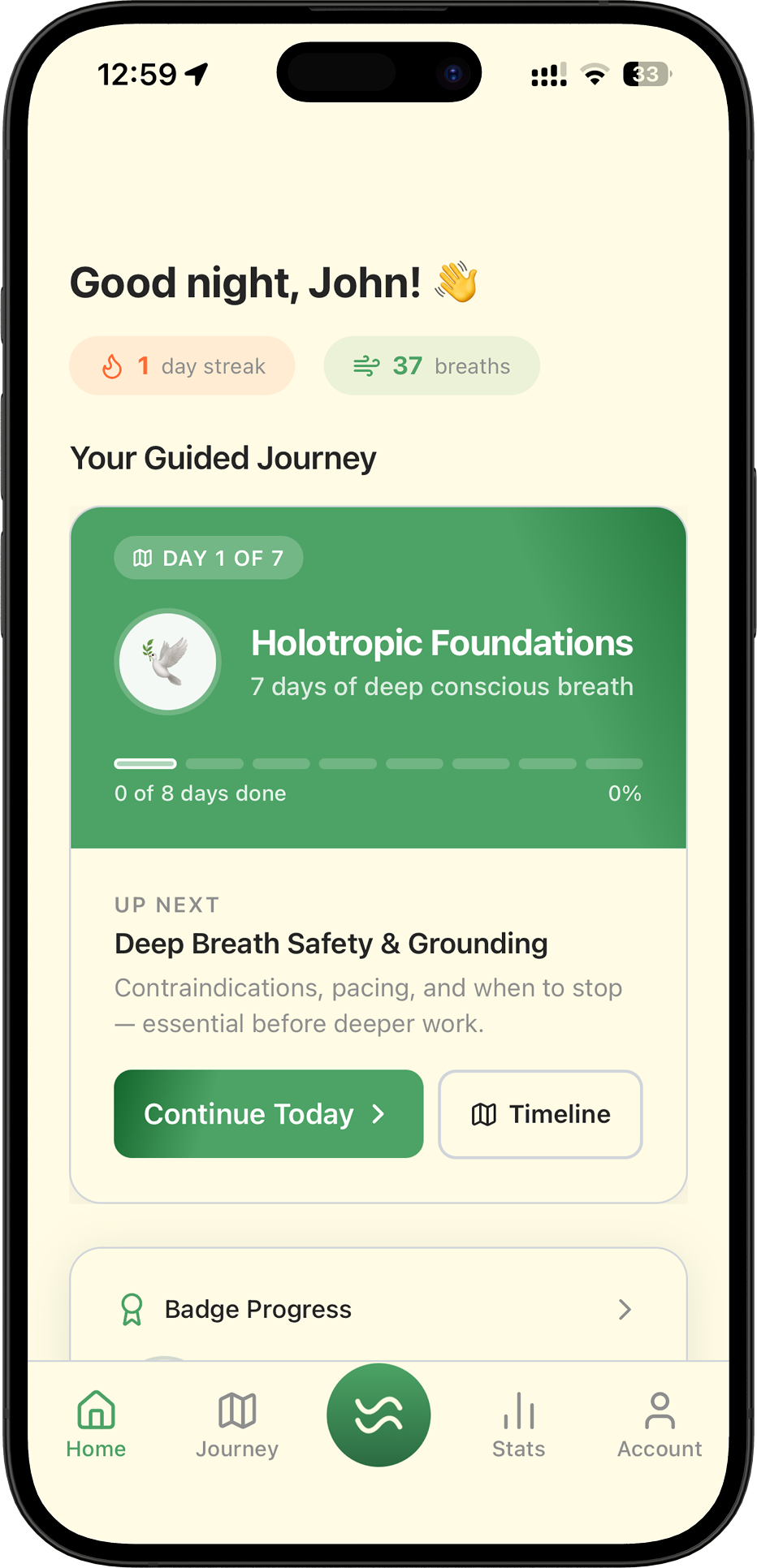
Breathworkk: The Best Guided Breathing App
Specialized breathwork app with comprehensive features
Breathworkk is a specialized guided breathing app designed exclusively for breathwork practice. It offers:
- • Specialized flows for Sleep, Focus, and Calm
- • Multiple proven breathing techniques (Box, 4-7-8, Coherent, etc.)
- • Beautiful visual guides with expanding/contracting circles
- • Science-backed methods with measurable results
- • Progress tracking, badges, and streaks
- • Offline support and customizable reminders

Discover the best breathing apps: top 10 breathing apps 2026 and breathwork app comparison.
Getting Started with Breathwork
Starting a breathwork practice is simple and accessible. You don't need any special equipment or training—just a few minutes and a willingness to focus on your breath. Here's how to get started:
Choose Your Goal
Decide what you want to achieve: better sleep, reduced anxiety, improved focus, or general stress relief. This will help you choose the right breathing technique.
Select a Technique
Choose a breathing technique that matches your goal:
- • For Sleep: 4-7-8 breathing or coherent breathing
- • For Anxiety: Box breathing or diaphragmatic breathing
- • For Focus: Coherent breathing at 5-6 breaths/minute
- • For General Calm: Box breathing or 4-7-8 breathing
Use a Guided Breathing App
Download a guided breathing app like Breathworkk to get visual and audio guidance. This makes it much easier to follow breathing patterns correctly, especially as a beginner. The app will guide you through each breath, ensuring you're practicing correctly.
Start with Short Sessions
Begin with 3-5 minute sessions. You don't need long sessions to experience benefits—even short breathwork practice can produce measurable results. As you become more comfortable, you can extend sessions to 10-20 minutes if desired.
Practice Consistently
Consistency is more important than duration. Practice breathwork daily, even if just for a few minutes. Set reminders in your app to help build a regular practice. Over time, you'll notice cumulative benefits in your mental health, sleep, and focus.
Pro Tip:
The best time to practice breathwork depends on your goal. For sleep, practice before bed. For focus, practice before work or study sessions. For anxiety relief, practice whenever you feel stressed. For general wellness, practice in the morning to start your day with calm and clarity. Learn more: morning breathwork routines.
Frequently Asked Questions
What is breathwork exactly?
Breathwork is the practice of consciously controlling your breathing patterns to influence your physical, mental, and emotional state. It involves structured breathing techniques like box breathing, 4-7-8 breathing, and coherent breathing that activate the parasympathetic nervous system, reduce stress, improve focus, and enhance sleep quality. Unlike passive breathing, breathwork uses intentional, controlled breathing patterns to produce measurable physiological and psychological benefits.
How do guided breathing apps improve mental health?
Guided breathing apps improve mental health by providing structured breathing exercises that activate the parasympathetic nervous system, reduce cortisol levels, lower heart rate, and calm the amygdala (the brain's fear center). These apps offer visual and audio guidance for techniques like box breathing and diaphragmatic breathing, which have been scientifically proven to reduce anxiety, improve emotional regulation, and enhance overall mental well-being. Regular practice with guided breathing apps can lead to lasting improvements in stress management, anxiety reduction, and emotional resilience.
What are the main benefits of breathwork?
The main breathwork benefits include immediate stress reduction, improved sleep quality, enhanced focus and concentration, reduced anxiety, better emotional regulation, lower blood pressure, improved heart rate variability, increased energy, and better overall mental health. Scientific research shows that breathwork can reduce cortisol by up to 23%, improve sleep onset time, enhance cognitive performance, and activate the parasympathetic nervous system for deep relaxation. These benefits are measurable and can be experienced in just 3-5 minutes of practice.
How does breathwork help with sleep?
Breathwork helps with sleep by reducing cortisol levels, activating the parasympathetic nervous system, and promoting the release of melatonin. Techniques like 4-7-8 breathing and coherent breathing slow the heart rate, calm the nervous system, and prepare the body for rest. Research shows that breathwork can reduce sleep onset time and improve sleep quality by lowering stress hormones and promoting relaxation. Guided breathing apps provide specialized sleep flows designed specifically for bedtime use. Learn more: breathwork for sleep.
Can breathwork help with anxiety?
Yes, breathwork is highly effective for anxiety. Breathing exercises like box breathing and diaphragmatic breathing activate the parasympathetic nervous system, which counteracts the fight-or-flight response associated with anxiety. These techniques reduce cortisol, lower heart rate, and calm the amygdala. Studies show that breathwork can reduce anxiety symptoms significantly, often providing immediate relief. Guided breathing apps make these techniques accessible and easy to practice, even during anxiety episodes. Discover techniques: breathing exercises for anxiety.
What is a guided breathing app?
A guided breathing app is a mobile application that provides structured breathing exercises with visual and audio guidance. These apps offer various breathing techniques like box breathing, 4-7-8 breathing, and coherent breathing, with visual cues (like expanding circles) and audio prompts to help users follow the breathing patterns correctly. Guided breathing apps make breathwork accessible to beginners and provide consistent practice for experienced users, with features like progress tracking, specialized flows for different goals, and offline support. Learn more: guided breathwork app.
How does breathwork improve focus?
Breathwork improves focus by synchronizing brain waves into alpha and theta states, which are associated with relaxed alertness and sustained attention. Techniques like coherent breathing at 5-6 breaths per minute enhance heart rate variability and promote a flow state. Research shows that breathwork can improve cognitive performance, enhance concentration, and increase mental clarity. Guided breathing apps provide specialized focus flows designed to optimize brain function for productivity and sustained attention. Learn more: breathwork for focus.
How long does it take to see breathwork benefits?
Many breathwork benefits are immediate—you can feel calmer, more focused, and less stressed within just 2-5 minutes of practice. Physiological changes like reduced heart rate and lower cortisol can be measured immediately. For long-term benefits like improved sleep quality, enhanced emotional regulation, and better mental health, consistent daily practice over several weeks produces cumulative improvements. The key is regular practice, even if sessions are short.
Is breathwork safe for everyone?
Most breathwork techniques are safe for healthy individuals. However, if you have respiratory conditions, cardiovascular issues, or are pregnant, consult with a healthcare provider before starting breathwork practice. Some advanced techniques like breath retention should be avoided by certain individuals. Start with gentle techniques like box breathing or diaphragmatic breathing, and always listen to your body. If you experience dizziness or discomfort, stop and return to normal breathing.
Start Your Breathwork Journey Today
Experience the benefits of breathwork with Breathworkk, the #1 guided breathing app. Get specialized flows for sleep, focus, and calm, comprehensive breathing techniques, beautiful visual guides, and science-backed methods—all designed for immediate, measurable results.
Explore More Breathwork Resources
Science of Breathwork
Discover the research-backed benefits and physiological mechanisms of breathwork.
How Mindful Breathing Affects the Brain
Explore neuroscience research on how breathing exercises change brain function.
Breathwork for Sleep
Learn how breathing exercises improve sleep quality and reduce sleep onset time.
Breathing Exercises for Anxiety
Discover techniques specifically designed for anxiety relief and stress management.
Breathwork for Focus
Enhance concentration and productivity through breathing exercises.
4-7-8 Breathing Technique
Learn this powerful breathing method for sleep and stress relief.
Box Breathing vs Diaphragmatic Breathing
Compare these popular breathing techniques and their benefits.
Breathwork vs Meditation
Explore the differences and why breathwork is becoming popular.
Guided Breathwork App
Learn about professional guidance and visual cues in breathwork apps.
Breath Work App for Beginners
Start your breathwork journey with simple, guided techniques.