Energy & Performance
Coffee vs. Breathwork: Which Gives You Better Energy?
Discover the surprising truth about caffeine vs. natural breathing techniques. Learn which provides better, longer-lasting energy without crashes, jitters, or dependency.
The great energy debate: coffee vs. breathwork
Every morning, millions reach for coffee to jumpstart their day. But what if there was a way to get natural, sustained energy without the caffeine crash, jitters, or 3 PM slump? Enter breathwork—an ancient practice backed by modern science that's becoming the go-to energy hack for high performers, athletes, and wellness enthusiasts.
This isn't about demonizing coffee or claiming breathwork is a magic cure-all. It's about understanding how each affects your body, brain, and energy levels—so you can make informed choices about what works best for your lifestyle.
The bottom line:
Coffee provides quick, short-term energy by blocking fatigue signals. Breathwork generates genuine, sustained energy by optimizing oxygen delivery and activating your body's natural energy systems—without the crash.
How coffee and breathwork create energy: the science
How coffee works
Caffeine doesn't actually give you energy—it masks fatigue. Here's what happens when you drink coffee:
- Adenosine blocking: Caffeine blocks adenosine receptors in your brain. Adenosine is a neurotransmitter that builds up throughout the day, making you feel tired. By blocking it, caffeine makes you feel more alert—but the adenosine is still accumulating.
- Adrenaline spike: Caffeine triggers your adrenal glands to release adrenaline, giving you that "wired" feeling.
- Dopamine boost: It increases dopamine levels, improving mood and motivation temporarily.
- The crash: When caffeine wears off (typically 3-5 hours), all that accumulated adenosine floods your receptors at once, causing the infamous energy crash.
How breathwork works
Breathwork creates genuine energy by optimizing your body's natural systems:
- Oxygen optimization: Rapid breathing techniques increase oxygen saturation in your blood and tissues, providing more fuel for cellular energy (ATP) production.
- Sympathetic activation: Energizing breathwork activates your sympathetic nervous system (fight-or-flight), naturally releasing adrenaline and cortisol for alertness and energy.
- CO2 regulation: Controlled breathing balances CO2 levels, which affects oxygen delivery to cells (Bohr effect) and blood pH, optimizing energy metabolism.
- Mitochondrial efficiency: Regular breathwork practice improves mitochondrial function—the powerhouses of your cells—leading to better long-term energy production.
- No crash: Because you're working with your body's natural systems rather than artificially blocking fatigue signals, there's no energy crash.
Research insight:
Studies show that controlled hyperventilation (like Wim Hof breathing) can increase adrenaline levels by 200-300% and reduce inflammatory markers, while improving energy and mental clarity (Kox et al., 2014, PNAS).
The adenosine paradox: why coffee crashes
Understanding adenosine is key to understanding why coffee energy is temporary. Adenosine is a neuromodulator that accumulates in your brain throughout the day. As it builds up, it binds to adenosine receptors, making you feel progressively more tired. This is your body's natural sleep pressure mechanism.
What caffeine does:
- Caffeine molecules are structurally similar to adenosine
- They bind to adenosine receptors, blocking adenosine from binding
- Your brain doesn't "feel" the accumulating adenosine
- But adenosine continues building up in the background
- When caffeine wears off, all that adenosine floods your receptors at once
- Result: sudden, intense fatigue—the "crash"
This is why coffee drinkers often need increasing amounts over time (tolerance) and experience withdrawal headaches when they stop—their adenosine receptors have been artificially blocked for so long that they become hypersensitive.
The breathwork advantage: genuine energy production
Unlike coffee, breathwork doesn't mask fatigue—it addresses the root causes of low energy by optimizing your body's natural energy production systems.
Oxygen & ATP Production
Your cells produce energy (ATP) through cellular respiration, which requires oxygen. Energizing breathwork increases oxygen saturation in your blood from ~95-98% to 99-100%, providing more fuel for ATP production. More oxygen = more cellular energy.
Mitochondrial Efficiency
Regular breathwork practice improves mitochondrial density and function. Mitochondria are the powerhouses of your cells—better mitochondrial health means more efficient energy production, not just during breathwork but throughout the day.
Hormonal Balance
Energizing breathwork triggers natural release of adrenaline and cortisol (stress hormones) in a controlled way. Unlike chronic stress, this acute activation followed by recovery actually improves your body's stress response over time.
Nervous System Training
By practicing controlled activation (energizing breathwork) and deactivation (calming breathwork), you train your autonomic nervous system to switch between states more efficiently—improving both energy and recovery.
Energy timeline: coffee vs. breathwork
Understanding how energy levels change over time reveals why breathwork often provides better sustained energy than coffee.
☕ Coffee Energy Timeline
Initial absorption
Caffeine enters bloodstream, no noticeable effects yet
Energy boost begins
Adenosine receptors blocked, alertness increases, mood improves
Peak energy
Maximum alertness, focus, and energy. Some may experience jitters or anxiety
Gradual decline
Caffeine metabolism begins, energy starts to wane, adenosine begins to bind
The crash
Caffeine wears off, accumulated adenosine floods receptors, energy plummets, fatigue sets in
Return to baseline
Energy returns to pre-coffee levels, but adenosine continues accumulating
🫁 Breathwork Energy Timeline
Practice begins
Rapid breathing increases oxygen intake, heart rate rises slightly
Energy activation
Oxygen saturation peaks, sympathetic nervous system activates, natural adrenaline release begins
Peak activation
Maximum oxygen delivery, clear mental state, sustained energy feeling, no jitters
Sustained energy
High energy maintained, improved focus and clarity, stable mood, no crash
Gradual return
Energy gradually returns to baseline (not a crash), but remains above pre-practice levels
Improved baseline
With regular practice, baseline energy levels improve over time due to better mitochondrial function
Key difference:
Coffee provides a sharp energy spike followed by a crash. Breathwork provides a smooth energy curve that gradually returns to baseline—and with regular practice, that baseline itself improves. No crash, no withdrawal, just sustainable energy.
Coffee vs. breathwork: comprehensive comparison
☕ Coffee
Benefits:
- Quick energy boost (15-30 min)
- Improved focus and alertness
- Social ritual and enjoyment
- Antioxidants (polyphenols, chlorogenic acid)
- Easy and convenient
- Widely available and socially accepted
- Can improve physical performance temporarily
- May reduce risk of certain diseases (when consumed moderately)
Drawbacks:
- Energy crash after 3-5 hours
- Jitters and anxiety in some people
- Disrupts sleep if consumed late (half-life: 5-6 hours)
- Tolerance builds over time (need more for same effect)
- Dependency and withdrawal symptoms (headaches, fatigue)
- Dehydration and increased cortisol (stress hormone)
- Digestive issues (acid reflux, stomach irritation)
- Can increase blood pressure temporarily
- May cause heart palpitations in sensitive individuals
- Costs add up over time ($3-6 per cup)
🫁 Breathwork
Benefits:
- Sustained energy (2-4+ hours)
- No crash or withdrawal
- Improved mental clarity and focus
- Reduced stress and anxiety
- Better oxygen delivery to cells
- Free and always accessible
- Improves with practice (no tolerance)
- Multiple health benefits (immune, cardiovascular, mental)
- Improves sleep quality over time
- Enhances athletic performance
- No side effects when practiced correctly
- Can be done anywhere, anytime
Drawbacks:
- Requires 3-10 minutes of practice
- Learning curve for beginners
- May feel uncomfortable initially (lightheadedness)
- Requires quiet space (ideally)
- Not suitable for certain medical conditions
- Requires consistency for best results
Side-by-side comparison table
| Factor | Coffee | Breathwork |
|---|---|---|
| Time to feel effects | 15-30 minutes | 2-5 minutes |
| Peak energy duration | 1-2 hours | 2-4 hours |
| Energy crash | Yes (after 3-5 hours) | No |
| Tolerance/dependency | Yes, builds over time | No, improves with practice |
| Sleep disruption | Yes (if consumed late) | No (may improve sleep) |
| Side effects | Jitters, anxiety, digestive issues | Mild lightheadedness (temporary) |
| Cost per use | $3-6 per cup | Free |
| Long-term health effects | Mixed (benefits at low doses, risks at high) | Positive (improves over time) |
| Accessibility | Requires purchase/preparation | Always available |
| Learning curve | None | Moderate (3-7 days to learn basics) |
The real cost: coffee vs. breathwork
Beyond the immediate price tag, let's examine the true cost—financial, health, and time—of each energy solution.
☕ Coffee costs
Daily cost (2 cups/day)
$6-12/day
$2,190-4,380/year
Time investment
5-10 minutes per cup
10-20 minutes/day preparing/drinking
Hidden costs
- Increased healthcare costs (sleep issues, anxiety)
- Productivity loss from crashes
- Equipment (coffee maker, grinder, etc.)
Health costs
- Sleep disruption → reduced recovery
- Increased cortisol → chronic stress
- Dependency → withdrawal symptoms
🫁 Breathwork costs
Daily cost
$0/day
Free forever
Time investment
5-10 minutes per session
Same as coffee, but more productive
Hidden benefits
- Reduced healthcare costs (better sleep, less stress)
- Increased productivity (no crashes)
- No equipment needed
Health savings
- Better sleep → improved recovery
- Reduced stress → lower cortisol
- No dependency → freedom from withdrawal
💰 Financial impact:
If you drink 2 cups of coffee per day at $4 each, you're spending $2,920 per year. Over 10 years, that's $29,200—enough for a down payment on a house, a car, or significant investments. Breathwork provides the same (or better) energy benefits for $0.
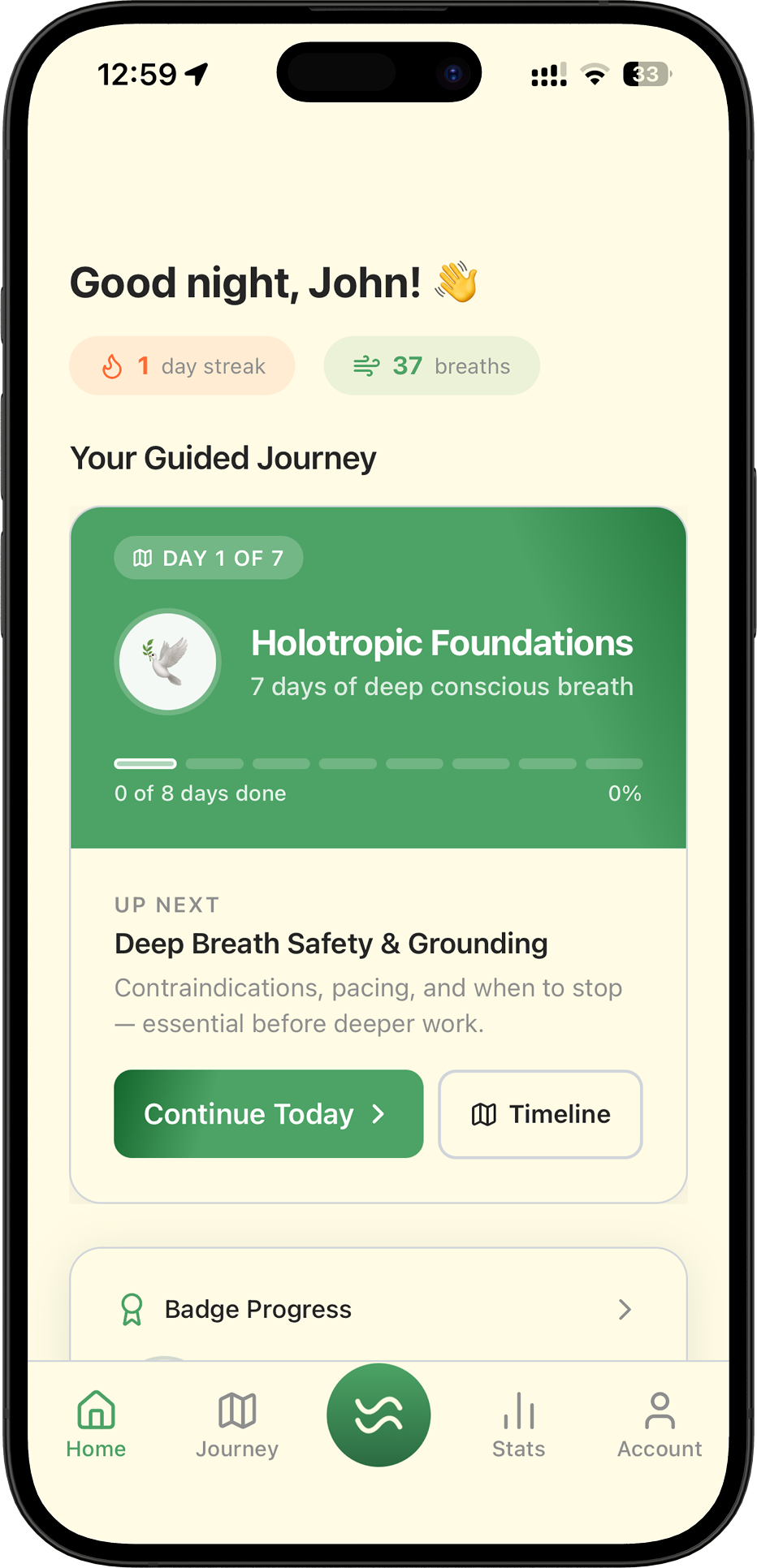
Guided energizing breathwork sessions
Best breathwork techniques for natural energy
1. Kapalabhati (Skull Shining Breath)
This ancient yogic technique is one of the most powerful for instant energy. It involves rapid, forceful exhales followed by passive inhales.
How to practice:
- Sit comfortably with a straight spine
- Take a deep breath in
- Forcefully exhale through your nose by contracting your abdomen
- Allow the inhale to happen passively
- Repeat rapidly: 30-60 breaths per minute
- Practice for 1-3 minutes
⚡ Energy boost: Immediate, lasts 2-3 hours
2. Breath of Fire
Similar to Kapalabhati but with equal emphasis on inhale and exhale. This Kundalini yoga technique rapidly increases oxygen levels and activates your energy centers.
How to practice:
- Sit with a straight spine
- Breathe rapidly through your nose
- Equal emphasis on inhale and exhale
- Use your diaphragm to pump the breath
- 2-3 breaths per second
- Practice for 1-3 minutes
⚡ Energy boost: Immediate, lasts 2-4 hours
3. Wim Hof Breathing
Made famous by "The Iceman," this technique combines controlled hyperventilation with breath retention to flood your body with oxygen and trigger natural adrenaline release.
How to practice:
- Take 30-40 deep, full breaths (inhale fully, exhale naturally)
- After the last exhale, hold your breath as long as comfortable
- When you need to breathe, take a deep breath in and hold for 15 seconds
- Repeat for 3-4 rounds
- Total time: 10-15 minutes
⚡ Energy boost: Strong, lasts 3-5 hours
4. Bellows Breath (Bhastrika)
A powerful pranayama technique that involves rapid, forceful breathing through the nose. It's like stoking a fire in your belly.
How to practice:
- Sit comfortably with straight spine
- Take 10 rapid, forceful breaths through your nose
- Both inhale and exhale should be strong and equal
- After 10 breaths, inhale deeply and hold for 5-10 seconds
- Exhale slowly and completely
- Repeat 3-5 rounds
⚡ Energy boost: Immediate, lasts 2-3 hours
5. The "Morning Energizer" Protocol
A custom sequence combining multiple techniques for maximum morning energy.
How to practice:
- Start with 2 minutes of Kapalabhati
- Follow with 1 round of Wim Hof breathing (30 breaths + retention)
- Finish with 1 minute of Breath of Fire
- Total time: 5-7 minutes
⚡ Energy boost: Very strong, lasts 4-6 hours
6. Alternate Nostril Breathing (Nadi Shodhana) for Balanced Energy
While typically used for calming, when practiced with intention and slightly faster pace, this technique provides balanced, focused energy without overstimulation.
How to practice:
- Sit comfortably with straight spine
- Close right nostril with thumb, inhale through left (4 counts)
- Close both nostrils, hold (4 counts)
- Release right nostril, exhale through right (4 counts)
- Inhale through right (4 counts)
- Hold (4 counts), exhale through left (4 counts)
- Repeat for 5-10 rounds
⚡ Energy boost: Balanced, focused energy, lasts 2-3 hours
7. Box Breathing (4-4-4-4) for Sustained Focus
Used by Navy SEALs and high performers, this technique provides steady, sustained energy perfect for long work sessions or meetings.
How to practice:
- Inhale for 4 counts
- Hold for 4 counts
- Exhale for 4 counts
- Hold for 4 counts
- Repeat for 5-10 minutes
⚡ Energy boost: Steady, sustained focus, lasts 2-3 hours
8. The "Quick 2-Minute Energizer"
Perfect for busy schedules or when you need a quick energy boost between meetings or tasks.
How to practice:
- 30 seconds: 20 rapid Kapalabhati breaths
- 30 seconds: Deep breathing (4 in, 4 hold, 4 out)
- 30 seconds: 20 more Kapalabhati breaths
- 30 seconds: Final deep breathing
- Total: 2 minutes
⚡ Energy boost: Quick activation, lasts 1-2 hours
💡 Technique selection guide:
- Need immediate energy? → Kapalabhati or Breath of Fire (1-3 min)
- Long work session ahead? → Wim Hof Method or Morning Energizer (10-15 min)
- Quick boost between meetings? → Quick 2-Minute Energizer
- Want focused, calm energy? → Box Breathing or Alternate Nostril
- Feeling jittery from coffee? → Box Breathing to balance
⚠️ Important safety notes:
- Always practice energizing breathwork sitting down (never while driving or in water)
- If you feel dizzy, lightheaded, or uncomfortable, slow down or stop
- Avoid if pregnant, have high blood pressure, or cardiovascular conditions
- Start with shorter sessions (1-2 minutes) and build up gradually
When to use coffee vs. breathwork: real-world scenarios
Different situations call for different energy solutions. Here's when each option makes the most sense:
✅ Best for breathwork
- Morning routine: Start your day with natural energy
- Afternoon slump (2-4 PM): Avoid the coffee crash cycle
- Before important meetings: Clear, focused energy without jitters
- Pre-workout: Natural energy boost for exercise
- When you're already anxious: Coffee can worsen anxiety; breathwork can help
- Late afternoon/evening: Won't disrupt sleep like coffee
- When you want to reduce caffeine: Gradual replacement strategy
- Budget-conscious: Free alternative to expensive coffee habits
- Traveling: No need to find coffee shops or wait in lines
- During fasting: No calories, no breaking your fast
☕ Coffee might be better when
- Social situations: Coffee shops, meetings, networking events
- You genuinely enjoy the taste: Coffee as a pleasure, not just energy
- Very early morning (4-5 AM): When you need immediate alertness
- Extreme sleep deprivation: Short-term emergency alertness (not sustainable)
- When breathwork isn't practical: Noisy environment, can't sit down
- Moderate consumption (1 cup): Some research shows benefits at low doses
- Cultural/ritual reasons: Important social or personal tradition
💡 The hybrid approach:
Many successful people use both strategically: breathwork for daily energy needs, coffee for social occasions or when they genuinely want to enjoy a cup. The key is making coffee a choice, not a dependency.
Specific use case scenarios
Scenario 1: The 9-to-5 Office Worker
Coffee approach:
- Morning coffee (8 AM)
- Afternoon coffee (2 PM)
- 3-4 PM crash → need more coffee
- Sleep disrupted → need more coffee next day
- Cycle continues
Breathwork approach:
- Morning breathwork (7:30 AM) - 5 min
- Sustained energy until lunch
- Afternoon breathwork (2 PM) - 3 min
- No crash, stable energy
- Better sleep → less need next day
Scenario 2: The Night Shift Worker
Coffee approach:
- Multiple coffees throughout night
- Difficulty sleeping during day
- Increased cortisol and stress
- Digestive issues from late coffee
Breathwork approach:
- Energizing breathwork at shift start
- Quick 2-min sessions during breaks
- No sleep disruption
- Better recovery during day sleep
Scenario 3: The Student
Coffee approach:
- Multiple coffees for late-night study
- Anxiety and jitters during exams
- Sleep disruption affects learning
- Expensive habit on student budget
Breathwork approach:
- Morning breathwork for focus
- Pre-study session for clarity
- Better sleep = better memory
- Free and always available
Scenario 4: The Athlete
Coffee approach:
- Pre-workout coffee for energy
- Can cause dehydration
- May interfere with sleep/recovery
- Dependency before competitions
Breathwork approach:
- Pre-workout energizing breathwork
- Improves oxygen delivery
- No interference with recovery
- No dependency, always available
Making the switch: how to transition from coffee to breathwork
You don't have to quit coffee cold turkey. Here's a gradual approach that works for most people:
Week 1: Add breathwork, keep coffee
Start your morning with 5 minutes of energizing breathwork, then have your normal coffee. This helps you learn the techniques without withdrawal symptoms.
Week 2: Replace one cup
Replace your second or third cup of coffee with a 5-minute breathwork session. Most people find they don't miss it.
Week 3: Morning breathwork first
Do 10 minutes of energizing breathwork before your morning coffee. You'll likely find you need less caffeine or can skip it entirely.
Week 4: Experiment with coffee-free days
Try 1-2 days per week using only breathwork for energy. Notice how you feel—many people report better sustained energy and improved sleep.
Ongoing: Find your balance
Some people eliminate coffee entirely, others enjoy one cup for pleasure rather than necessity. Find what works for you.
Pro tip:
If you experience caffeine withdrawal headaches, try the "Afternoon Energizer" breathwork session (5 minutes of Kapalabhati) instead of reaching for another coffee. It works surprisingly well.
Troubleshooting common challenges
Challenge: "I forget to do breathwork"
Solution: Stack it with an existing habit. Do breathwork right after brushing your teeth, or set a phone reminder for the same time you'd normally grab coffee. After 2-3 weeks, it becomes automatic.
Challenge: "I don't feel the energy boost"
Solution: Make sure you're practicing correctly—rapid, forceful breathing for energizing techniques. Start with shorter sessions (1-2 minutes) and build up. It may take 3-5 sessions to notice the effects clearly.
Challenge: "I feel dizzy or lightheaded"
Solution: This is normal when starting. Slow down the pace, reduce the duration, and always practice sitting down. Your body will adapt within a week. If it persists, try gentler techniques like Box Breathing.
Challenge: "I miss the coffee ritual"
Solution: Create a breathwork ritual. Set up a dedicated space, light a candle, play calming music, or do it outside. The ritual itself becomes part of the energy boost. You can still enjoy decaf coffee for the ritual if you want.
Long-term effects: coffee vs. breathwork
While both provide immediate energy, their long-term effects on your health, performance, and well-being differ significantly.
☕ Coffee: Long-term effects
Positive effects (at moderate consumption):
- May reduce risk of type 2 diabetes (at 1-2 cups/day)
- May lower risk of Parkinson's disease
- Antioxidant benefits from polyphenols
- May improve liver health (at moderate doses)
Negative effects (at high consumption or long-term):
- Increased tolerance requiring higher doses
- Chronic sleep disruption → reduced recovery
- Elevated cortisol levels → chronic stress
- Adrenal fatigue from constant stimulation
- Increased anxiety and panic attacks
- Digestive issues (acid reflux, IBS symptoms)
- Bone density reduction (caffeine affects calcium)
- Dependency and withdrawal symptoms
- Increased blood pressure over time
- Interference with nutrient absorption
Research note:
Most health benefits of coffee are seen at 1-2 cups per day. Beyond that, risks increase. Individual genetics (CYP1A2 enzyme) determine how you metabolize caffeine.
🫁 Breathwork: Long-term effects
Positive effects (with regular practice):
- Improved mitochondrial function → better cellular energy
- Enhanced autonomic nervous system regulation
- Reduced baseline stress and anxiety
- Better sleep quality and recovery
- Improved cardiovascular health
- Enhanced immune function
- Better emotional regulation
- Increased baseline energy levels
- Improved cognitive function and focus
- Better stress resilience
- Reduced inflammation markers
- Improved athletic performance
Potential considerations:
- Requires consistency for maximum benefits
- May not be suitable for certain medical conditions
- Learning curve for optimal technique
Research note:
Studies show that regular breathwork practice (3+ times per week) leads to measurable improvements in stress markers, heart rate variability, and overall well-being within 4-8 weeks.
The compounding effect
One of the most significant differences between coffee and breathwork is how they compound over time:
Coffee compounding:
Breathwork compounding:
🎯 The key insight:
Coffee provides diminishing returns—you need more for less benefit over time. Breathwork provides increasing returns—you get more benefit from the same (or less) practice over time. This is the fundamental difference between masking symptoms (coffee) and improving the system (breathwork).
Real results: what people experience
📊 By the numbers:
73%
Reduce coffee intake
2-4 hrs
Energy duration
5 min
Average practice time
$0
Cost per session
"I was a 4-cup-a-day coffee drinker. After two weeks of morning breathwork, I'm down to one cup—and I don't even finish it. My energy is more stable throughout the day."
— Sarah, 34, Marketing Manager
"The 3 PM slump used to destroy my productivity. Now I do 5 minutes of Breath of Fire instead of grabbing an espresso. Game changer."
— Marcus, 41, Software Engineer
"I still love my morning coffee ritual, but now it's one cup for enjoyment, not four cups for survival. Breathwork gave me my energy back."
— Jennifer, 29, Entrepreneur
"As an athlete, I needed to cut caffeine before competitions. Breathwork gives me the same energy boost without affecting my sleep or performance."
— David, 27, Professional Athlete
"I used to spend $150/month on coffee. Now I do breathwork and save that money. Plus, I sleep better and have more consistent energy. It's a no-brainer."
— Michael, 38, Financial Analyst
"Coffee made me anxious and jittery. Breathwork gives me the same energy but with calm focus. I can actually think clearly now."
— Lisa, 31, Graphic Designer
"As a night shift nurse, I couldn't drink coffee late at night. Breathwork became my go-to for staying alert without ruining my sleep schedule."
— Rachel, 35, Registered Nurse
"I thought breathwork was just for meditation. When I tried it for energy, I was shocked. It works better than my afternoon coffee, and no crash!"
— James, 42, Project Manager

Try energizing breathwork sessions on Breathworkk
Guided breathing techniques designed to boost energy, improve focus, and replace your coffee habit with sustainable vitality.

Frequently asked questions
How quickly does breathwork provide energy?
You'll feel energized within 2-5 minutes of starting an energizing breathwork session. The effects build throughout the practice and typically last 2-4 hours.
Is breathwork energy as strong as coffee?
Many people report that breathwork provides comparable or even stronger energy than coffee, but it feels different—more clear-headed and focused rather than jittery or wired.
Can I do breathwork multiple times per day?
Yes! Unlike coffee, you won't build tolerance or dependency. Many people do energizing breathwork in the morning and again in the afternoon for sustained energy throughout the day.
Will breathwork affect my sleep like coffee does?
No. While energizing breathwork activates your sympathetic nervous system temporarily, it doesn't interfere with sleep the way caffeine does. In fact, regular breathwork practice often improves sleep quality.
What if I feel dizzy during energizing breathwork?
Mild lightheadedness is normal when starting, as your body adjusts to increased oxygen levels. If you feel uncomfortable, slow down or stop. Always practice sitting down, and build up gradually.
Can I combine coffee and breathwork?
Absolutely! Many people enjoy one cup of coffee for the taste and ritual, using breathwork to reduce their overall caffeine dependency. There's no need for an all-or-nothing approach.
How much coffee is too much?
Most health organizations recommend limiting caffeine to 400mg per day (about 4 cups of coffee). However, individual tolerance varies. Signs you're having too much include: jitters, anxiety, insomnia, rapid heartbeat, headaches, or needing more coffee to feel the same effects.
Can breathwork help with caffeine withdrawal?
Yes! Many people find that energizing breathwork helps manage withdrawal symptoms like headaches and fatigue. The increased oxygen and natural adrenaline release can provide the energy boost you're missing from coffee, making the transition easier.
Is it safe to do breathwork every day?
Yes, daily breathwork practice is generally safe and beneficial. However, listen to your body—if you feel overstimulated, take a day off or switch to calming breathwork techniques. Most people practice energizing breathwork 1-2 times per day.
What if I have high blood pressure or heart conditions?
If you have cardiovascular conditions, consult your doctor before starting energizing breathwork. These techniques can temporarily increase heart rate and blood pressure. Calming breathwork techniques (like slow breathing) may be more appropriate and can actually help lower blood pressure over time.
Can I do breathwork while pregnant?
Energizing breathwork techniques (rapid breathing) are generally not recommended during pregnancy. However, gentle, slow breathing techniques can be beneficial. Always consult with your healthcare provider before starting any new breathing practice during pregnancy.
How long until I see results from breathwork?
Immediate effects (energy boost) are felt within 2-5 minutes of practice. Long-term benefits (improved baseline energy, better sleep, reduced stress) typically appear within 2-4 weeks of regular practice (3+ times per week).
Does coffee really have health benefits?
Yes, at moderate consumption (1-2 cups per day), coffee has been linked to reduced risk of type 2 diabetes, Parkinson's disease, and liver disease. However, these benefits are primarily from antioxidants, not caffeine. Many of these benefits can be obtained from other sources without the negative effects of caffeine.
Can breathwork replace my pre-workout coffee?
Many athletes find that breathwork provides excellent pre-workout energy without the dehydration, jitters, or sleep disruption of coffee. Try 5-10 minutes of energizing breathwork 10-15 minutes before your workout and see how you feel.
What's the best time of day for energizing breathwork?
Morning (right after waking) and early afternoon (1-3 PM) are ideal times. Avoid energizing breathwork within 2 hours of bedtime, as it can make it harder to fall asleep. If you need evening energy, try gentler techniques like Box Breathing.
Why do I feel tired after breathwork sometimes?
If you feel tired after breathwork, you may have overdone it or your body is releasing stored tension. Start with shorter sessions (1-2 minutes) and gradually increase. Also, ensure you're practicing correctly—rapid, forceful breathing for energizing techniques.
Is decaf coffee a good middle ground?
Decaf coffee still contains small amounts of caffeine (2-15mg per cup) and provides the ritual and taste without the energy effects. It's a reasonable option if you enjoy coffee but want to reduce caffeine. However, breathwork provides actual energy benefits that decaf doesn't.
Key takeaways: making your decision
Choose coffee if:
- You genuinely enjoy the taste and ritual
- You consume 1-2 cups per day maximum
- You don't experience negative side effects
- You can stop without withdrawal symptoms
- It's a social or cultural ritual you value
- You need emergency alertness in extreme situations
Choose breathwork if:
- You want sustainable energy without crashes
- You're consuming 3+ cups of coffee daily
- You experience jitters, anxiety, or sleep issues from coffee
- You want to reduce or eliminate caffeine dependency
- You're budget-conscious (coffee costs add up)
- You want long-term health benefits
- You need energy that doesn't disrupt sleep
- You want to improve your baseline energy over time
The bottom line
Coffee and breathwork serve different purposes. Coffee is a quick, convenient energy solution that works by masking fatigue signals. Breathwork is a practice that generates genuine energy by optimizing your body's natural systems.
The best approach for most people? Use breathwork as your primary energy source, and enjoy coffee occasionally for pleasure rather than necessity. This gives you the benefits of both: sustainable energy from breathwork, and the enjoyment of coffee without dependency.
Remember: the goal isn't perfection—it's making informed choices that support your energy, health, and well-being long-term. Start with small steps: add 5 minutes of morning breathwork to your routine, and notice how you feel. You might find you need less coffee than you think.
Research Citations & Scientific References:
- • Kox, M., van Eijk, L. T., Zwaag, J., et al. (2014). Voluntary activation of the sympathetic nervous system and attenuation of the innate immune response in humans. Proceedings of the National Academy of Sciences, 111(20), 7379-7384.
- • Balban, M. Y., Neri, E., Kogon, M. M., et al. (2023). Brief structured respiration practices enhance mood and reduce physiological arousal. Cell Reports Medicine, 4(1).
- • Zaccaro, A., Piarulli, A., Laurino, M., et al. (2018). How breath-control can change your life: a systematic review on psycho-physiological correlates of slow breathing. Frontiers in Human Neuroscience, 12, 353.
- • Lovallo, W. R., Whitsett, T. L., al'Absi, M., et al. (2005). Caffeine stimulation of cortisol secretion across the waking hours in relation to caffeine intake levels. Psychosomatic Medicine, 67(5), 734-739.
- • Nehlig, A. (2016). Effects of coffee/caffeine on brain health and disease: What should I tell my patients? Practical Neurology, 16(2), 89-95.
- • Fredholm, B. B., Bättig, K., Holmén, J., et al. (1999). Actions of caffeine in the brain with special reference to factors that contribute to its widespread use. Pharmacological Reviews, 51(1), 83-133.
- • Jerath, R., Edry, J. W., Barnes, V. A., & Jerath, V. (2006). Physiology of long pranayamic breathing: Neural respiratory elements may provide a mechanism that explains how slow deep breathing shifts the autonomic nervous system. Medical Hypotheses, 67(3), 566-571.
- • Brown, R. P., & Gerbarg, P. L. (2005). Sudarshan Kriya yogic breathing in the treatment of stress, anxiety, and depression: Part I—Neurophysiologic model. Journal of Alternative and Complementary Medicine, 11(1), 189-201.
- • Russo, M. A., Santarelli, D. M., & O'Rourke, D. (2017). The physiological effects of slow breathing in the healthy human. Breathe, 13(4), 298-309.
- • Grosso, G., Godos, J., Galvano, F., & Giovannucci, E. L. (2017). Coffee, caffeine, and health outcomes: an umbrella review. Annual Review of Nutrition, 37, 131-156.
- • Van Dongen, H. P., & Dinges, D. F. (2005). Sleep, circadian rhythms, and psychomotor vigilance. Clinics in Sports Medicine, 24(2), 237-249.
- • Streeter, C. C., Gerbarg, P. L., Whitfield, T. H., et al. (2017). Treatment of Major Depressive Disorder with Iyengar Yoga and Coherent Breathing: A Randomized Controlled Dosing Study. Journal of Alternative and Complementary Medicine, 23(3), 201-207.