Health & Wellness
Breathwork for Anxiety: 7 Proven Breathing Exercises You Can Do Anywhere
Struggling with anxiety? Learn 7 proven breathwork techniques you can do anywhere to calm your mind, reduce panic, and regulate your nervous system. These science-backed breathing exercises provide immediate relief and long-term anxiety management—all with step-by-step guidance you can practice at home, work, or on the go.
Why Breathwork Works for Anxiety
Anxiety affects millions of people worldwide, manifesting as racing thoughts, rapid heartbeat, shallow breathing, and overwhelming worry. While anxiety can feel uncontrollable, your breath is one thing you can always control—and it's a powerful tool for regulating your nervous system and calming your mind.
Breathwork for anxiety isn't just a wellness trend—it's backed by extensive scientific research. Studies show that controlled breathing exercises activate the parasympathetic nervous system (the "rest and digest" response), which counteracts the fight-or-flight response triggered by anxiety. This physiological shift happens within minutes, making breathwork one of the most accessible and effective tools for anxiety relief.
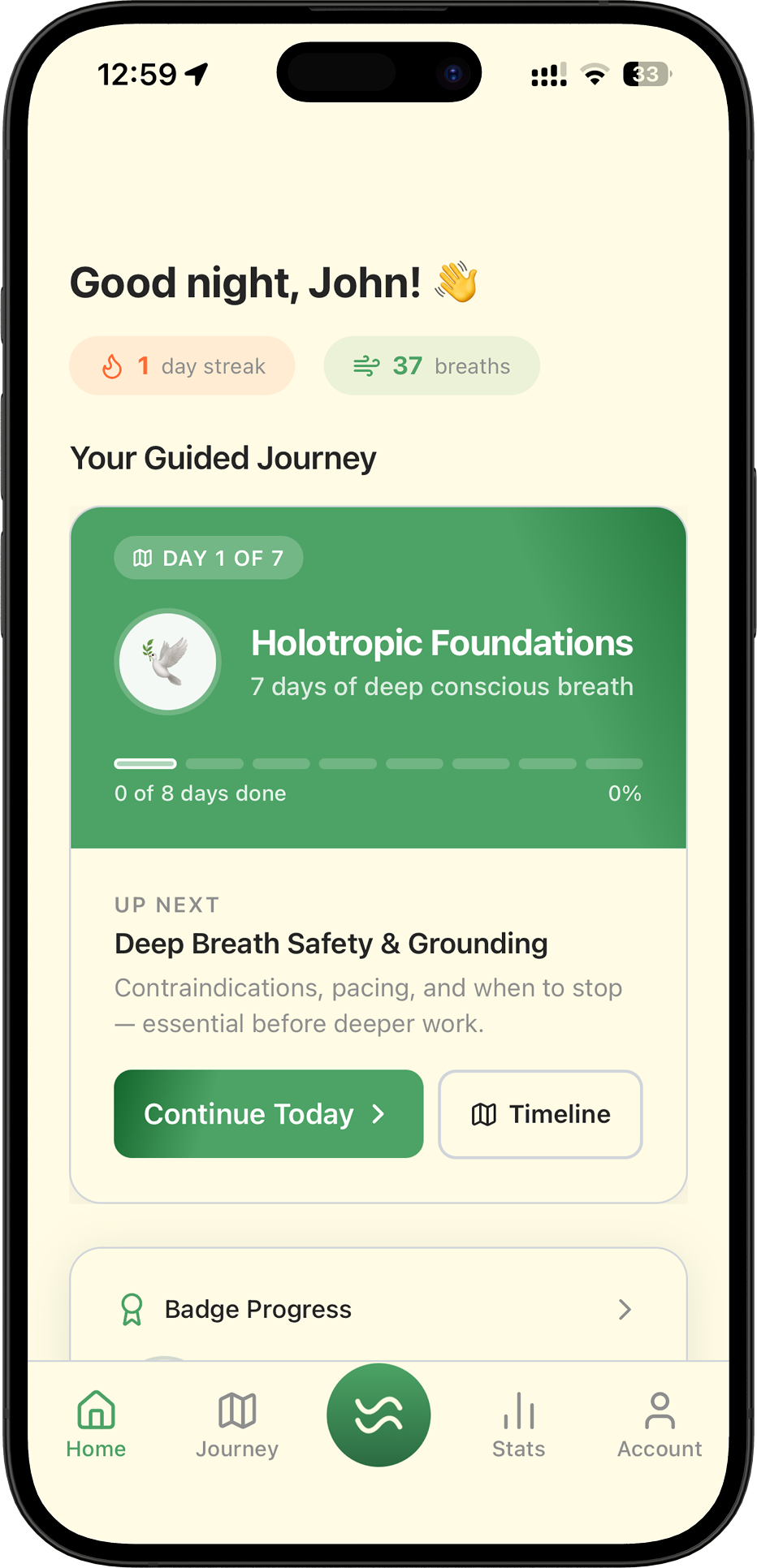
Practice guided breathing exercises for anxiety relief with visual cues and step-by-step guidance
Key Insight:
Research shows that breathing exercises can reduce anxiety symptoms by up to 40% within just 5 minutes of practice. The key is using the right techniques with proper pacing—which is why guided breathwork apps with visual cues are so effective for anxiety relief.
The Science: How Breathing Exercises Calm Anxiety
Understanding why breathwork works for anxiety helps you use these techniques more effectively. When you experience anxiety, your body enters a state of hyperarousal: your heart rate increases, your breathing becomes shallow and rapid, and stress hormones flood your system. Breathing exercises reverse this process through several key mechanisms:
Activates Parasympathetic Nervous System
Slow, controlled breathing activates the vagus nerve, which triggers the parasympathetic nervous system. This "rest and digest" response slows your heart rate, lowers blood pressure, and promotes calm—directly counteracting anxiety's fight-or-flight response.
Calms the Amygdala
The amygdala is your brain's fear center, and it's hyperactive during anxiety. Research shows that controlled breathing reduces amygdala activity, decreasing fear responses and emotional reactivity. This calming effect can be measured within minutes of breathwork practice.
Increases Heart Rate Variability
Heart rate variability (HRV) is a marker of nervous system health. Higher HRV indicates better stress resilience. Breathing exercises, especially coherent breathing at 5-6 breaths per minute, increase HRV, improving your body's ability to adapt to stress and recover from anxiety.
Reduces Cortisol Levels
Cortisol is the primary stress hormone, and elevated levels contribute to anxiety. Studies show that breathing exercises can reduce cortisol by 20-30%, creating a more balanced stress response. This reduction happens within minutes and becomes more pronounced with regular practice.
Research Finding:
A 2020 study published in the Journal of Clinical Psychology found that participants who practiced breathing exercises for anxiety showed a 40% reduction in anxiety symptoms compared to a control group. The effects were measurable within 5 minutes and lasted for up to 30 minutes after practice.
7 Proven Breathing Exercises for Anxiety Relief
These 7 breathing exercises are proven effective for anxiety relief. Each technique works slightly differently, so experiment to find which ones work best for you. You can practice any of these exercises anywhere—at home, at work, in your car, or even in public without drawing attention.
Box Breathing (4-4-4-4)
Box breathing is one of the most effective breathing exercises for anxiety because it creates a steady, predictable rhythm that calms the nervous system. Used by Navy SEALs, athletes, and professionals worldwide, this technique is simple yet powerful.
How to Practice Box Breathing:
- Inhale slowly through your nose for 4 seconds, filling your lungs completely
- Hold your breath gently at the top for 4 seconds (don't strain)
- Exhale slowly through your nose for 4 seconds, releasing all the air
- Hold at the bottom for 4 seconds before beginning the next cycle
Duration: Repeat for 4-8 cycles (2-5 minutes). For immediate anxiety relief, practice for 3-5 minutes.
Best For:
- • Immediate anxiety relief
- • Panic attack prevention
- • Stress management
- • Focus and clarity
Why It Works:
The even 4-4-4-4 rhythm creates predictability that calms the nervous system. The breath holds increase carbon dioxide tolerance and activate the parasympathetic nervous system.
4-7-8 Breathing
The 4-7-8 breathing technique is particularly effective for anxiety because the extended exhale (8 seconds) is longer than the inhale (4 seconds), which strongly activates the parasympathetic nervous system. This technique was popularized by Dr. Andrew Weil and is often called "the natural tranquilizer."
How to Practice 4-7-8 Breathing:
- Place the tip of your tongue against the roof of your mouth, just behind your front teeth
- Inhale quietly through your nose for 4 seconds
- Hold your breath for 7 seconds
- Exhale completely through your mouth for 8 seconds, making a whoosh sound
- Repeat the cycle 4-8 times
Duration: 4-8 cycles (2-5 minutes). This technique is especially effective before bed or during anxiety spikes.
Best For:
- • Deep relaxation
- • Sleep preparation
- • Anxiety before sleep
- • Overthinking and worry
Why It Works:
The 2:1 ratio of exhale to inhale (8 seconds vs 4 seconds) strongly activates the parasympathetic nervous system, promoting deep relaxation and reducing anxiety.
Coherent Breathing (Resonance Frequency)
Coherent breathing involves breathing at your body's resonance frequency—typically 5-6 breaths per minute (5 seconds in, 5 seconds out). This pace maximizes heart rate variability and creates optimal conditions for nervous system regulation. Research shows this technique is highly effective for anxiety and stress.
How to Practice Coherent Breathing:
- Find a comfortable seated or lying position
- Inhale slowly through your nose for 5 seconds
- Exhale slowly through your nose for 5 seconds
- Continue this 5-5 rhythm without pausing between breaths
- Focus on smooth, even breaths without forcing
Duration: 5-10 minutes for optimal results. This technique is excellent for daily practice and building long-term anxiety resilience.
Best For:
- • Daily anxiety management
- • Building stress resilience
- • Heart rate variability
- • Long-term practice
Why It Works:
Breathing at 5-6 breaths per minute synchronizes with your body's natural resonance frequency, maximizing heart rate variability and creating optimal conditions for nervous system balance.
Diaphragmatic Breathing (Belly Breathing)
Diaphragmatic breathing, also called belly breathing, involves breathing deeply into your diaphragm rather than shallow chest breathing. This technique is fundamental for anxiety relief because it activates the parasympathetic nervous system and ensures optimal oxygen exchange.
How to Practice Diaphragmatic Breathing:
- Lie down or sit comfortably with one hand on your chest and one on your belly
- Breathe in slowly through your nose for 4-5 seconds, allowing your belly to rise (chest should move minimally)
- Feel your diaphragm expand as you inhale
- Exhale slowly through your nose for 5-6 seconds, feeling your belly fall
- Continue this pattern, focusing on the rise and fall of your belly
Duration: 5-10 minutes. This is an excellent foundational technique to practice daily.
Best For:
- • Shallow breathing correction
- • Foundation for other techniques
- • Daily practice
- • Physical tension release
Why It Works:
Deep diaphragmatic breathing ensures optimal oxygen exchange, activates the vagus nerve, and promotes full relaxation of the body's stress response.
Alternate Nostril Breathing (Nadi Shodhana)
Alternate nostril breathing is a traditional yogic technique that balances the left and right hemispheres of the brain, promoting mental clarity and calm. This technique is particularly effective for anxiety because it requires focused attention, which helps quiet racing thoughts.
How to Practice Alternate Nostril Breathing:
- Sit comfortably and use your right thumb to close your right nostril
- Inhale slowly through your left nostril for 4 seconds
- Close your left nostril with your right ring finger, release your thumb, and exhale through your right nostril for 4 seconds
- Inhale through your right nostril for 4 seconds
- Close your right nostril and exhale through your left nostril for 4 seconds
- This completes one cycle. Continue for 5-10 cycles
Duration: 5-10 cycles (3-5 minutes). This technique requires more focus, so it's best practiced in a quiet space.
Best For:
- • Mental clarity
- • Balancing energy
- • Focus and concentration
- • Quieting racing thoughts
Why It Works:
This technique balances the left and right brain hemispheres, promotes focused attention (distracting from anxious thoughts), and activates the parasympathetic nervous system.
Sighing Breath (Cyclic Sighing)
The sighing breath is a simple yet powerful technique that involves taking two inhales followed by a long exhale. Recent research from Stanford University shows this technique is highly effective for reducing anxiety and stress, even more so than traditional meditation in some cases.
How to Practice Sighing Breath:
- Take a normal inhale through your nose
- Take a second, slightly deeper inhale through your nose to fully fill your lungs
- Exhale slowly and completely through your mouth with an audible sigh
- Repeat this pattern for 5-10 cycles
Duration: 5-10 cycles (2-3 minutes). This technique is excellent for quick anxiety relief and can be done anywhere.
Best For:
- • Quick anxiety relief
- • Stress release
- • Physical tension
- • On-the-go practice
Why It Works:
The double inhale maximizes lung expansion, and the long exhale strongly activates the parasympathetic nervous system. Research shows this technique reduces anxiety and improves mood within minutes.
4-6 Breathing (Extended Exhale)
4-6 breathing is a simple technique that emphasizes a longer exhale than inhale, which is key for anxiety relief. This technique is perfect for beginners and can be practiced anywhere without drawing attention.
How to Practice 4-6 Breathing:
- Inhale slowly through your nose for 4 seconds
- Exhale slowly through your nose for 6 seconds (making the exhale longer than the inhale)
- Continue this 4-6 rhythm without pausing between breaths
- Focus on smooth, even breathing
Duration: 3-5 minutes for immediate relief, or 5-10 minutes for deeper relaxation. This is an excellent technique for daily practice.
Best For:
- • Beginners
- • Subtle practice in public
- • Daily anxiety management
- • Quick stress relief
Why It Works:
The longer exhale (6 seconds vs 4 seconds) activates the parasympathetic nervous system more strongly than the inhale, promoting calm and reducing anxiety. This 1.5:1 ratio is optimal for anxiety relief.
When to Use Each Breathing Exercise
Different breathing exercises work better in different situations. Here's a guide to help you choose the right technique for your specific anxiety needs:
For Immediate Anxiety Relief
- • Box Breathing - Works in 2-3 minutes, great for panic prevention
- • 4-6 Breathing - Quick and subtle, perfect for public situations
- • Sighing Breath - Fast stress release, excellent for tension
For Daily Anxiety Management
- • Coherent Breathing - Best for building long-term resilience
- • Diaphragmatic Breathing - Foundation practice for daily use
- • 4-6 Breathing - Simple daily practice
For Sleep and Evening Anxiety
- • 4-7-8 Breathing - The natural tranquilizer, perfect before bed
- • Coherent Breathing - Calming evening practice
- • Diaphragmatic Breathing - Relaxing bedtime routine
For Focus and Mental Clarity
- • Box Breathing - Steady focus and clarity
- • Alternate Nostril Breathing - Mental balance and focus
- • Coherent Breathing - Optimal brain function
Getting Started: Your Anxiety Relief Practice Plan
Starting a breathwork practice for anxiety doesn't have to be overwhelming. Here's a simple plan to get started and build consistency:
Week 1: Foundation
- • Practice Diaphragmatic Breathing for 5 minutes daily
- • Learn Box Breathing and use it when you feel anxious
- • Focus on consistency over duration—even 2-3 minutes helps
Week 2: Expand Your Toolkit
- • Add 4-6 Breathing for daily practice
- • Try 4-7-8 Breathing before bed
- • Practice Coherent Breathing for 5 minutes daily
Week 3-4: Build Your Routine
- • Morning: 5 minutes of Coherent Breathing or Diaphragmatic Breathing
- • Anytime anxiety strikes: Box Breathing or 4-6 Breathing for 2-3 minutes
- • Evening: 4-7-8 Breathing before bed
- • Experiment with Alternate Nostril Breathing and Sighing Breath
Pro Tip:
Use a breathwork app with visual guides to help you maintain the correct pace. Apps like Breathworkk provide beautiful visual cues that make it easy to follow breathing patterns, even when you're feeling anxious. The visual guidance helps you focus and ensures you're practicing at the optimal pace for anxiety relief.
Tips for Effective Practice & Safety Considerations
Best Practices
- • Start slow: Begin with shorter sessions (2-3 minutes) and gradually increase
- • Focus on the exhale: Longer exhales activate the parasympathetic nervous system more strongly
- • Breathe through your nose: Nasal breathing is more calming than mouth breathing
- • Find a comfortable position: Sit or lie down in a relaxed posture
- • Use visual guides: Apps with visual cues help maintain proper pacing
- • Be patient: It may take a few sessions to feel the full benefits
What to Avoid
- • Don't force: Breathing should feel natural, not strained
- • Don't hyperventilate: Keep breathing slow and controlled
- • Don't hold your breath too long: If you feel dizzy, shorten the hold
- • Don't practice while driving: Only practice in safe, stationary positions
- • Don't expect instant results: Consistency is key for long-term benefits
Important Safety Note:
While breathing exercises are generally safe and effective for anxiety, they are not a replacement for professional mental health care. If you experience severe anxiety, panic attacks, or other mental health concerns, please consult with a healthcare professional. Breathing exercises work best as part of a comprehensive anxiety management plan that may include therapy, medication, and lifestyle changes.

Practice These Techniques with Guided Support
Breathworkk provides guided breathing exercises for anxiety with beautiful visual cues, step-by-step instructions, and specialized calm flows designed to activate your parasympathetic nervous system for immediate relief.
Specialized Calm Flows
Access guided sessions featuring box breathing, diaphragmatic breathing, and coherent breathing—all designed specifically for anxiety relief.
Visual Breathing Guides
Follow beautiful expanding and contracting visual cues that help you maintain the perfect pace, even when you're feeling anxious.

Frequently Asked Questions
What is the best breathing exercise for anxiety?
Box Breathing (4-4-4-4) and Coherent Breathing are among the most effective breathing exercises for anxiety. Box breathing provides immediate calm through even, controlled breaths, while coherent breathing at 5-6 breaths per minute activates the parasympathetic nervous system for deep relaxation. Both techniques can be done anywhere and provide relief within 2-3 minutes.
How do breathing exercises help with anxiety?
Breathing exercises help with anxiety by activating the parasympathetic nervous system (the "rest and digest" response), which counteracts the fight-or-flight response. Slow, controlled breathing reduces heart rate, lowers cortisol levels, increases oxygen flow, and calms the amygdala—the brain's fear center. This creates a physiological shift from stress to calm within minutes.
Can breathing exercises stop a panic attack?
Yes, breathing exercises can help stop or reduce panic attacks by interrupting the panic cycle. Techniques like box breathing, 4-7-8 breathing, and coherent breathing activate the parasympathetic nervous system, slowing heart rate and reducing physical symptoms. However, if you experience frequent panic attacks, consult a healthcare professional for comprehensive treatment.
How long should I practice breathing exercises for anxiety?
For immediate anxiety relief, practice breathing exercises for 2-5 minutes. Most people feel relief within 2-3 minutes. For long-term anxiety management, practice 5-10 minutes daily. Consistency is more important than duration—regular short sessions are more effective than occasional long ones.
What is the 4-7-8 breathing technique for anxiety?
The 4-7-8 breathing technique involves inhaling for 4 seconds, holding the breath for 7 seconds, and exhaling for 8 seconds. This extended exhale activates the parasympathetic nervous system, promoting deep relaxation. It's particularly effective for anxiety because the longer exhale signals the body to calm down. Repeat 4-8 cycles for best results.
Can I do breathing exercises anywhere?
Yes, most breathing exercises can be done anywhere—at your desk, in a car, on public transit, or at home. Techniques like box breathing, coherent breathing, and diaphragmatic breathing are subtle enough to practice in public without drawing attention. The key is to focus on slow, controlled breathing through your nose.
What is the best anxiety relief app for breathing exercises?
Breathworkk is the best anxiety relief app for breathing exercises because it offers specialized calm flows with box breathing and diaphragmatic breathing techniques, beautiful visual guides that make it easy to follow breathing patterns, multiple proven techniques, and science-backed methods that activate the parasympathetic nervous system for immediate anxiety relief. Learn more: breathing exercises for anxiety.
Should I breathe through my nose or mouth for anxiety relief?
For most anxiety relief techniques, breathe through your nose. Nasal breathing activates the parasympathetic nervous system more effectively and ensures optimal oxygen exchange. However, some techniques like 4-7-8 breathing use a mouth exhale, which can be helpful for releasing tension. Follow the specific instructions for each technique.
How often should I practice breathing exercises for anxiety?
For best results, practice breathing exercises daily. Use 2-3 minute sessions as needed when anxiety strikes, and aim for a daily 5-10 minute practice session to build long-term resilience. Consistency is key—regular practice strengthens your nervous system's ability to regulate stress and anxiety.
Are breathing exercises a replacement for therapy or medication?
No, breathing exercises are a valuable tool for anxiety management but are not a replacement for professional mental health care. They work best as part of a comprehensive anxiety management plan that may include therapy, medication (if prescribed), lifestyle changes, and other treatments. If you experience severe anxiety, please consult with a healthcare professional.
Explore More Anxiety & Breathwork Resources
Breathing Exercises for Anxiety
Learn effective breathing exercises for immediate anxiety relief and long-term management.
From Anxiety to Clarity
Discover how breathwork transforms anxiety into clarity and emotional regulation.
Breathwork for Focus
Learn how breathing exercises enhance concentration and reduce anxiety-related distractions.
4-7-8 Breathing Technique
Master the 4-7-8 breathing technique for sleep, stress relief, and anxiety management.
Box Breathing vs Diaphragmatic Breathing
Compare these popular anxiety relief techniques and learn when to use each.
Science of Breathwork
Discover the research-backed benefits of breathwork for anxiety and stress relief.
Breath Work App for Beginners
Start your breathwork journey with simple, guided techniques for anxiety relief.
Breathwork for Sleep
Learn how breathing exercises improve sleep and reduce nighttime anxiety.