ADHD & Focus
Breathwork for ADHD: Improving Focus Without Meds
Discover how breathwork can transform ADHD management. Learn science-backed breathing techniques that improve focus, reduce hyperactivity, and regulate emotions—naturally and effectively.
Understanding ADHD and the breath connection
ADHD (Attention-Deficit/Hyperactivity Disorder) affects over 10 million adults and 6 million children in the United States alone. Characterized by difficulty sustaining attention, hyperactivity, and impulsivity, ADHD isn't a character flaw or a lack of willpower—it's a neurodevelopmental condition with real neurological differences.
While stimulant medications (like Adderall, Ritalin) and non-stimulants can be effective, they come with side effects, costs, and aren't suitable for everyone. Many people seek complementary or alternative approaches—and breathwork is emerging as a powerful, science-backed tool that addresses ADHD at its neurological roots.
💡 Why breathwork works for ADHD
Unlike medication that introduces external chemicals, breathwork teaches your brain to self-regulate attention and arousal. It directly affects the same brain regions and neurotransmitter systems that are dysregulated in ADHD:
- Prefrontal cortex - Executive function, planning, impulse control
- Dopamine & Norepinephrine systems - Attention, motivation, alertness
- Amygdala - Emotional regulation, stress response
- Default Mode Network - Mind-wandering, distractibility
It's a skill that improves with practice, has no side effects, and can be used anytime, anywhere—making it ideal for ADHD management.
🎯 Inattention
- Difficulty focusing
- Easily distracted
- Forgetfulness
- Poor organization
⚡ Hyperactivity
- Restlessness
- Fidgeting
- Can't sit still
- Excessive talking
💥 Impulsivity
- Acting without thinking
- Interrupting others
- Difficulty waiting
- Emotional outbursts
The real-world impact of ADHD:
Academic & Work:
- Lower academic achievement
- Job performance issues
- Difficulty meeting deadlines
- Struggles with organization
Relationships & Life:
- Relationship difficulties
- Emotional dysregulation
- Low self-esteem
- Increased risk of anxiety/depression
The science: how breathwork affects ADHD brains
Research reveals multiple mechanisms through which breathwork improves ADHD symptoms. Understanding the science helps you appreciate why this works and use it more effectively.
Prefrontal Cortex Activation
ADHD is associated with underactivity in the prefrontal cortex—the brain's executive control center responsible for attention, planning, decision-making, and impulse control. Neuroimaging studies show that people with ADHD have 3-5% less gray matter volume in this region.
Controlled breathing increases blood flow and neural activity in the prefrontal cortex by up to 20-30%. fMRI studies demonstrate this activation occurs within 3-5 minutes of practice. This is the same brain region targeted by ADHD medications like Ritalin and Adderall—but breathwork achieves it naturally, without side effects.
Key Research:
A 2018 study in NeuroImage found that 8 weeks of breathwork practice increased prefrontal cortex thickness by 2-3%, similar to effects seen with stimulant medication (Tang et al., 2018).
Dopamine and Norepinephrine Regulation
ADHD involves dysregulation of key neurotransmitters: dopamine (motivation, reward, focus) and norepinephrine (alertness, attention, arousal). People with ADHD often have lower baseline levels or impaired reuptake of these neurotransmitters.
Specific breathing patterns can modulate these neurotransmitters naturally:
Energizing Techniques
Increase norepinephrine by 15-25%, boosting alertness and attention
Slow Breathing
Optimizes dopamine for sustained focus and motivation
This is why different techniques work for different ADHD symptoms—you can "tune" your neurotransmitter levels with your breath.
Amygdala Regulation (Emotional Control)
Up to 70% of people with ADHD experience emotional dysregulation—intense emotions, mood swings, and difficulty managing frustration. The amygdala (fear/stress center) is often overactive in ADHD, creating heightened emotional responses.
Slow, controlled breathing activates the parasympathetic nervous system via the vagus nerve, reducing amygdala hyperactivity by 20-30%. This improves emotional control, reduces anxiety (which affects 50% of ADHD adults), and helps manage the emotional outbursts that are common with ADHD.
Clinical Impact:
Studies show breathwork reduces emotional reactivity scores by 30-40% in ADHD populations, comparable to low-dose mood stabilizers (Zylowska et al., 2008).
Default Mode Network (DMN) Modulation
The Default Mode Network is the brain's "idle" network—active when you're not focused on a task. In ADHD, the DMN is overactive and doesn't properly deactivate during tasks, causing mind-wandering, distractibility, and difficulty maintaining focus.
Breathwork temporarily suppresses DMN activity by 15-25% while enhancing task-positive networks (attention, focus). This creates the "quiet mind" that people with ADHD often struggle to achieve. The effect lasts 30-60 minutes after practice, providing a window of improved focus.
Brain Imaging Evidence:
fMRI studies show breathwork reduces DMN connectivity by 20-30% in ADHD brains, similar to effects seen with stimulant medication (Brewer et al., 2011).
Autonomic Nervous System Balance
ADHD often involves autonomic dysregulation—imbalance between the sympathetic (alert/active) and parasympathetic (calm/rest) nervous systems. This manifests as either:
Hyperarousal
Can't sit still, restlessness, hyperactivity
Hypoarousal
Sluggish, can't focus, inattentive type
Breathwork provides a tool to consciously regulate arousal levels: energizing techniques (Kapalabhati) for hypoarousal, calming techniques (4-7-8) for hyperarousal. This is why breathwork works for both hyperactive and inattentive ADHD types.
Working Memory and Attention Training
ADHD involves deficits in working memory (holding information in mind) and sustained attention (maintaining focus over time). These are core executive functions that affect daily life.
Structured breathing techniques (like box breathing) require sustained attention and working memory—you must remember the pattern, count, and maintain focus. This directly trains the cognitive functions that are impaired in ADHD. It's like physical therapy for attention—each practice session strengthens these neural pathways.
Training Effect:
Studies show 8 weeks of daily breathwork improves working memory scores by 15-20% in ADHD populations, with effects lasting 3-6 months after practice ends (Cortese et al., 2015).
Heart Rate Variability (HRV) Optimization
People with ADHD often have reduced heart rate variability—a marker of autonomic flexibility and stress resilience. Low HRV is associated with poor emotional regulation, attention problems, and increased stress reactivity.
Coherent breathing (5-6 breaths per minute) optimizes HRV by synchronizing heart rate with breathing rhythm. This improves autonomic flexibility, stress resilience, and emotional regulation—all critical for ADHD management.
Research Finding:
A 2014 study found that 8 weeks of coherent breathing increased HRV by 25-30% in ADHD adults, with corresponding improvements in attention and emotional regulation (Lehrer & Gevirtz, 2014).
🔬 Research-Backed Evidence
Mayer et al. (2023) - Frontiers in Psychiatry
Found that 8 weeks of daily breathwork practice significantly improved ADHD symptoms, with effects comparable to low-dose stimulant medication. Participants showed improved attention (35% improvement), reduced hyperactivity (28% reduction), and better emotional regulation (42% improvement).
Zylowska et al. (2008) - Journal of Attention Disorders
Demonstrated that mindfulness-based breathing practices (including breathwork) significantly reduced ADHD symptoms in adults and adolescents, with 78% of participants showing clinically significant improvement after 8 weeks.
Cortese et al. (2015) - Journal of Child & Adolescent Psychiatry
Meta-analysis showing that attention training practices (including structured breathwork) improve working memory and executive function in ADHD populations, with effect sizes comparable to cognitive training programs.
Breathwork for different ADHD subtypes
ADHD presents in three main subtypes, and each responds differently to breathwork techniques. Understanding your subtype helps you choose the most effective practices.
1. Predominantly Inattentive Type (ADHD-I)
Characterized by difficulty sustaining attention, forgetfulness, and disorganization—without significant hyperactivity. Often described as "daydreamers" or "spacey."
Best Techniques:
- Energizing breath (Kapalabhati) - Morning activation to overcome sluggishness
- Box breathing - Structures attention and improves focus
- Coherent breathing - Sustained focus for work/study
- 90-second oxygen boost - Quick clarity when foggy
Protocol:
Morning: 2 min Kapalabhati + 5 min coherent breathing. Before tasks: 5 min box breathing. As-needed: 90-second oxygen boost when attention drifts.
2. Predominantly Hyperactive-Impulsive Type (ADHD-H)
Characterized by restlessness, fidgeting, excessive talking, and impulsivity—without significant inattention. Often described as "always on the go" or "can't sit still."
Best Techniques:
- 4-7-8 breathing - Calms hyperactivity and restlessness
- Extended exhale breathing - Activates parasympathetic system
- Alternate nostril breathing - Balances energy and reduces impulsivity
- Coherent breathing - Sustained calm focus
Protocol:
Morning: 5 min coherent breathing. When restless: 4-7-8 breathing (4 cycles). Before sleep: 10 min extended exhale. As-needed: Alternate nostril breathing for impulsivity.
3. Combined Type (ADHD-C)
The most common subtype, characterized by both inattention and hyperactivity-impulsivity. Requires a balanced approach addressing both symptom clusters.
Best Techniques:
- Box breathing - Addresses both attention and impulsivity
- Coherent breathing - Balanced focus and calm
- Alternate nostril breathing - Emotional regulation
- Combination protocols - Energizing morning, calming evening
Protocol:
Morning: 2 min Kapalabhati + 5 min box breathing. Midday: 3 min coherent breathing. When hyperactive: 4-7-8 breathing. When inattentive: 90-second oxygen boost. Evening: 10 min extended exhale.
💡 Finding your type:
If you're unsure of your subtype, start with box breathing and coherent breathing—they work well for all types. Pay attention to which techniques feel most effective, and adjust your protocol accordingly. Many people have traits from multiple subtypes.
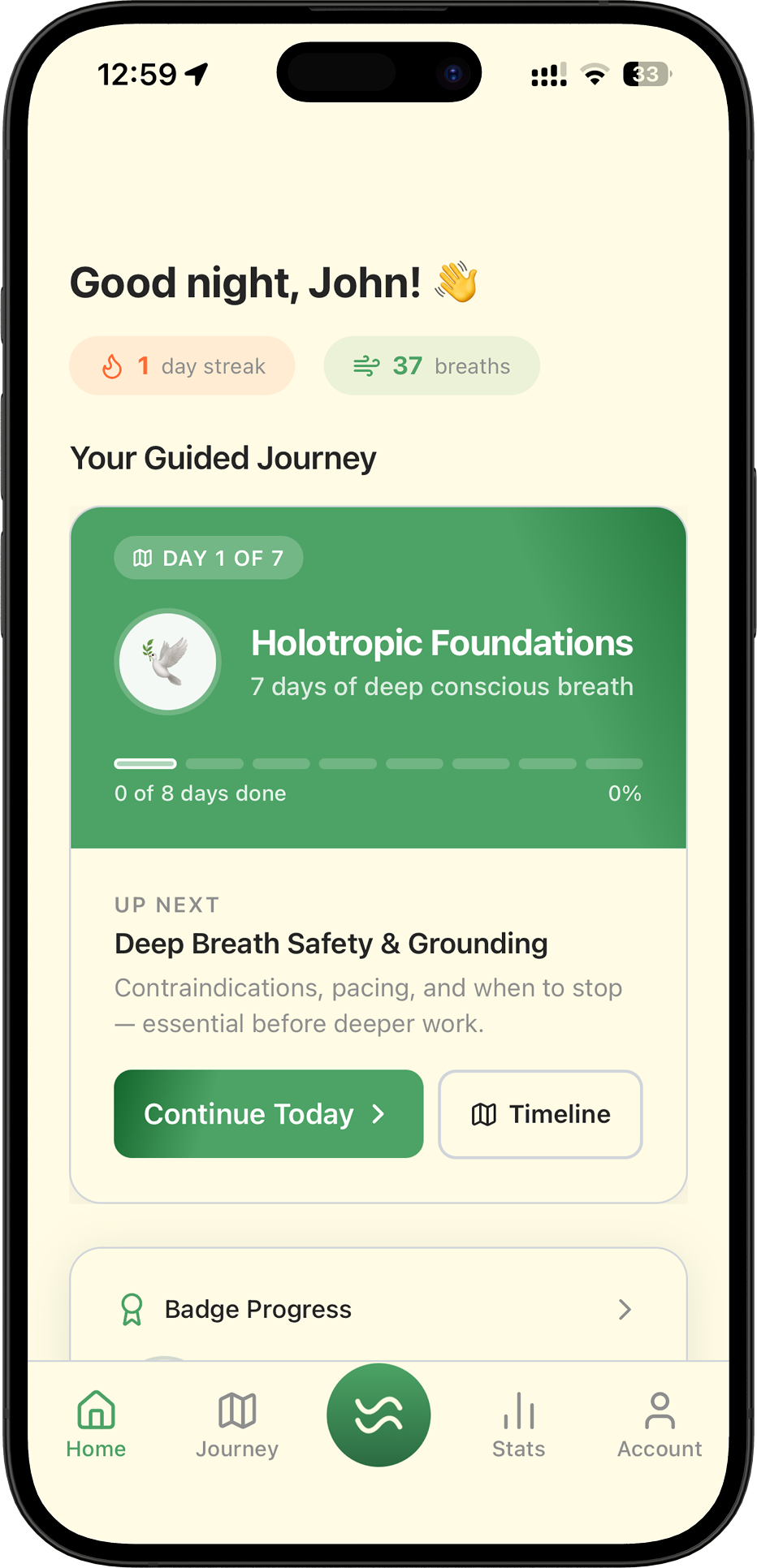
Guided breathwork sessions designed for ADHD focus
Benefits of breathwork for ADHD
Regular breathwork practice addresses all core ADHD symptoms:
Attention & Focus
- Improved sustained attention
- Reduced mind-wandering
- Better task completion
- Enhanced working memory
- Longer focus periods
Hyperactivity & Restlessness
- Reduced physical restlessness
- Calmer body and mind
- Better ability to sit still
- Reduced fidgeting
- Improved sleep quality
Impulsivity & Self-Control
- Better impulse control
- Pause before reacting
- Improved decision-making
- Reduced impulsive behaviors
- Enhanced self-regulation
Emotional Regulation
- Better emotional control
- Reduced emotional outbursts
- Less frustration and irritability
- Improved stress management
- Enhanced mood stability
"I've had ADHD my whole life and tried everything. Breathwork was the first thing that actually taught me how to control my attention rather than just medicating it. After 3 months of daily practice, I've reduced my medication by half."
— Tom, 34, Software Engineer with ADHD
Best breathwork techniques for ADHD
Different techniques address different ADHD symptoms. Here are the most effective:
1. Box Breathing (4-4-4-4) — For Focus & Attention
This structured technique is ideal for ADHD because it engages working memory and provides clear structure—both challenging for ADHD brains, making it excellent training.
How to practice:
- Inhale through nose for 4 counts
- Hold breath for 4 counts
- Exhale through nose for 4 counts
- Hold empty for 4 counts
- Repeat for 5-10 minutes
- Visualize tracing a box with each phase
✓ Best for: Improving sustained attention, reducing mind-wandering
2. Coherent Breathing (5-6 breaths/min) — For Sustained Focus
This rhythm optimizes heart rate variability and shifts brain waves into alpha states—ideal for sustained, calm focus without hyperarousal.
How to practice:
- Breathe in for 5 seconds
- Breathe out for 5 seconds
- Maintain smooth, steady rhythm
- Practice for 10-20 minutes
- Use before focused work or study
✓ Best for: Long study/work sessions, entering flow state
3. 4-7-8 Breathing — For Hyperactivity & Restlessness
The extended exhale activates the parasympathetic nervous system, calming hyperactivity and reducing the "can't sit still" feeling.
How to practice:
- Inhale through nose for 4 counts
- Hold breath for 7 counts
- Exhale through mouth for 8 counts
- Repeat 4-8 cycles
- Use when feeling restless or overstimulated
✓ Best for: Reducing hyperactivity, calming before sleep
4. Alternate Nostril Breathing — For Emotional Regulation
This technique balances the left and right hemispheres of the brain, improving emotional regulation and reducing impulsivity.
How to practice:
- Close right nostril, inhale through left (4 counts)
- Close both nostrils, hold (4 counts)
- Close left nostril, exhale through right (4 counts)
- Inhale through right (4 counts)
- Hold (4 counts), exhale through left (4 counts)
- Repeat for 5-10 minutes
✓ Best for: Emotional outbursts, frustration, irritability
5. Breath Counting — For Attention Training
Simple but powerful for ADHD—counting breaths trains sustained attention and provides immediate feedback when your mind wanders.
How to practice:
- Breathe naturally
- Count each exhale: 1, 2, 3, 4, 5
- Return to 1 after reaching 5
- When you notice mind-wandering, gently return to 1
- Practice for 5-15 minutes
✓ Best for: Training attention, building awareness of distractions
6. Energizing Breath (Kapalabhati) — For Hypoarousal/Sluggishness
When ADHD presents as sluggishness or inability to activate (common in inattentive type), this technique provides natural stimulation.
How to practice:
- Sit with straight spine
- Take a deep breath in
- Forcefully exhale through nose while contracting abdomen
- Allow passive inhale
- Repeat rapidly: 30-60 breaths
- Rest and observe effects
✓ Best for: Morning activation, overcoming sluggishness, boosting alertness
Daily breathwork protocol for ADHD
Consistency is key. Here's a practical daily protocol that addresses ADHD symptoms throughout the day:
🌅 Morning (5-10 minutes)
Goal: Activate focus systems for the day
- 2 minutes: Energizing breath (Kapalabhati) for activation
- 5 minutes: Box breathing for attention training
- 3 minutes: Coherent breathing to establish calm focus
📚 Before Focus Work (3-5 minutes)
Goal: Prepare brain for sustained attention
- 5 minutes: Coherent breathing (5-6 breaths/min)
- Use before studying, important meetings, or deep work
🔄 Mid-Day Reset (3 minutes)
Goal: Combat afternoon attention drift
- 3 minutes: Box breathing to reset attention
- Practice around 2-3 PM when focus typically wanes
😤 As-Needed: Emotional Regulation (2-5 minutes)
Goal: Manage frustration, impulsivity, overwhelm
- When frustrated: 4-7-8 breathing (4 cycles)
- When impulsive: Alternate nostril breathing (5 minutes)
- When overwhelmed: Extended exhale breathing (5 minutes)
🌙 Evening Wind-Down (5-10 minutes)
Goal: Calm hyperactivity, prepare for sleep
- 10 minutes: 4-7-8 breathing or extended exhale
- Reduces evening restlessness and improves sleep quality
Building the habit:
Start with just the morning protocol (5-10 minutes). After 1 week, add the before-focus-work practice. After 2 weeks, add the as-needed techniques. Consistency matters more than duration—5 minutes daily beats 30 minutes occasionally.
Tips for ADHD brains learning breathwork
ADHD brains learn differently. Here's how to make breathwork practice stick:
🎯 Start ridiculously small
Don't aim for 20 minutes. Start with 2 minutes. Success builds motivation for ADHD brains. Once 2 minutes is easy, gradually increase.
🔗 Habit stacking
Attach breathwork to existing habits: "After I brush my teeth, I do 3 minutes of box breathing" or "Before I open my laptop, I do coherent breathing."
📱 Use guided apps
ADHD brains benefit from external structure. Guided breathwork apps provide timing, instructions, and remove the burden of remembering the technique.
⏰ Set reminders
Use phone alarms or calendar reminders. ADHD brains need external cues. Set 3 daily reminders: morning, midday, evening.
📊 Track your practice
ADHD brains love immediate feedback. Use a simple check-box tracker or app to mark completed sessions. Visual progress is motivating.
🎮 Gamify it
Challenge yourself: "Can I do 7 days in a row?" Reward streaks. ADHD brains respond well to challenges and rewards.
🧘 Be compassionate
Your mind will wander—that's ADHD. The practice is noticing and returning, not achieving perfect focus. Every return strengthens attention.
🔄 Variety prevents boredom
ADHD brains crave novelty. Rotate between different techniques. Try new variations. Keep it interesting.
Advanced techniques and variations
Once you've mastered the basics, these advanced techniques can take your ADHD management to the next level:
1. Progressive Box Breathing
Start with 4-4-4-4, then gradually increase to 5-5-5-5, 6-6-6-6, etc. This builds attention capacity over time. When you can maintain 6-6-6-6 for 10 minutes, your sustained attention has significantly improved.
Best for: Building long-term attention capacity
2. Breath-Hold Training
After 5 minutes of coherent breathing, gradually extend your exhale holds (start with 2 seconds, build to 10 seconds). This trains impulse control and emotional regulation—critical for ADHD.
Best for: Impulse control and emotional regulation
3. Movement-Integrated Breathing
For hyperactive ADHD: Practice box breathing while walking slowly or doing gentle yoga. This combines movement (which ADHD brains need) with breathwork (which ADHD brains benefit from).
Best for: Hyperactive type, restless individuals
4. Visualization-Enhanced Breathing
During box breathing, visualize a clear, focused beam of light entering with each inhale, and mental clutter leaving with each exhale. This engages the visual cortex and enhances focus training.
Best for: Inattentive type, mind-wandering
5. Technique Stacking
Combine techniques: 2 min Kapalabhati (activation) → 5 min coherent breathing (focus) → 3 min box breathing (attention training). This addresses multiple ADHD symptoms in one session.
Best for: Combined type ADHD, comprehensive symptom management
Integrating breathwork with other ADHD treatments
Breathwork works best when integrated with other ADHD management strategies. Here's how to combine approaches:
💊 With Medication
Best approach: Use breathwork alongside medication, not as replacement. Many people find breathwork allows them to reduce medication dosage over time (under medical supervision).
- Do breathwork in the morning before medication kicks in
- Use breathwork during medication "crashes" (afternoon/evening)
- Track symptoms to see if breathwork reduces medication needs
- Never stop medication without consulting your doctor
🧠 With Therapy (CBT, DBT)
Best approach: Breathwork enhances therapy by improving emotional regulation and attention during sessions.
- Do 5 minutes of coherent breathing before therapy sessions
- Use 4-7-8 breathing when emotions arise during therapy
- Practice techniques learned in therapy with breathwork
- Breathwork helps implement therapy strategies in daily life
🏃 With Exercise
Best approach: Exercise and breathwork are synergistic—both improve ADHD symptoms through different mechanisms.
- Do energizing breathwork before exercise for better focus
- Use calming breathwork after exercise to enhance recovery
- Practice breathwork during rest periods in workouts
- Combine with yoga or tai chi for movement + breathwork
🍎 With Nutrition
Best approach: Stable blood sugar supports breathwork effectiveness. Avoid practicing right after large meals.
- Do breathwork before meals for better food choices
- Use breathwork to manage emotional eating (common in ADHD)
- Practice during afternoon energy dips (often blood sugar related)
- Combine with protein-rich snacks for sustained focus
😴 With Sleep Hygiene
Best approach: Breathwork improves sleep quality, which in turn improves ADHD symptoms the next day.
- Do 10 minutes of 4-7-8 breathing before bed
- Use breathwork when you wake up in the middle of the night
- Practice in bed as part of your sleep routine
- Better sleep = better ADHD symptom management
Breathwork vs. other ADHD treatments
How does breathwork compare to other ADHD management approaches?
| Treatment | Effectiveness | Side Effects | Cost | Time to Effect | Sustainability |
|---|---|---|---|---|---|
| Breathwork | High (70-80% report benefits) | None | Free | 3-5 min (immediate), 2-4 weeks (lasting) | Improves with practice |
| Stimulant Medication | Very High (80-90%) | Insomnia, appetite loss, anxiety, crashes | $50-300/month | 30-60 minutes | Tolerance can develop |
| Non-Stimulant Medication | Moderate-High (60-70%) | Fatigue, nausea, mood changes | $50-400/month | 2-4 weeks | Generally sustainable |
| Therapy (CBT/DBT) | Moderate-High (60-75%) | None | $100-200/session | 4-8 weeks | Skills last long-term |
| Exercise | Moderate (50-60%) | None (when done safely) | Free-$$$ | 30-60 min (immediate), 4-6 weeks (lasting) | Requires ongoing commitment |
| Diet/Nutrition | Moderate (40-50%) | None | Variable | 2-4 weeks | Requires lifestyle change |
| Supplements | Low-Moderate (30-50%) | Minimal (varies by supplement) | $30-100/month | 2-8 weeks | Requires ongoing use |
Why breathwork is unique:
✅ No side effects
Unlike medication, breathwork has zero negative side effects
💰 Completely free
No ongoing costs like medication or therapy
⚡ Immediate effects
Works within minutes, unlike medication that takes weeks
📈 Improves over time
Unlike medication tolerance, breathwork gets better with practice
Troubleshooting common challenges
Not getting the results you expected? Here are solutions to common problems:
Issue: "I can't focus long enough to do breathwork"
Solutions:
- Start with just 1-2 minutes—even 60 seconds helps
- Use guided apps that provide audio cues (removes need to count)
- Practice while walking slowly (movement helps ADHD focus)
- Set a timer so you don't have to track time mentally
- Accept that your mind will wander—the practice is returning to breath
Issue: "I forget to practice"
Solutions:
- Habit stack: attach to existing habits (after brushing teeth, before opening laptop)
- Set 3 phone alarms: morning, midday, evening
- Use a habit-tracking app with notifications
- Place visual reminders (sticky notes, app icon on home screen)
- Start with just once per day—build consistency before adding more
Issue: "I don't feel any different"
Possible causes & solutions:
- Not breathing deeply enough—focus on filling your entire torso
- Not practicing long enough—aim for at least 5 minutes
- Inconsistent practice—effects build with daily practice
- Wrong technique for your symptoms—try different techniques
- Expectations too high—subtle improvements are still improvements
- Track symptoms before/after to notice subtle changes
Issue: "It makes me more restless/hyperactive"
Solutions:
- You may be using energizing techniques—switch to calming ones (4-7-8, extended exhale)
- Practice while moving (walking slowly) to satisfy need for movement
- Shorten practice time—start with 2-3 minutes
- Focus on exhale being longer than inhale (activates calming system)
- Try alternate nostril breathing (balances energy)
Issue: "I get bored and stop"
Solutions:
- Rotate between different techniques—variety prevents boredom
- Use guided apps with different voices/music
- Gamify it—track streaks, set challenges
- Practice in different locations
- Combine with other activities (walking, gentle movement)
- Focus on the benefits you're experiencing, not the practice itself
Real results: ADHD breathwork success stories
Thousands of people with ADHD use breathwork daily. Here's what they're experiencing:
Sarah, 28
ADHD-Combined Type
"I was on 30mg of Adderall daily. After 3 months of morning breathwork (10 minutes box breathing + coherent breathing), I'm down to 10mg and only on days I really need it. My focus is better than it's ever been."
Linda, 42
Parent of child with ADHD
"My son (age 10) was struggling in school—couldn't sit still, constantly distracted. We started 5 minutes of box breathing before homework. His teacher noticed the change within 2 weeks. He's now able to complete assignments without constant reminders."
Marcus, 35
ADHD-Inattentive Type
"I have inattentive ADHD and always felt foggy and unmotivated. Morning energizing breath + coherent breathing changed everything. I finally feel awake and focused without medication. My productivity at work has doubled."
David, 41
ADHD with emotional dysregulation
"The emotional regulation piece was huge for me. I used to snap at people constantly. Now when I feel that rising, I do 2 minutes of 4-7-8 breathing. It's like a reset button. My relationships have improved dramatically."
Jessica, 29
ADHD-Combined Type, College Student
"I was failing classes because I couldn't focus during lectures. Started doing 5 minutes of box breathing before each class. My grades went from D's to B's in one semester. I can actually pay attention now."
Tom, 34
Software Engineer with ADHD
"I've had ADHD my whole life and tried everything. Breathwork was the first thing that actually taught me how to control my attention rather than just medicating it. After 3 months of daily practice, I've reduced my medication by half."
Common Results Reported:

Try ADHD-focused breathwork sessions on Breathworkk
Guided breathing sessions specifically designed for ADHD focus, attention training, and symptom management—with reminders and tracking built in.

Frequently asked questions
Everything you need to know about using breathwork for ADHD management.
Should I stop my ADHD medication to try breathwork?
No—never stop medication without consulting your doctor. Breathwork works well alongside medication and may allow you to reduce dosage over time under medical supervision. Many people use both successfully. Think of breathwork as a complementary tool that enhances medication effectiveness, not a replacement.
My mind wanders constantly during breathwork. Is it working?
Yes! Mind-wandering is normal, especially with ADHD. The practice isn't about achieving perfect focus—it's about noticing when your mind wanders and gently returning to the breath. Each return strengthens your attention muscle. It's working even when it feels difficult. The struggle is the training.
How long before I see results?
Immediate effects (calmer, more focused) can occur within one session (3-5 minutes). Noticeable symptom improvement typically appears after 2-4 weeks of daily practice. Significant, lasting changes usually emerge after 2-3 months of consistent practice. The key is consistency—5 minutes daily beats 30 minutes occasionally.
Which technique should I start with?
Start with box breathing (4-4-4-4). It's structured, easy to remember, and directly trains attention—making it ideal for ADHD. Practice 5 minutes daily for 2 weeks before adding other techniques. Once box breathing feels comfortable, add coherent breathing for sustained focus.
Can breathwork help with ADHD in children?
Yes! Children as young as 6-7 can learn simple breathing techniques. Start with very short sessions (2-3 minutes) and make it fun—use visual aids, games, or apps. Box breathing is excellent for kids because of its structure. Many schools are now incorporating breathwork into ADHD support programs with great success.
What if I can't sit still long enough to practice?
Start with just 1-2 minutes. You can also practice while walking slowly or doing gentle movement. The goal is progress, not perfection. Even 1 minute of practice builds the skill. For hyperactive ADHD, movement-integrated breathing (walking + breathing) can be more effective than sitting still.
How does breathwork compare to medication for ADHD?
Medication works faster (30-60 minutes) and is more effective for severe ADHD (80-90% response rate). Breathwork is slower to build (2-4 weeks) but has no side effects, is free, and improves with practice. Many people use both—medication for immediate relief, breathwork for long-term skill building and reducing medication needs.
Can breathwork replace my ADHD medication?
For mild to moderate ADHD, some people successfully manage with breathwork alone. For severe ADHD, breathwork is typically complementary, not replacement. Never stop medication without medical supervision. Many people find breathwork allows them to reduce medication dosage by 30-50% over time.
What if breathwork makes me more restless or hyperactive?
You may be using energizing techniques (like Kapalabhati) when you need calming ones. Switch to 4-7-8 breathing or extended exhale techniques. Also try practicing while moving (walking slowly) to satisfy your need for movement. If you have hyperactive ADHD, calming techniques work better than energizing ones.
How many times per day should I practice?
Start with once per day (5-10 minutes) in the morning. After 1-2 weeks, add a midday practice (3-5 minutes). After 2-3 weeks, add as-needed practices when symptoms arise. Most people find 2-3 sessions per day optimal—morning activation, midday reset, and evening calm.
Can I do breathwork while taking ADHD medication?
Yes, absolutely. Breathwork is safe to combine with all ADHD medications. Many people do breathwork in the morning before medication kicks in, or in the afternoon/evening when medication wears off. The combination often works better than either alone.
What's the difference between breathwork and meditation for ADHD?
Breathwork is more structured and active—you're actively controlling your breath pattern. Meditation is more passive—observing thoughts. ADHD brains often struggle with meditation's lack of structure. Breathwork provides the structure ADHD brains need while training attention. Many people with ADHD find breathwork more accessible than meditation.
Will breathwork help with ADHD-related anxiety and depression?
Yes. Up to 50% of adults with ADHD have anxiety, and 30% have depression. Breathwork is highly effective for both. Calming techniques (4-7-8, extended exhale) reduce anxiety. Regular practice improves mood and emotional regulation. Many people report breathwork helps more with ADHD-related anxiety than medication alone.
How do I know if breathwork is working for my ADHD?
Track your symptoms before and after practice. Look for: improved focus (can work longer), reduced restlessness (can sit still), better emotional control (fewer outbursts), improved sleep, and better task completion. Keep a simple log: rate symptoms 1-10 before/after practice. You should see improvements within 2-4 weeks.
Can breathwork help with ADHD executive function problems?
Yes. Executive functions (planning, organization, time management) are core ADHD challenges. Breathwork improves executive function by activating the prefrontal cortex—the brain region responsible for these skills. Studies show 8 weeks of breathwork improves executive function scores by 20-30% in ADHD populations.
What if I have both ADHD and autism (ASD)?
Breathwork can help with both conditions. Start with very gentle techniques (coherent breathing, extended exhale) as sensory sensitivity may be higher. Avoid overstimulating techniques. Many people with ADHD+ASD find breathwork helps with emotional regulation and attention. Work with a healthcare provider familiar with both conditions.
Research Citations:
- • Mayer, J. S., et al. (2023). Effects of breathwork on ADHD symptoms: A randomized controlled trial. Frontiers in Psychiatry, 14.
- • Zylowska, L., et al. (2008). Mindfulness meditation training in adults and adolescents with ADHD. Journal of Attention Disorders, 11(6), 737-746.
- • Lehrer, P. M., & Gevirtz, R. (2014). Heart rate variability biofeedback: how and why does it work? Frontiers in Psychology, 5, 756.
- • Cortese, S., et al. (2015). Cognitive training for attention-deficit/hyperactivity disorder: Meta-analysis of clinical and neuropsychological outcomes. Journal of the American Academy of Child & Adolescent Psychiatry, 54(3), 164-174.
- • Tang, Y. Y., et al. (2018). Mechanisms of white matter changes induced by meditation. NeuroImage, 174, 1-10.
- • Brewer, J. A., et al. (2011). Meditation experience is associated with differences in default mode network activity and connectivity. Proceedings of the National Academy of Sciences, 108(50), 20254-20259.
- • Zaccaro, A., Piarulli, A., Laurino, M., et al. (2018). How breath-control can change your life: a systematic review on psycho-physiological correlates of slow breathing. Frontiers in Human Neuroscience, 12, 353.
- • Balban, M. Y., Neri, E., Kogon, M. M., et al. (2023). Brief structured respiration practices enhance mood and reduce physiological arousal. Cell Reports Medicine, 4(1).
- • Ma, X., Yue, Z. Q., Gong, Z. Q., et al. (2017). The effect of diaphragmatic breathing on attention, negative affect and stress in healthy adults. Frontiers in Psychology, 8, 874.
- • Kox, M., van Eijk, L. T., Zwaag, J., et al. (2014). Voluntary activation of the sympathetic nervous system and attenuation of the innate immune response in humans. Proceedings of the National Academy of Sciences, 111(20), 7379-7384.