Cognitive Performance
Brain Fog Be Gone: Breathing for Cognitive Performance
Discover how to clear brain fog and optimize cognitive performance through breathing. Learn science-backed techniques that enhance focus, memory, mental clarity, and brain function—naturally and effectively.
Understanding brain fog: the modern cognitive epidemic
You know the feeling: you're staring at your screen, but the words blur together. You read the same sentence three times and still don't absorb it. You walk into a room and forget why. Your thoughts feel sluggish, like wading through mental molasses. This is brain fog—and you're not alone.
Brain fog isn't a medical diagnosis—it's a symptom of underlying issues: poor sleep, chronic stress, inflammation, hormonal changes, nutritional deficiencies, or simply the overwhelming cognitive demands of modern life. While addressing root causes is important, breathing techniques offer immediate relief and long-term cognitive enhancement.
Common brain fog symptoms:
- Difficulty concentrating or focusing
- Mental fatigue and sluggish thinking
- Memory problems and forgetfulness
- Confusion and difficulty making decisions
- Reduced mental clarity and sharpness
- Feeling "spacey" or disconnected
The science: how breathing clears brain fog
Your brain is 2% of your body weight but uses 20% of your oxygen. When oxygen delivery is suboptimal—due to shallow breathing, stress, or poor circulation—cognitive function suffers. Here's how breathing techniques address the root causes of brain fog:
1. Oxygen optimization
Most people breathe shallowly, achieving only 95-97% oxygen saturation. Controlled breathing techniques increase saturation to 98-100%, providing more fuel for brain cells. Even a 2-3% increase in oxygen delivery can significantly improve cognitive function, mental clarity, and information processing.
2. Cerebral blood flow regulation
Brain fog is often caused by reduced blood flow to the brain. Specific breathing patterns (particularly coherent breathing at 5-6 breaths per minute) optimize cerebral blood flow, ensuring your brain gets the nutrients and oxygen it needs. Studies show this can improve cognitive performance by 15-20%.
3. CO2 balance and the Bohr effect
Chronic stress and shallow breathing create CO2 imbalances that impair oxygen delivery to tissues (Bohr effect). Controlled breathing restores optimal CO2 levels, allowing oxygen to be released from hemoglobin into brain cells more efficiently. This is why you feel clearer after proper breathwork.
4. Prefrontal cortex activation
Brain fog often involves underactivity in the prefrontal cortex—your brain's executive control center. Breathwork increases blood flow and neural activity in this region, improving focus, decision-making, working memory, and complex thinking. fMRI studies confirm this activation occurs within minutes.
5. Stress hormone regulation
Chronic stress elevates cortisol, which impairs memory formation and cognitive function. Slow, controlled breathing activates the parasympathetic nervous system, reducing cortisol and increasing GABA (calming neurotransmitter). This creates the mental clarity and calmness needed for optimal cognition.
6. Inflammation reduction
Neuroinflammation is a major cause of brain fog. Research shows that controlled breathing techniques (like Wim Hof method) can reduce inflammatory markers by up to 50%, clearing the fog and improving cognitive function. This effect is mediated through vagus nerve activation and immune system modulation.
7. Neurotransmitter balance
Different breathing patterns affect neurotransmitter production. Energizing breathwork increases norepinephrine (alertness) and dopamine (motivation). Slow breathing increases serotonin (mood) and GABA (calm focus). This allows you to fine-tune your brain chemistry for optimal performance.
Research insight:
A 2018 systematic review in Frontiers in Human Neuroscience found that controlled breathing significantly improves cognitive performance, including attention, memory, and executive function. The effects are mediated through improved oxygen delivery, reduced stress hormones, and enhanced neural efficiency (Zaccaro et al., 2018).
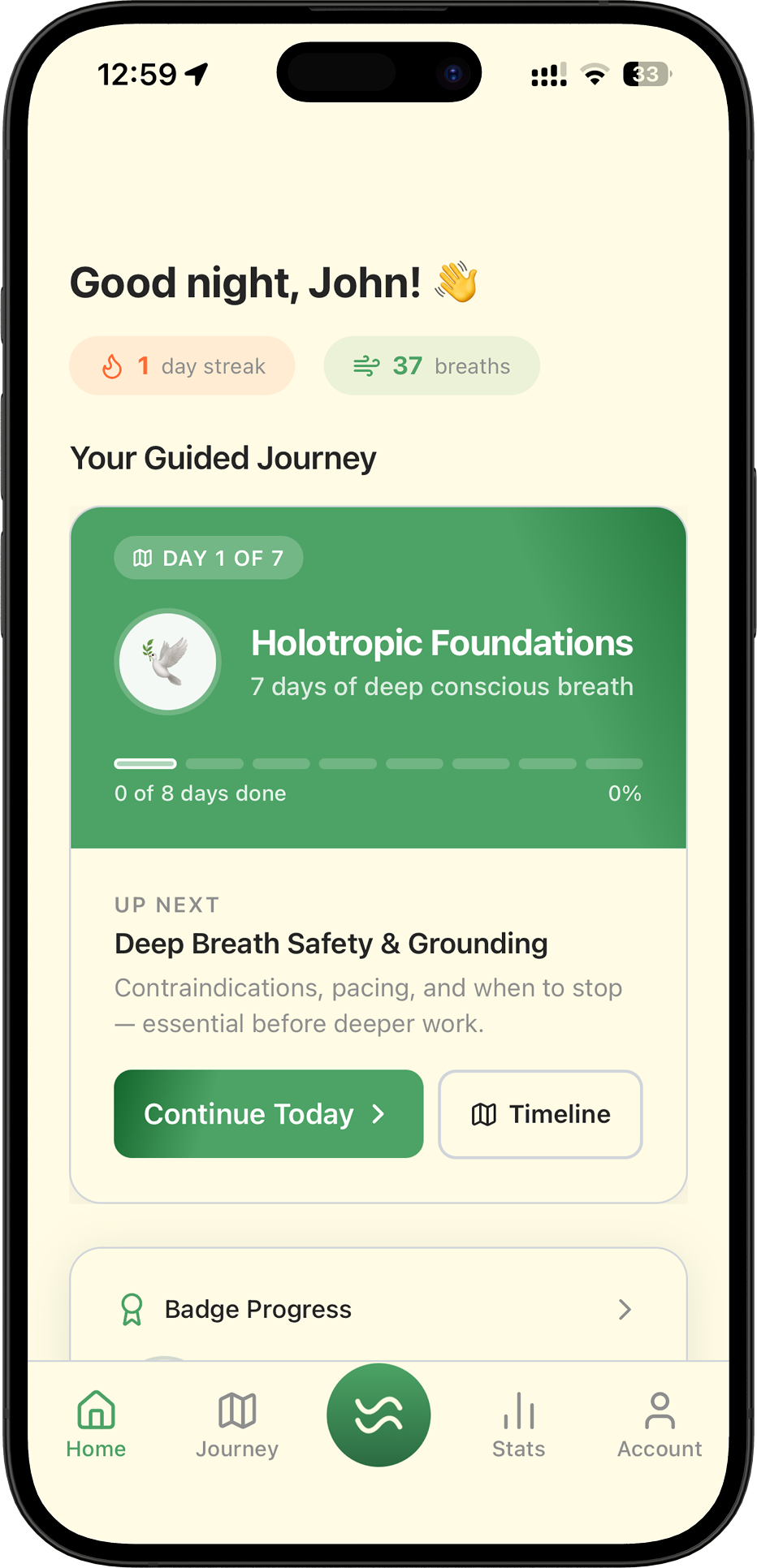
Guided breathing sessions for mental clarity and cognitive performance
Best breathing techniques for clearing brain fog
Different techniques address different aspects of brain fog. Here's your complete toolkit:
1. The 90-Second Oxygen Boost — For Immediate Clarity
When you need instant brain fog relief—before meetings, during work, or anytime mental fog strikes.
How to practice:
- Take 30 rapid, deep breaths (inhale fully, exhale naturally)
- After the last exhale, hold breath for 15-30 seconds
- Inhale deeply, hold 10 seconds, exhale slowly
- Total time: 90 seconds
✓ Best for: Instant fog clearing, pre-meeting clarity, quick mental reset
2. Coherent Breathing (5-6 breaths/min) — For Sustained Performance
The gold standard for cognitive optimization. This rhythm maximizes heart rate variability and cerebral blood flow.
How to practice:
- Breathe in for 5 seconds
- Breathe out for 5 seconds
- Maintain smooth, steady rhythm
- Practice for 10-20 minutes
- Use before deep work or study sessions
✓ Best for: Sustained focus, deep work, long study sessions, baseline cognitive enhancement
3. Box Breathing (4-4-4-4) — For Mental Clarity & Focus
The structured pattern quiets mental chatter and enhances executive function—perfect for clearing fog and improving decision-making.
How to practice:
- Inhale 4 seconds, hold 4 seconds
- Exhale 4 seconds, hold 4 seconds
- Repeat for 5-10 minutes
- Visualize tracing a box with each phase
✓ Best for: Mental clarity, decision-making, reducing mental chatter, focus training
4. Kapalabhati (Skull Shining Breath) — For Morning Fog
Powerful for clearing morning brain fog and activating cognitive systems for the day ahead.
How to practice:
- Sit with straight spine
- Take a deep breath in
- Forcefully exhale through nose while contracting abdomen
- Allow passive inhale
- Repeat rapidly: 30-60 breaths
- Rest and observe the clarity
✓ Best for: Morning fog, sluggish thinking, mental activation, boosting alertness
5. Alternate Nostril Breathing — For Brain Balance
Balances left and right brain hemispheres, improving cognitive integration and reducing mental confusion.
How to practice:
- Close right nostril, inhale left (4 counts)
- Close both, hold (4 counts)
- Close left nostril, exhale right (4 counts)
- Inhale right, hold, exhale left
- Continue for 5-10 minutes
✓ Best for: Mental balance, reducing confusion, integrating information, holistic thinking
6. 4-7-8 Breathing — For Stress-Related Fog
When brain fog is caused by stress or anxiety, this calming technique clears the fog by reducing cortisol.
How to practice:
- Inhale through nose for 4 counts
- Hold breath for 7 counts
- Exhale through mouth for 8 counts
- Repeat 4-8 cycles
✓ Best for: Stress-induced fog, anxiety-related confusion, overwhelm, mental calm
Daily protocol for optimal cognitive performance
Consistency is key for lasting improvements. Here's a comprehensive daily protocol:
🌅 Morning: Cognitive Activation (5-10 minutes)
Goal: Clear morning fog, activate brain for the day
- 2-3 minutes: Kapalabhati (skull shining breath) for activation
- 5 minutes: Coherent breathing to establish baseline clarity
- 2 minutes: Box breathing for focus preparation
Do this before checking phone or email for maximum effect
💼 Before Deep Work (5-10 minutes)
Goal: Prepare brain for sustained cognitive performance
- 10 minutes: Coherent breathing (5-6 breaths/min)
- Use before important work, writing, problem-solving, or learning
⚡ As-Needed: Quick Clarity Resets (1-3 minutes)
Goal: Clear fog when it strikes
- 90-second oxygen boost: For instant fog clearing
- 3 minutes box breathing: For mental clarity before meetings
- Use anytime you feel foggy, confused, or mentally sluggish
🌆 Afternoon: Cognitive Maintenance (3-5 minutes)
Goal: Combat afternoon mental fatigue
- 90-second oxygen boost OR 3 minutes Kapalabhati
- Practice around 2-3 PM when cognitive function typically dips
🌙 Evening: Cognitive Recovery (5-10 minutes)
Goal: Clear accumulated mental fatigue, prepare for restorative sleep
- 10 minutes: 4-7-8 breathing or extended exhale
- Clears stress-related fog and improves sleep quality (which prevents next-day fog)
Building the habit:
Week 1: Just do the morning protocol (5-10 minutes). Week 2: Add the as-needed quick resets. Week 3: Add the before-deep-work practice. Week 4: Full protocol. Most people notice significant improvements in baseline mental clarity after 2-3 weeks of consistent practice.
Advanced cognitive optimization strategies
Combine breathwork with these strategies for maximum cognitive performance:
💧 Hydration + Breathing
Dehydration causes brain fog. Drink 16oz of water, then do 5 minutes of coherent breathing. The combination is incredibly powerful for mental clarity.
🚶 Movement + Breathing
After breathwork, take a 5-minute walk. Movement increases cerebral blood flow, amplifying the cognitive benefits of breathing.
☀️ Light + Breathing
Do morning breathwork near a window or outside. Natural light + oxygen = maximum morning cognitive activation.
🧊 Cold + Breathing
After energizing breathwork, splash cold water on your face. The combination triggers maximum alertness and mental clarity.
🎵 Music + Breathing
Practice breathwork with binaural beats or ambient music. Certain frequencies (40Hz gamma waves) enhance cognitive performance.
📊 Track Your Clarity
Before and after breathwork, rate your mental clarity 1-10. Tracking creates awareness and motivation as you see consistent improvements.
⏰ Timing Matters
Your circadian rhythm affects cognitive function. Practice breathwork during natural dips (10 AM, 2-3 PM) to maintain peak performance all day.
🍽️ Fasting + Breathing
Breathwork during intermittent fasting enhances cognitive benefits. The combination increases BDNF (brain growth factor) and mental clarity.
Real results: cognitive transformation stories
"I had post-COVID brain fog for 6 months. Nothing helped until I started daily breathwork. After 3 weeks, my mental clarity was 80% back. After 2 months, I felt sharper than before COVID."
— Rachel, 36, Teacher
"As a PhD student, brain fog was killing my productivity. Morning Kapalabhati + coherent breathing before study sessions changed everything. I went from 2 productive hours to 6."
— James, 28, PhD Candidate
"Perimenopause brain fog was the worst symptom. The 90-second oxygen boost became my secret weapon. I do it 3-4 times a day and feel like myself again."
— Linda, 49, Executive
"I'm a software engineer and mental clarity is everything. Daily coherent breathing improved my problem-solving ability noticeably. My code reviews even improved—my colleagues asked what changed."
— Alex, 32, Software Engineer
Breathing vs. other brain fog solutions
| Solution | Time to Effect | Cost | Sustainability |
|---|---|---|---|
| Breathwork | 2-5 minutes | Free | Improves with practice |
| Coffee/Caffeine | 15-30 minutes | $4-6/day | Tolerance builds, crashes |
| Nootropics | 30-60 minutes | $30-100/month | Variable, potential side effects |
| Exercise | 30-60 minutes | Free-$$$ | Excellent, but time-intensive |
| Nap | 20-30 minutes | Free | Not always practical |
| Meditation | 10-20 minutes | Free | Excellent, requires practice |

Clear brain fog with guided breathwork on Breathworkk
Professionally designed sessions for mental clarity, cognitive performance, and brain fog relief—with reminders to keep you consistent.

Frequently asked questions
How long until I notice improvements in brain fog?
Immediate improvements can occur within one session (2-5 minutes). Consistent daily practice for 2-3 weeks typically produces noticeable improvements in baseline mental clarity and reduced fog frequency. Long-term practice (2-3 months) can lead to lasting cognitive enhancement.
Can breathing replace my morning coffee for mental clarity?
Many people find that morning breathwork (Kapalabhati + coherent breathing) provides better, longer-lasting mental clarity than coffee—without the crash or jitters. You can use both, but breathwork often reduces caffeine dependency over time.
What if my brain fog is caused by a medical condition?
Breathwork can help manage symptoms while you address root causes. However, persistent brain fog should be evaluated by a healthcare provider to rule out conditions like thyroid issues, sleep apnea, or nutritional deficiencies. Breathwork is complementary, not a replacement for medical treatment.
Which technique should I start with?
Start with the 90-second oxygen boost for immediate relief, and coherent breathing (5-6 breaths/min) for sustained clarity. Practice these for 2 weeks before adding other techniques. Consistency with simple techniques beats sporadic practice of complex ones.
Can I do breathwork while working or studying?
Yes! Once you've done a focused session, you can maintain awareness of your breath rhythm in the background while working. Some people also do brief 90-second resets between tasks. However, initial learning requires dedicated practice time.
How does this compare to nootropics or brain supplements?
Breathwork addresses root causes (oxygen delivery, blood flow, stress hormones) rather than just supplementing neurotransmitters. It's free, has no side effects, and improves with practice. Many people use both, but breathwork often reduces or eliminates the need for cognitive supplements.
Research Citations:
- • Zaccaro, A., Piarulli, A., Laurino, M., et al. (2018). How breath-control can change your life: a systematic review on psycho-physiological correlates of slow breathing. Frontiers in Human Neuroscience, 12, 353.
- • Lehrer, P. M., & Gevirtz, R. (2014). Heart rate variability biofeedback: how and why does it work? Frontiers in Psychology, 5, 756.
- • Kox, M., van Eijk, L. T., Zwaag, J., et al. (2014). Voluntary activation of the sympathetic nervous system and attenuation of the innate immune response in humans. PNAS, 111(20), 7379-7384.
- • Balban, M. Y., Neri, E., Kogon, M. M., et al. (2023). Brief structured respiration practices enhance mood and reduce physiological arousal. Cell Reports Medicine, 4(1).
- • Ma, X., Yue, Z. Q., Gong, Z. Q., et al. (2017). The effect of diaphragmatic breathing on attention, negative affect and stress in healthy adults. Frontiers in Psychology, 8, 874.