Quick Focus & Clarity
The 90-Second Oxygen Boost for Instant Mental Clarity
Discover the fastest way to clear brain fog and sharpen your mind. This 90-second breathing technique delivers instant mental clarity when you need it most—no coffee, no pills, just oxygen.
Why you need a 90-second clarity reset
You're in back-to-back meetings. Your brain feels foggy. You have an important decision to make in 5 minutes. You need to be sharp—right now. You don't have time for a 20-minute meditation or a coffee run.
This is the reality of modern work. We need tools that deliver instant results in the time we actually have. The 90-Second Oxygen Boost is designed for exactly this: maximum mental clarity in minimum time.
❌ The Problem
- Brain fog hits at the worst times
- Traditional solutions take too long
- Caffeine causes jitters and crashes
- No time for meditation or exercise
- Mental fatigue accumulates throughout the day
✅ The Solution
- Instant clarity in 90 seconds
- No equipment or preparation needed
- Natural, no side effects
- Works anywhere, anytime
- Effects last 30-60 minutes
💡 The Promise
In 90 seconds, you can flood your brain with oxygen, clear mental fog, boost alertness, and sharpen focus—providing 30-60 minutes of enhanced mental clarity. It's the fastest, most effective cognitive reset available. No pills, no caffeine, no waiting—just pure, immediate mental clarity.
Real-world scenarios where this saves the day:
📊 Before a critical presentation
You've been preparing all week, but your mind feels scattered. 90 seconds later, you're laser-focused and ready to deliver.
💼 Mid-afternoon energy crash
That 2 PM slump hits hard. Instead of another coffee (and the 4 PM crash), you reset your brain in 90 seconds.
🧠 After hours of deep work
Your brain feels fried from intense focus. A quick oxygen boost refreshes your mental capacity instantly.
⚡ Before an important decision
You need to think clearly about a major choice. Clear the mental clutter first, then decide with clarity.
The 90-Second Oxygen Boost: step-by-step
This technique is adapted from Wim Hof breathing, optimized for speed and workplace practicality. Here's exactly how to do it:
Get Ready (5 seconds)
- Sit upright with straight spine
- Feet flat on floor, hands on lap or desk
- Close your eyes or soften your gaze
- Take one normal breath to prepare
Power Breathing (60 seconds)
- Take 30 rapid, deep breaths
- Inhale fully through your nose (belly and chest expand)
- Exhale naturally through your mouth (don't force it)
- Rhythm: about 2 breaths per second
- Think: "Power inhale, release exhale"
- You may feel tingling—this is normal and good
Duration: ~60 seconds for 30 breaths
The Hold (15-30 seconds)
- After the 30th breath, exhale naturally
- Hold your breath with empty lungs
- Relax your body—don't create tension
- Hold for 15-30 seconds (whatever's comfortable)
- Notice the stillness and clarity emerging
Duration: 15-30 seconds
Recovery Breath (15 seconds)
- When you need to breathe, take a deep, full inhale
- Hold this breath for 10 seconds
- Visualize oxygen flooding your brain
- Feel the clarity and alertness building
- Exhale slowly and completely
Duration: ~15 seconds
Return to Work (Immediate)
- Open your eyes
- Take 2-3 normal breaths
- Notice the enhanced clarity and alertness
- Return to your task with a clear mind
✓ Total time: 90 seconds | Clarity duration: 30-60 minutes
Pro tip:
For maximum effect, do this technique standing up (if safe to do so). Standing increases blood flow and makes the oxygen boost even more powerful. Just make sure you're in a safe space in case you feel lightheaded.
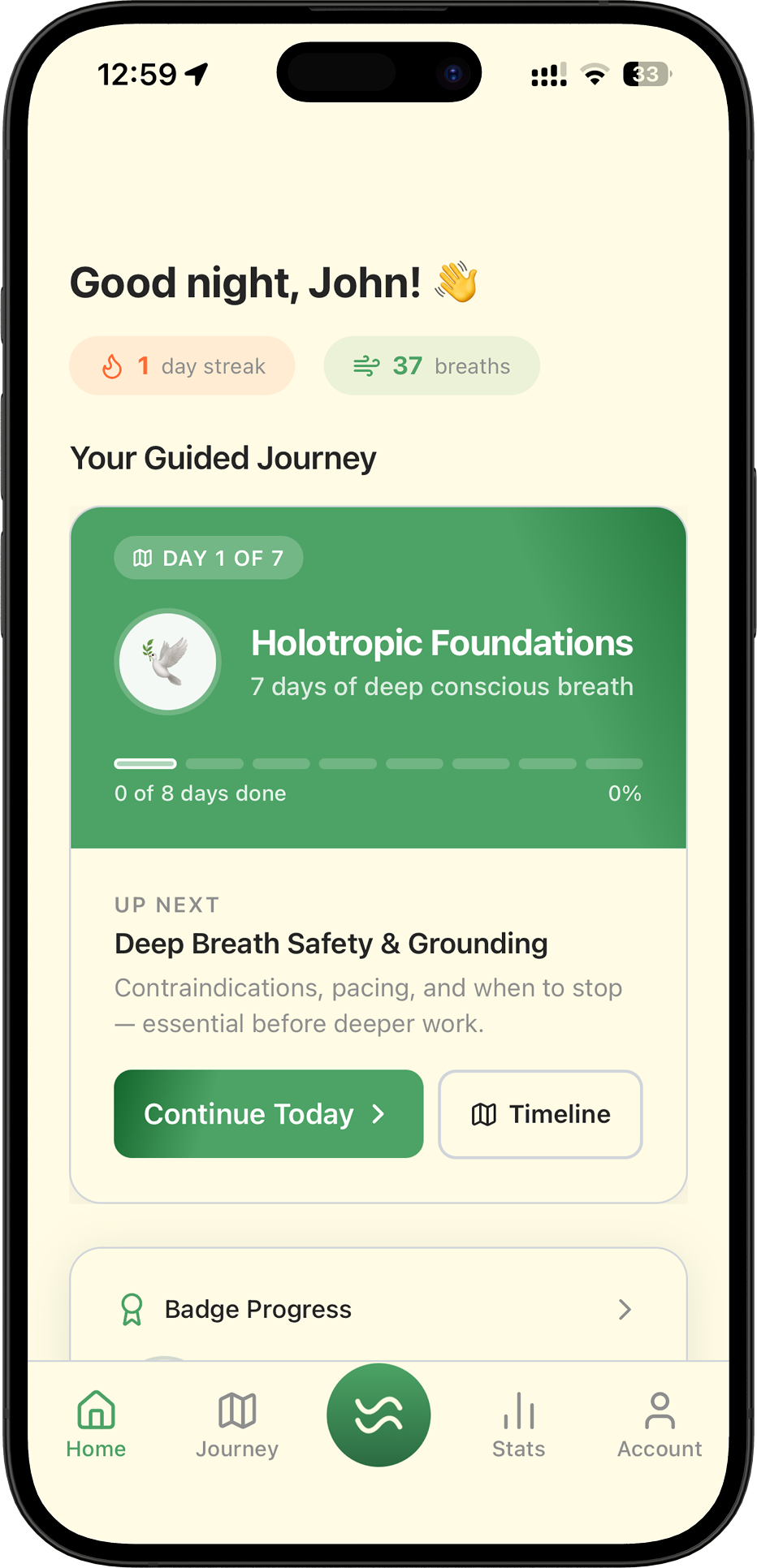
Guided 90-second oxygen boost with perfect timing
The science: why 90 seconds works
This isn't just hyperventilating—there's precise science behind why this technique delivers instant mental clarity. Understanding the mechanisms helps you appreciate the power and use it more effectively.
What happens in your body (second by second):
Rapid Breathing Phase
Blood oxygen saturation rises from 95-98% to near 100%. CO2 levels drop, pH increases. Sympathetic nervous system activates.
Breath Hold & Recovery
Oxygen-rich blood floods the brain. Prefrontal cortex receives increased blood flow. Adrenaline peaks. Mental clarity emerges.
Enhanced State
Mitochondrial efficiency optimized. Enhanced cognitive function maintained for 30-60 minutes. Body returns to normal gradually.
Oxygen Supersaturation
The rapid breathing phase increases blood oxygen saturation from typical 95-98% to near 100%. Your brain, which uses 20% of your body's oxygen despite being only 2% of body weight, gets a massive influx of its primary fuel. This immediately improves neural firing and cognitive function.
Key Fact:
Brain cells are extremely sensitive to oxygen levels. Even a 2-3% increase in saturation can improve cognitive performance by 15-20%.
CO2 Reduction and Respiratory Alkalosis
Rapid breathing expels CO2 faster than your body produces it, temporarily changing blood pH from ~7.4 to ~7.5-7.6 (respiratory alkalosis). This affects cerebral blood flow and neural excitability, creating the mental clarity and alertness you feel. It's a controlled, beneficial state that reverses naturally within minutes.
Why This Matters:
The pH change increases neurotransmitter sensitivity, making your brain more responsive and alert. This is why you feel "sharper" immediately.
Sympathetic Nervous System Activation
The breathing pattern triggers your sympathetic nervous system (fight-or-flight), releasing adrenaline and noradrenaline. Research shows this technique can increase adrenaline by 200-300%, providing genuine alertness and energy—not just masking fatigue like caffeine does.
Adrenaline
+200-300%
Noradrenaline
+150-200%
Prefrontal Cortex Activation
The technique increases blood flow to the prefrontal cortex—your brain's executive control center responsible for focus, decision-making, and complex thinking. This is why you feel sharper and more capable of handling difficult tasks immediately after.
Brain Region Activated:
Prefrontal cortex (PFC) - responsible for executive functions, working memory, attention control, and decision-making. Increased blood flow = better performance.
Mitochondrial Efficiency
The oxygen surge optimizes mitochondrial function—the powerhouses of your cells. More oxygen means more efficient ATP (energy) production, particularly in brain cells. This is why the clarity lasts 30-60 minutes, not just seconds.
Energy Production:
Mitochondria produce ATP (adenosine triphosphate) - your cells' energy currency. More oxygen = more efficient ATP production = sustained mental energy.
Neural Reset
The breath hold followed by the recovery breath creates a "reset" in your nervous system. It's like clearing your browser cache—mental clutter dissipates, and you return to baseline with enhanced clarity and focus.
What Gets Reset:
Autonomic nervous system balance, stress hormone levels, neural firing patterns, and mental "noise" from accumulated fatigue.
🔬 Research-Backed Evidence
Kox et al. (2014) - PNAS
Demonstrated that controlled hyperventilation techniques can voluntarily activate the sympathetic nervous system and increase adrenaline by 200-300%, providing measurable improvements in alertness and cognitive function.
Balban et al. (2023) - Cell Reports Medicine
Found that brief structured respiration practices (60-90 seconds) enhance mood and reduce physiological arousal while improving cognitive performance and focus.
Zaccaro et al. (2018) - Frontiers in Human Neuroscience
Systematic review showing that breath-control practices can significantly impact psycho-physiological states, including increased prefrontal cortex activation and improved executive function.
When to use the 90-second oxygen boost
This technique is your emergency mental clarity tool. Here are the best times to use it:
🧠 Before important meetings
Step away 2 minutes before a big meeting, do the 90-second boost, and walk in with crystal-clear focus and presence.
🌫️ When experiencing brain fog
That mid-afternoon mental haze? 90 seconds of power breathing clears it instantly—better than coffee, faster than a walk.
🔄 Between tasks or meetings
Use it as a mental reset when switching between different types of work. It clears the previous task and prepares you for the next.
⚡ During the afternoon slump
That 2-3 PM energy crash? The 90-second boost is faster and more effective than reaching for another coffee.
🎯 Before making decisions
Need to make an important decision? Clear your mind first. 90 seconds of oxygen gives you the clarity to think straight.
📞 Before important calls
Sales call? Difficult conversation? Interview? Do the boost 2 minutes before to be sharp, present, and articulate.
✍️ Before creative work
Writing, designing, problem-solving? The oxygen boost clears mental clutter and enhances creative thinking.
🚗 After a commute (safely)
Arrived at work feeling groggy? Before leaving your car, do the 90-second boost to arrive at your desk sharp and ready.
Pro tips for maximum effectiveness
💪 Go Deeper on the Inhales
The more oxygen you get in, the more powerful the effect. Fill your belly first (diaphragmatic breathing), then expand your chest. Don't be shy—take BIG, full breaths. Visualize filling your entire torso with air.
🎵 Use a Guided Timer
Apps like Breathworkk provide perfectly timed audio guidance, so you don't have to count or think—just breathe. This makes the technique even faster and easier, allowing you to focus entirely on the breathing.
🚪 Find a Private Space
The rapid breathing is noticeable. Step into a bathroom, meeting room, stairwell, or your car. 90 seconds of privacy is worth the clarity. If you must do it at your desk, use a quieter, modified version.
🧊 Combine with Cold Water
After the technique, splash cold water on your face or drink ice water. The combination is incredibly powerful for alertness. Cold exposure triggers additional sympathetic activation, amplifying the effect.
⏰ Schedule Strategically
Set calendar reminders for your typical low-energy times: 10 AM (mid-morning dip), 2:30 PM (afternoon slump), before important meetings. Consistency builds habit and maximizes benefits.
🔁 Multiple Rounds for Big Challenges
For really important moments (presentations, interviews), do 2-3 rounds with 30 seconds rest between. This creates an even stronger effect and extends the clarity duration.
📝 Notice the Difference
Before and after, rate your mental clarity 1-10. You'll typically see a 3-5 point improvement. This awareness builds confidence in the technique and helps you recognize when it's most effective.
🛡️ Don't Overdo It
3-5 times per day is plenty. While safe, doing it too frequently can be overstimulating. Use it strategically when you need it most, not as a constant crutch.
Additional Optimization Tips
🌅 Morning Routine
Do it first thing in the morning to start your day with maximum clarity and energy.
🎯 Pre-Task Ritual
Make it a ritual before starting important work. Your brain will associate the technique with focus.
📊 Track Results
Keep a simple log: time, clarity before/after, and context. Patterns will emerge.
🤝 Share with Team
If your team is open, share the technique. Group practice before meetings can be powerful.
Advanced techniques and variations
Once you've mastered the basic 90-second technique, try these advanced variations for different situations and enhanced effects:
1. Extended Hold Variation
For maximum oxygen retention and clarity, extend the breath hold phase. After 30 breaths, hold for 45-60 seconds instead of 15-30. This increases the intensity and duration of effects.
When to use:
Before extremely important tasks, presentations, or when you need maximum clarity for extended periods.
2. Desk-Friendly Quiet Version
Can't step away? Do 20 quieter breaths through your nose only, then hold for 10-15 seconds. Less intense but still effective, and much more discreet.
When to use:
Open office environments, during meetings (if appropriate), or when privacy isn't available.
3. Power Round Stacking
Do 3 rounds back-to-back with only 30 seconds of normal breathing between. Each round builds on the previous, creating an extremely powerful clarity state that can last 2-3 hours.
When to use:
Before all-day events, important deadlines, or when you need sustained peak performance.
4. Visualization-Enhanced Version
During the breathing phase, visualize bright, clear light entering with each inhale. During the hold, imagine this light filling your entire brain. During recovery, visualize clarity spreading throughout your mind.
When to use:
When you want to enhance the mental clarity aspect, before creative work, or when you need to "reset" your mental state.
5. Movement-Enhanced Version
While breathing, gently move your arms up on inhale and down on exhale. During the hold, remain still. This adds a physical component that can enhance the alertness effect.
When to use:
When you need both mental and physical alertness, before physical activities, or when you're feeling sluggish.
Troubleshooting common issues
Not getting the results you expected? Here are solutions to common problems:
Issue: "I don't feel any different"
Possible causes:
- Not breathing deeply enough - focus on filling your entire torso
- Breathing too slowly - aim for 2 breaths per second
- Not doing enough breaths - ensure you complete all 30
- Distracted during the practice - find a quiet space
Solutions:
- Use a guided app to ensure proper timing
- Practice in a quiet, private space
- Focus on making each breath as deep as possible
- Try the extended hold variation for stronger effects
Issue: "I feel too lightheaded or dizzy"
This is normal, but if uncomfortable:
- Reduce to 20 breaths instead of 30
- Slow down your breathing slightly (1.5 breaths per second)
- Shorten the breath hold to 10-15 seconds
- Always practice sitting down
- If severe, stop immediately and breathe normally
Issue: "The effects don't last long enough"
Enhance duration:
- Do 2-3 rounds with breaks between
- Extend the breath hold phase
- Combine with cold water after
- Ensure you're well-hydrated
- Get adequate sleep - technique works better when you're not severely sleep-deprived
Issue: "I can't find time or space to do it"
Solutions:
- Use the desk-friendly quiet version
- Do it in your car before entering the office
- Use a bathroom stall - 90 seconds is quick
- Schedule it like a meeting - block 2 minutes on your calendar
- Do it during a "coffee break" - replace the coffee run with this
Issue: "I forget to do it"
Build the habit:
- Set calendar reminders for your low-energy times
- Pair it with an existing habit (after checking email, before meetings)
- Use a habit-tracking app
- Place a sticky note reminder on your desk
- Start with just once per day, then build up
Real results: what people experience
Thousands of professionals use the 90-second oxygen boost daily. Here's what they're experiencing:
Jordan, 31
Sales Executive
"I do this before every client call. 90 seconds in the bathroom, and I walk into the call sharp and present. My close rate has actually improved since I started. It's become my secret weapon."
Maya, 28
Software Engineer
"The afternoon brain fog used to kill my productivity. Now I do the 90-second boost at 2:30 PM every day. It's like hitting a reset button on my brain. I've eliminated my 3 PM coffee habit completely."
Chris, 45
Executive
"I was skeptical that 90 seconds could do anything. First time I tried it, I was shocked—instant clarity, like someone turned the lights on in my brain. Now I use it daily before important decisions."
Dr. Patel, 39
Surgeon
"As a surgeon, mental clarity is critical. I do this between procedures. It's faster than coffee and doesn't give me jitters. My team has started doing it too. It's become part of our pre-surgery routine."
Sarah, 34
Marketing Director
"I use this before every presentation. The difference is night and day. I'm more articulate, confident, and present. My team has noticed I'm sharper in meetings. It's completely changed how I approach high-stakes situations."
Alex, 27
Entrepreneur
"I run a startup, so I'm constantly making decisions under pressure. This technique gives me the mental clarity I need in 90 seconds. It's replaced my afternoon espresso completely. Better focus, no crash."
Common Results Reported:
90-Second Oxygen Boost vs. other quick fixes
How does the 90-second oxygen boost compare to other methods for quick mental clarity and energy?
| Method | Time Required | Effect Duration | Cost | Downsides | Effectiveness |
|---|---|---|---|---|---|
| 90-Second Oxygen Boost | 90 seconds | 30-60 minutes | Free | None (when done correctly) | ★★★★★ |
| Coffee/Espresso | 5-10 min | 1-2 hours, then crash | $3-6 per cup | Jitters, crash, sleep disruption, dependency | ★★★★ |
| Energy Drink | 5-10 min | 2-3 hours, then crash | $2-4 per can | Sugar, jitters, crash, unhealthy, expensive | ★★★ |
| Walk Outside | 10-15 min | 30-45 minutes | Free | Time-consuming, weather-dependent, not always feasible | ★★★ |
| Meditation | 10-20 min | Variable (often calming, not activating) | Free | Time-consuming, skill required, not always activating | ★★★ |
| Cold Shower | 5-10 min | 1-2 hours | Free | Impractical at work, uncomfortable, not always available | ★★★★ |
| Power Nap | 15-20 min | 1-2 hours | Free | Time-consuming, not always possible, can cause grogginess | ★★★ |
| Caffeine Pills | 5-10 min | 2-4 hours, then crash | $0.10-0.50 per pill | Jitters, dependency, sleep disruption, tolerance build-up | ★★★ |
Why the 90-Second Oxygen Boost Wins:
⚡ Fastest method
Only 90 seconds vs. 5-20 minutes for alternatives
💰 Completely free
No ongoing costs like coffee or energy drinks
✅ No side effects
No jitters, crashes, or dependency
🌍 Works anywhere
No equipment, weather, or location needed
Quick Start Guide: Your First 90 Seconds
New to this technique? Follow this simple guide for your first attempt:
Find a quiet space
Bathroom, car, or empty meeting room. You need 90 seconds of privacy.
Sit comfortably
Straight spine, feet flat, hands relaxed. Close your eyes or soften your gaze.
Breathe rapidly for 60 seconds
30 deep breaths: inhale fully through nose, exhale naturally through mouth. About 2 breaths per second.
Hold your breath
After the 30th breath, exhale and hold for 15-30 seconds (whatever's comfortable).
Recovery breath
Take a deep inhale, hold for 10 seconds, then exhale slowly. Notice the clarity.
Return to work
Open your eyes, take 2-3 normal breaths, and resume with enhanced clarity.
💡 Pro Tip for First-Timers:
Don't worry about perfection. Just focus on breathing deeply and rapidly. You'll feel the effects even if your technique isn't perfect. With practice, it becomes second nature.

Try the guided 90-Second Oxygen Boost on Breathworkk
Perfectly timed audio guidance ensures you get maximum clarity in minimum time—no counting, no thinking, just breathe and boost.

Frequently asked questions
Is it safe to do this multiple times per day?
Yes, 3-5 times per day is safe for healthy individuals. However, always practice sitting down, and if you feel uncomfortable or dizzy, stop and breathe normally. Some people do it more frequently, but listen to your body—if you feel overstimulated, reduce frequency.
What if I feel lightheaded?
Mild lightheadedness is normal—it's part of how the technique works (caused by CO2 reduction and pH changes). If it's uncomfortable, slow down the breathing or take fewer breaths (try 20 instead of 30). Always practice sitting down. If you experience severe dizziness, stop immediately and breathe normally.
Can I do this before exercise or sports?
Yes! Many athletes use this technique before training or competition for mental clarity and focus. Just ensure you're fully recovered (breathing normally) before starting intense physical activity. Some athletes do it 5-10 minutes before competition for peak mental performance.
Why does the tingling happen?
The tingling (paresthesia) is caused by temporary changes in blood CO2 levels and pH. It's completely normal and harmless, typically subsiding within minutes after returning to normal breathing. Some people experience it in hands, feet, or face—all normal variations.
How is this different from just taking deep breaths?
Regular deep breathing is calming (activates parasympathetic nervous system). This technique is activating—it uses rapid breathing to create oxygen supersaturation and trigger sympathetic nervous system activation. The effects are much more powerful and immediate. Think of it as the difference between a gentle walk and a sprint.
Can I do this if I have anxiety?
This technique is activating (increases alertness), which may not be ideal during acute anxiety. For anxiety, use calming techniques like 4-7-8 breathing instead. However, many people with anxiety use this successfully for focus and energy when they're not in an anxious state. If you have anxiety disorders, consult with a healthcare provider first.
How long do the effects last?
Typically 30-60 minutes, though this varies by individual. Factors that affect duration include: your baseline energy level, how deeply you breathed, the length of your breath hold, and whether you did multiple rounds. Some people report effects lasting up to 2 hours after multiple rounds.
Can I do this while pregnant?
No. This technique is not recommended during pregnancy. The rapid breathing and CO2 changes can affect fetal development. Stick to gentle, calming breathing exercises during pregnancy. Always consult with your healthcare provider before trying any breathing techniques while pregnant.
Will this help with ADHD or focus issues?
Many people with ADHD report significant benefits from this technique. The increased prefrontal cortex activation and alertness can help with focus and attention. However, it's not a replacement for medical treatment. Some people with ADHD use it multiple times per day as a focus tool.
Can I do this before bed?
Not recommended. This is an activating technique that increases alertness and energy. Doing it before bed can interfere with sleep. Use calming breathing techniques (like 4-7-8 or box breathing) instead if you want to relax before sleep.
What if I can't hold my breath for 15-30 seconds?
That's perfectly fine! Start with whatever is comfortable—even 5-10 seconds works. The key is the rapid breathing phase. As you practice, your breath-hold capacity will naturally increase. Don't force it—comfort and safety come first.
Is this the same as Wim Hof breathing?
This technique is adapted from Wim Hof breathing but optimized for speed and workplace practicality. Wim Hof typically involves 3-4 rounds with longer holds. This version is condensed to 90 seconds for quick mental clarity, making it more practical for busy professionals.
Can children do this technique?
For children, use a modified version with fewer breaths (15-20 instead of 30) and shorter holds. Always supervise, ensure they're sitting, and stop if they feel uncomfortable. For children under 12, consult with a pediatrician first. Many teenagers use this successfully for focus before exams.
Will this help with jet lag?
Yes! Many travelers use this technique to combat jet lag. The alertness boost can help you stay awake during the day in a new time zone, and the technique can be done anywhere. Combine it with strategic light exposure and hydration for best results.
⚠️ Safety notes:
- Always practice sitting down (never while driving, standing, or in water)
- Avoid if you have cardiovascular conditions, epilepsy, or are pregnant
- Stop if you experience severe dizziness, chest pain, or discomfort
- This is an activating technique—use calming techniques for anxiety or before sleep
Research Citations:
- • Kox, M., van Eijk, L. T., Zwaag, J., et al. (2014). Voluntary activation of the sympathetic nervous system and attenuation of the innate immune response in humans. Proceedings of the National Academy of Sciences, 111(20), 7379-7384.
- • Balban, M. Y., Neri, E., Kogon, M. M., et al. (2023). Brief structured respiration practices enhance mood and reduce physiological arousal. Cell Reports Medicine, 4(1).
- • Zaccaro, A., Piarulli, A., Laurino, M., et al. (2018). How breath-control can change your life: a systematic review on psycho-physiological correlates of slow breathing. Frontiers in Human Neuroscience, 12, 353.